
For years, repairable smartphones have been a staple of right-to-repair discussions. The idea sounded good, but most U.S. shoppers had few practical options for buying, using and supporting one. That changed on August 18, when Dutch manufacturer Fairphone began selling the Fairphone (Gen. 6+) directly in the United States.
The launch matters beyond the arrival of another Android handset. It puts a different ownership model within reach. The $650 phone includes a screwdriver, while its battery, display, USB-C port, cameras and other components are built to be replaced instead of turning a single failure into a reason to buy a new device.
Repairability becomes a consumer feature
Most smartphone launches focus on camera sensors, slimmer bodies and AI features. Fairphone wants buyers to consider a more basic issue: what happens after the battery fades, the screen cracks or the charging port stops working?
The Gen. 6+ includes 12 modular elements that owners can replace themselves. According to Fairphone, a replacement screen costs $90, a battery is $40 and a USB-C port is $20. The company also provides a five-year warranty and software support through 2033. With those details, longevity becomes something buyers can calculate rather than a vague sustainability promise.
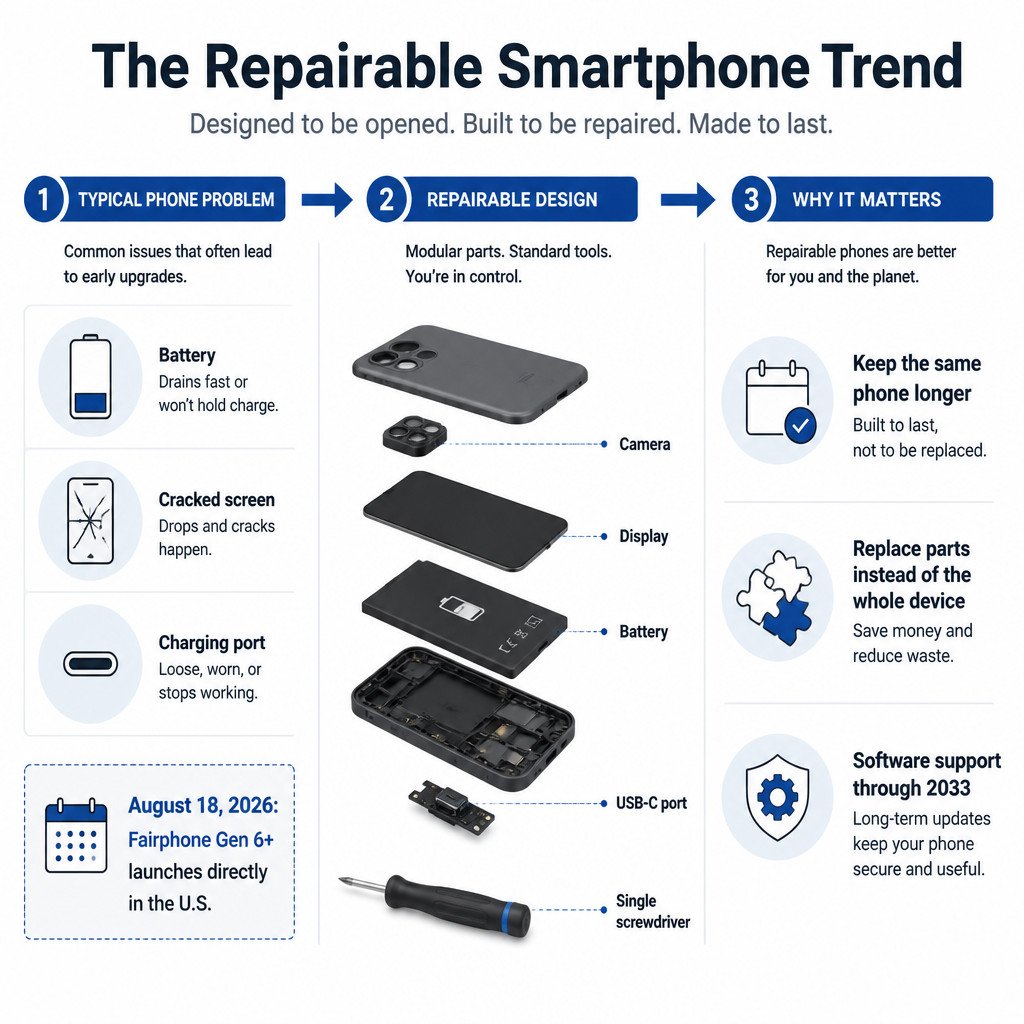
That helps explain why the U.S. launch is drawing attention now. American buyers already have access to repair programs from major phone manufacturers, but self-repair may still mean expensive parts, limited availability or opening a device that was never intended to be taken apart repeatedly. Fairphone begins with a different assumption: maintenance is part of owning the product.
The timing goes beyond one phone
Phones have grown more expensive, while yearly upgrades have become harder for many people to justify. A working five-year-old handset may need only a fresh battery, a replacement display or a charging-port repair, rather than complete replacement.
Fairphone isn’t suddenly a mainstream rival to Apple or Samsung. The Gen. 6+ runs on a midrange Qualcomm Snapdragon 7s Gen 4 chip, and it’s certified for T-Mobile and AT&T instead of being widely available through carrier stores. For now, the launch is a test of demand, not evidence that the mainstream market has already shifted.
Even so, its arrival raises expectations for the category. A modular phone no longer has to be imported, use a de-Googled operating system or remain a European curiosity. U.S. customers can now purchase an Android model directly, complete with 12GB of RAM, a conventional app experience and access to replacement parts.
Why this matters to buyers
The larger trend isn’t that everyone will suddenly start repairing phones at home. Most people won’t. What may change is how buyers judge a device, including whether it can be repaired affordably and kept in service longer.
That shift could push larger brands to make replacement parts easier to obtain, provide software support for longer and design phones with future repairs in mind. Fairphone’s U.S. debut won’t resolve the right-to-repair debate. But it gives the movement something it has lacked for years: a current, practical phone that presents repairability as a main feature rather than an afterthought.
