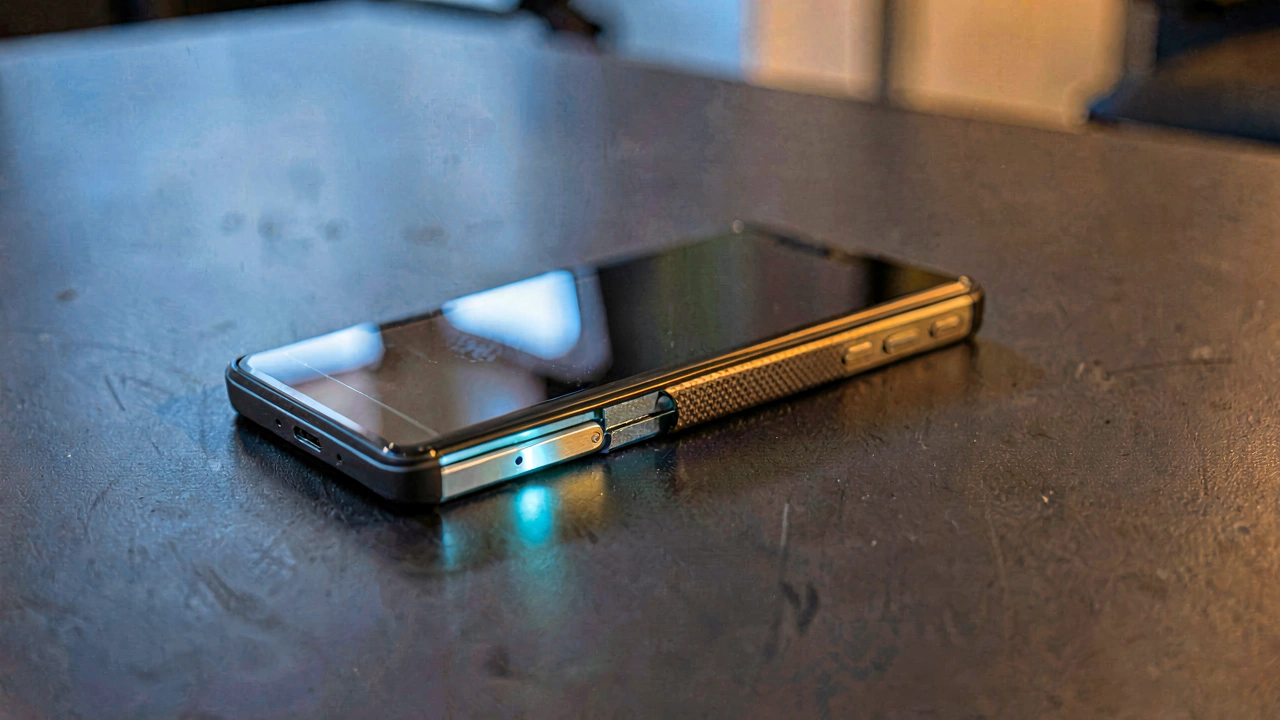
The biggest change in Samsung’s new foldables isn’t the larger screen or another AI shortcut. It’s inside the chassis.
Samsung unveiled the Galaxy Z Fold8, Galaxy Z Fold8 Ultra and Galaxy Z Flip8 on July 22, with all three reaching stores on August 7. They’re the company’s first foldables to use silicon-carbon batteries, a detail that has quickly drawn attention because it tackles a compromise that has followed thin foldable phones for years. A device can be slim, powerful or long-lasting, but getting all three has proved difficult.
The reason for the interest is straightforward. Samsung has taken a battery technology already gaining ground in mobile hardware and put it into one of the industry’s most visible premium product lines. The new Fold8 carries a 4,800mAh battery in a smaller chassis, up from the Fold7’s 4,400mAh cell. Despite being thinner, the Fold8 Ultra gets a 5,000mAh battery. Samsung has also increased wired charging on both Fold models to 45W.
Why silicon-carbon matters for smartphones
Most consumer phones still rely on lithium-ion batteries with graphite-heavy anodes. Silicon-carbon designs swap some of that graphite for silicon-based material. The practical benefit is higher energy density, allowing manufacturers to fit more capacity into the same physical space or retain capacity while making a device thinner.
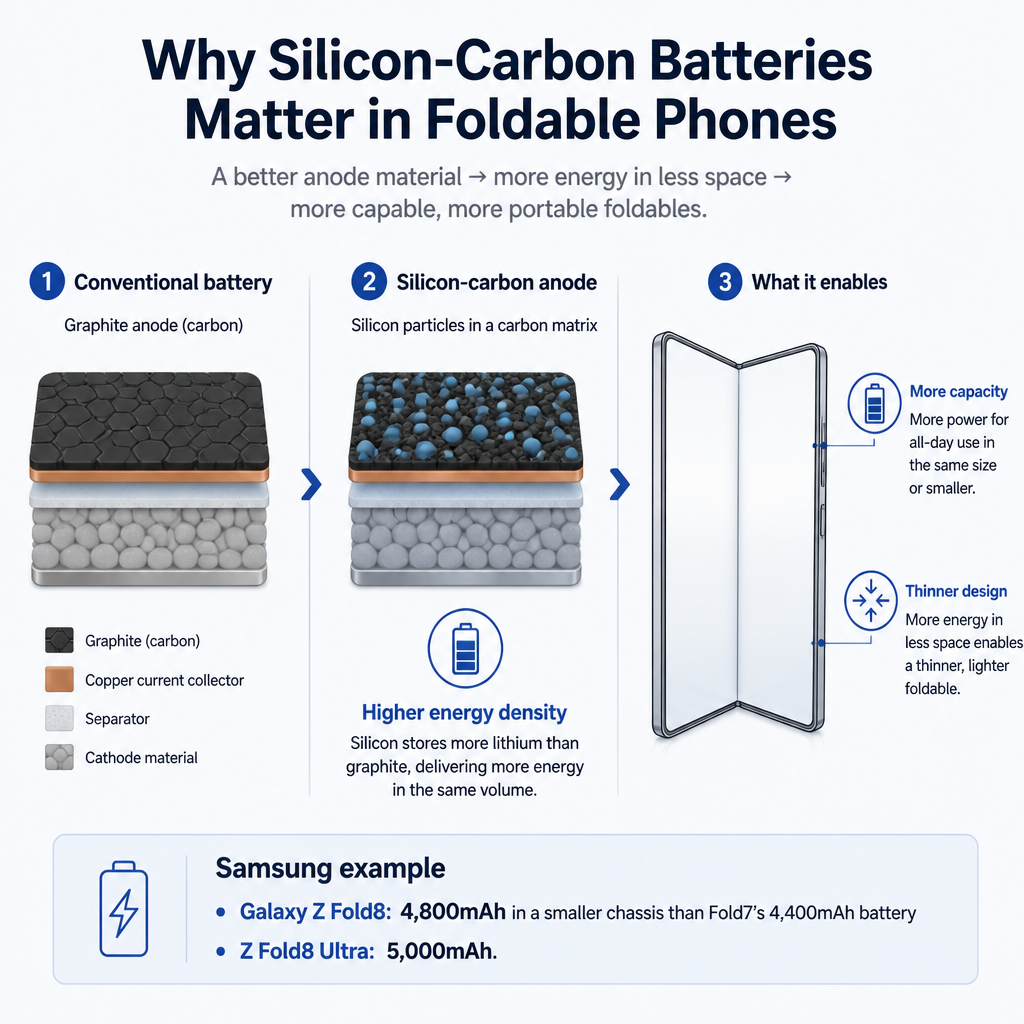
That’s particularly valuable in foldables. Hinges, two-part bodies and large internal displays leave less space for a battery than manufacturers have in a conventional slab phone. For years, brands have promoted thinness as a premium feature while expecting users to live with middling battery capacity. Samsung’s move suggests a different path: changing the battery chemistry to ease that trade-off instead of settling for another small annual spec increase.
It also puts battery technology in terms that mainstream shoppers can easily understand. The effect of a new chip or brighter display may be hard to judge before buying a phone. More usable battery in a thinner device is much clearer, especially for people who treat a foldable as both a phone and a small tablet.
A cautious step rather than a battery revolution
Samsung hasn’t suddenly turned its foldables into multi-day devices. Silicon-carbon cells don’t eliminate the familiar issues around charging habits, heat and long-term battery wear, either. The Fold8 Ultra’s 5,000mAh capacity is sensible rather than extreme. That restraint matters, as Samsung appears to be balancing performance, longevity and safety while introducing a newer cell design at scale.
Even so, the direction is significant. Samsung’s July 22 Galaxy Unpacked lineup pairs high-density cells with thinner hardware, larger foldable displays and on-device AI features. Each of those demands space and power.
What comes next
The next test is whether silicon-carbon batteries move beyond expensive foldables and into mainstream Galaxy phones. If that happens, the smartphone contest may begin to shift away from the pursuit of ever-faster charging alone. Capacity, thinness and endurance could once again become connected selling points, making the battery one of the phone’s most competitive components.