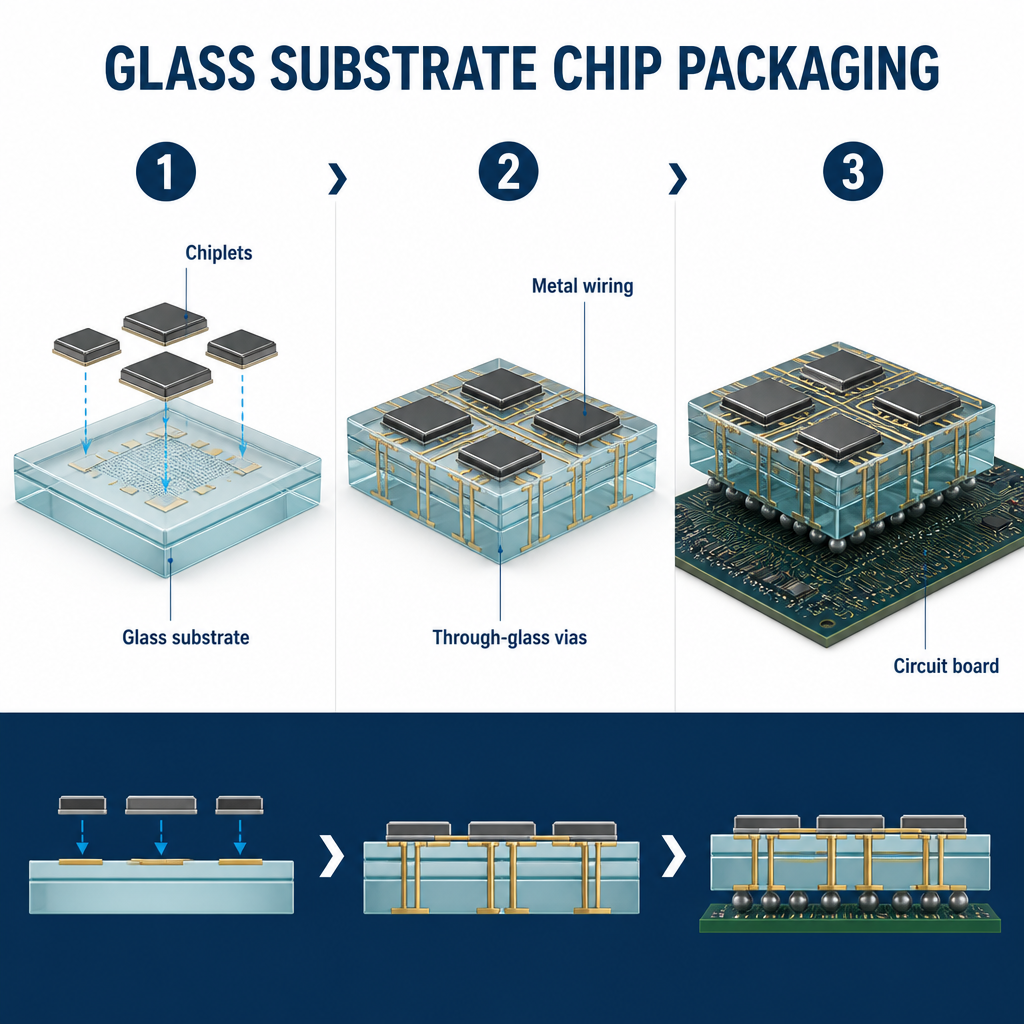
Glass-core substrates are drawing growing attention in advanced chip packaging. On July 24, 2026, Intel and Lens Technology announced a collaboration to explore glass substrate-based packaging for future AI, data center, edge-computing, and robotics hardware. The news brought fresh focus to a component most computer users never see: the structural foundation beneath a processor’s silicon chips.
What Are Glass-Core Substrates?
A substrate forms the main body of a semiconductor package. It supports one or more silicon dies, protects them from mechanical damage, and carries the electrical pathways connecting them to the rest of the computer system. Most high-end packages currently use organic materials. With a glass-core substrate, specially engineered glass replaces the package’s core material.
That doesn’t mean the chip itself is made of glass. The processor logic remains in silicon. Glass serves as a stable base for a package that may contain several smaller chips, commonly known as chiplets, which work together as a single processor.
How Does It Work?
Chip makers create fine layers of metal wiring on and through the substrate, then attach silicon dies and supporting components. These connections move data and power among the chiplets, memory, and circuit board.
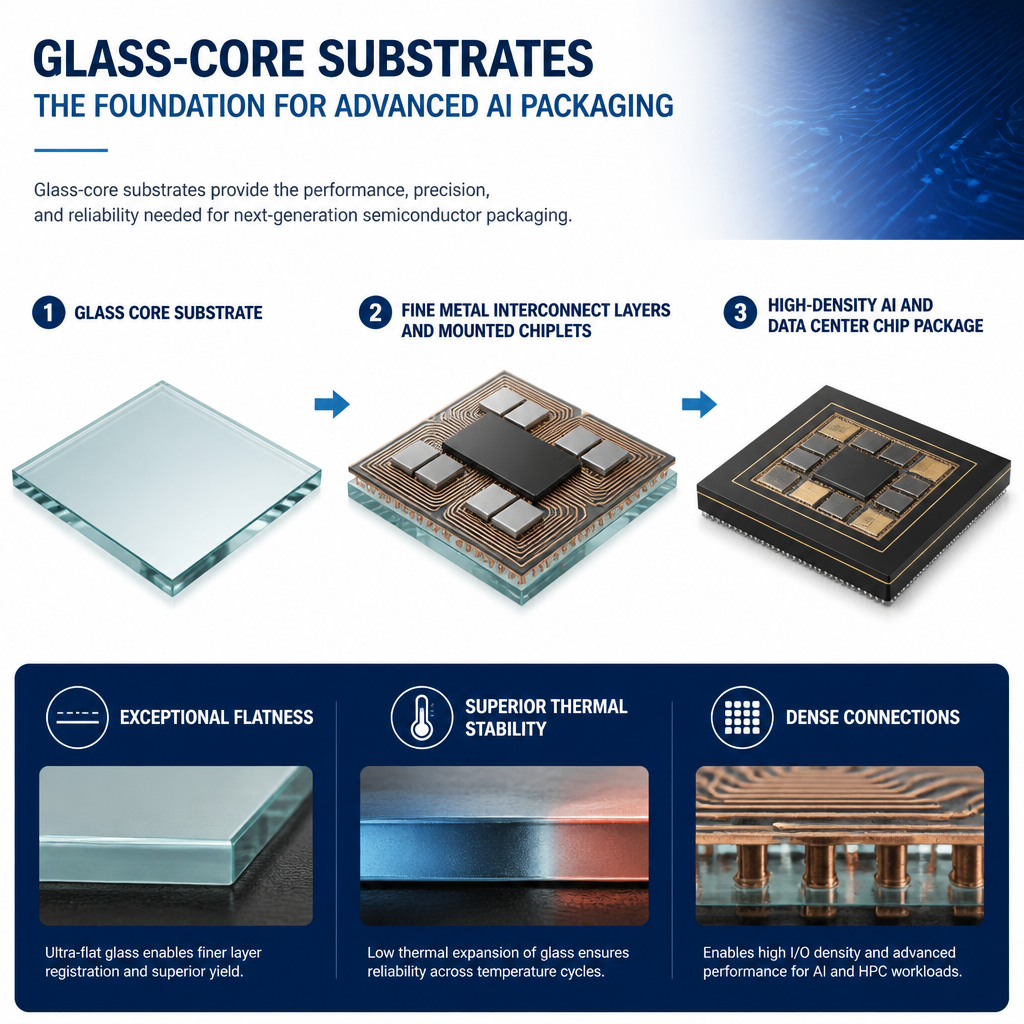
As package designs grow larger and more complex, glass can stay flatter and more dimensionally stable than organic substrate materials. That stability helps manufacturers line up extremely small wiring features with greater precision. It may also support denser interconnects, fitting more connections into a given area, while its thermal and mechanical properties help designers handle demanding package layouts.
Why Does It Matter?
Modern AI systems require enormous computing power and vast amounts of data movement. Instead of building one giant piece of silicon, chip designers increasingly combine specialized chiplets inside a single package. As a result, the package substrate has become a potential performance bottleneck rather than merely protective housing.
Glass-core substrates could support larger, denser packages for AI accelerators, data center processors, graphics hardware, and high-performance computing. The technology is still an emerging packaging approach, not a standard feature in consumer devices, and producing it at scale remains technically difficult. But as demand rises for closely connected chiplets, the material beneath those chips may become just as important as the chips themselves.