
A hardware root of trust is a protected part of a chip that provides a secure starting point for a device. It stores or derives cryptographic keys, checks critical software, and helps prove that approved code is running. The term has gained new relevance since the OpenTitan project announced Peppermint on August 25, 2026. Peppermint is an integrated root-of-trust design for space- and power-constrained products, including wearables, IoT endpoints, and microcontrollers.
What is a hardware root of trust?
Think of it as the security anchor built into a device. Unlike a standard app or operating-system service, it’s implemented in hardware and starts working before most other software. As a result, an attacker has a harder time replacing the security checker itself.
A root of trust can establish a unique device identity and keep secret keys away from normal software. It can also provide cryptographic services such as signing, verification, encryption, and random-number generation. This forms the first link in a chain of trust, with each stage verifying the next before allowing it to run.
How does it work?
During secure boot, the root of trust begins with code stored in a highly protected location, often read-only memory. It then checks the digital signature on the next firmware component. A valid signature allows startup to continue. If the check fails, the system can stop or switch to a recovery path.
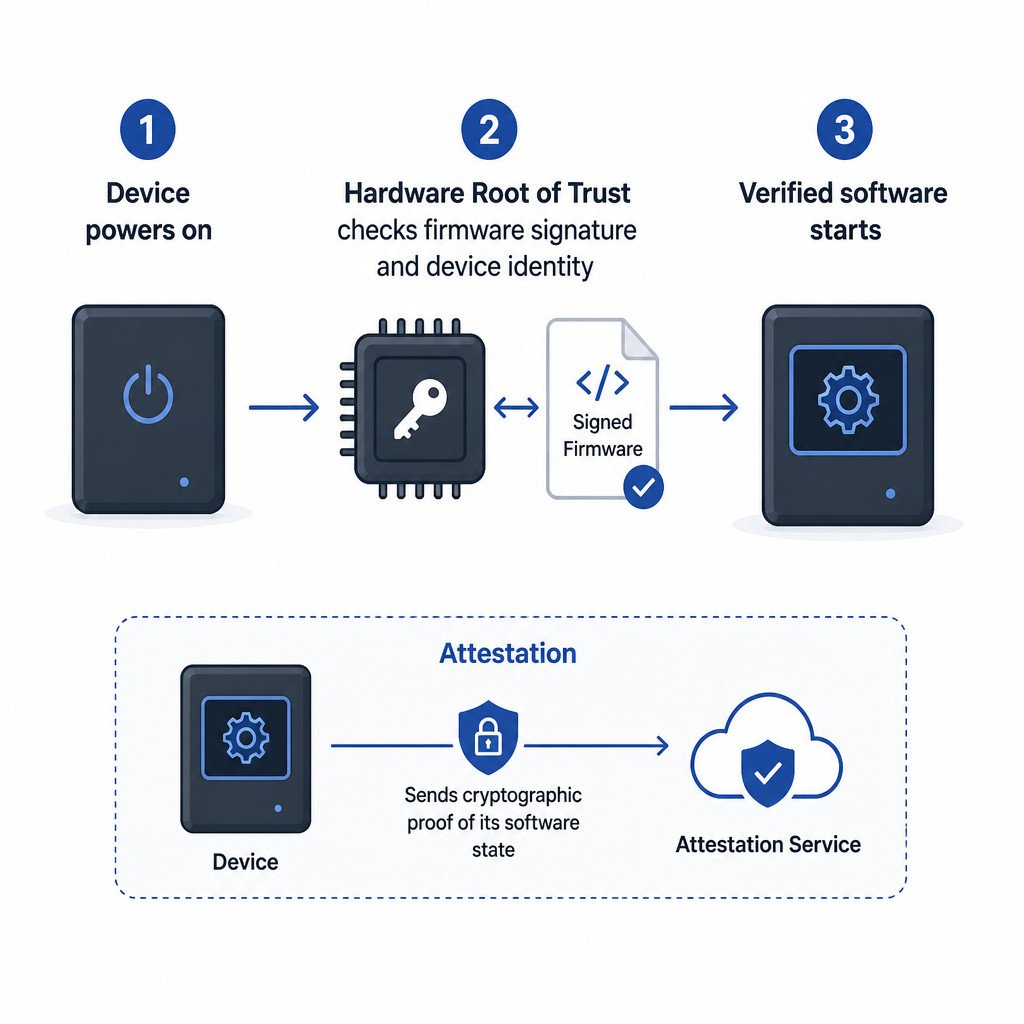
The hardware can support attestation as well. During this process, the device produces cryptographic evidence about its identity and software state, letting another system decide if it should be trusted. A company might use attestation to verify an IoT sensor, server component, or connected accessory before granting access.
Why does it matter?
Firmware-level attacks can be especially persistent because they run beneath conventional security software. A hardware root of trust protects the earliest stages of startup, supports authenticated updates, and keeps sensitive keys more isolated from bugs in applications or operating systems.
Integrated designs let manufacturers place these protections inside a larger system-on-chip rather than depend on a separate security chip. That can make hardware-backed security practical for smaller connected products, where cost, board space, and battery use are tightly constrained.
