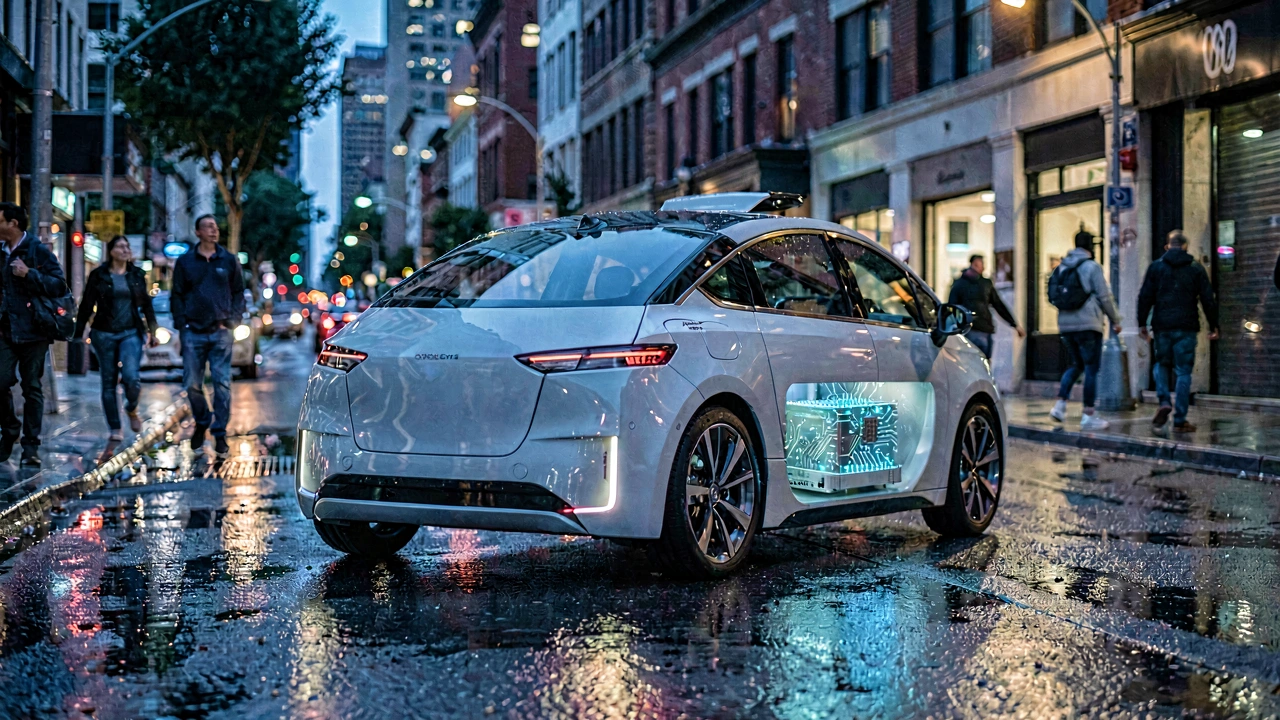
For years, robotaxis have made carefully controlled appearances: short routes, small service areas, waitlists and plenty of safety messaging. Nevada’s latest move signals a more consequential phase. The question is no longer just whether a driverless car can complete a ride. It’s whether autonomous vehicles can operate as a regulated transport network across a city.
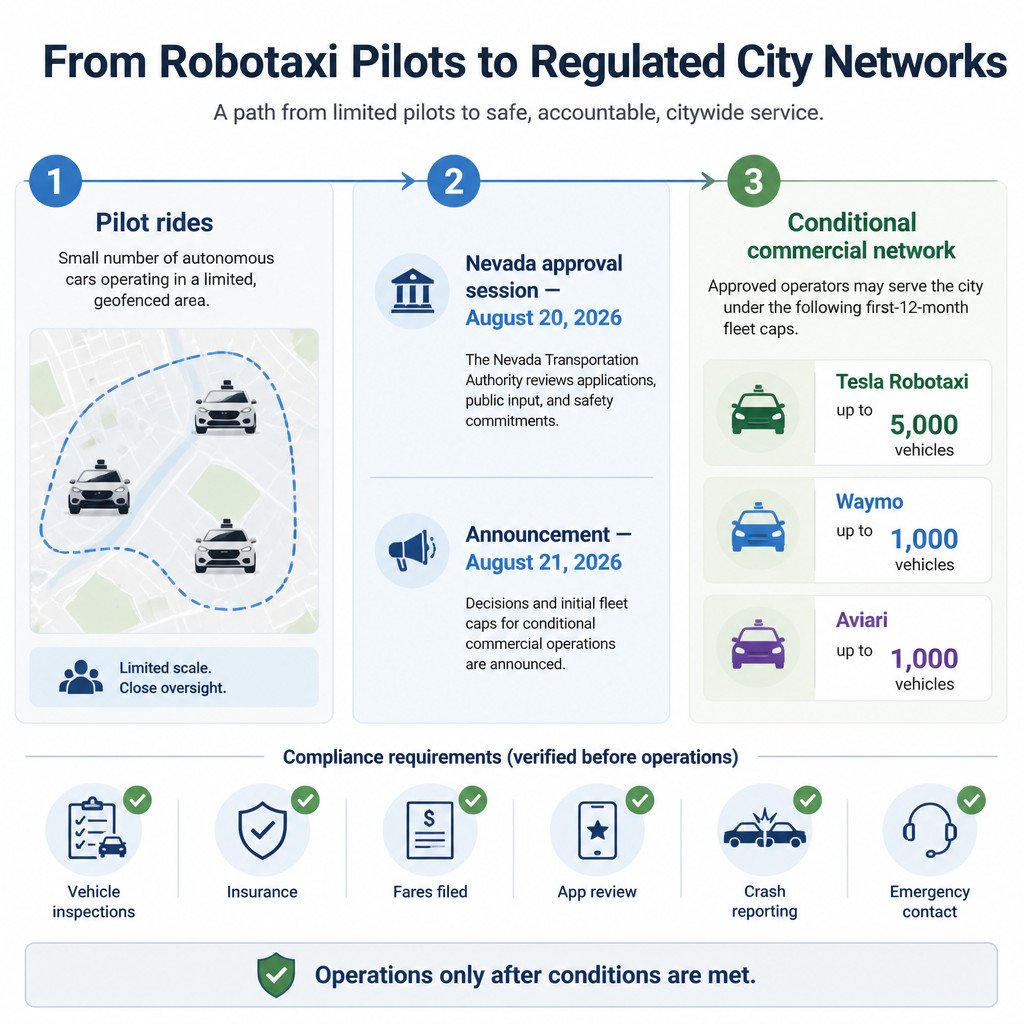
On August 21, the Nevada Transportation Authority announced that it had unanimously approved Autonomous Vehicle Network Company applications from Tesla Robotaxi, Waymo and Aviari. The decision followed an August 20 commission meeting and covers paid, fully autonomous passenger trips in Clark County, which includes Las Vegas. (business.nv.gov)
Moving beyond showcase rides
The headline numbers help explain the attention. Nevada authorized Tesla to operate up to 5,000 fully autonomous vehicles during the first 12 months after its permit is issued. Waymo and Aviari can each operate up to 1,000. Together, that creates a ceiling of 7,000 vehicles. It doesn’t mean every one of them will immediately take to the road, but the regulatory framework is designed for scale rather than a publicity demonstration. (business.nv.gov)
That difference matters. A pilot shows that a vehicle can work under limited conditions. Running a network means handling real passenger demand, dispatch and pricing, along with accessibility, vehicle cleaning, maintenance, airport rules, crash reporting and communication with first responders. Increasingly, those less glamorous details are becoming the real product.
Why Las Vegas offers a revealing test
Clark County is an unusually useful place to try this. It has dense tourism corridors, heavy airport traffic and late-night demand, all within a transport economy built around taxis and ride-hailing. The Nevada approvals include Harry Reid International Airport in the geographic area, though airport service still needs separate approval from the county aviation department. (business.nv.gov)
The permits come with conditions. Before carrying passengers, each company must meet requirements covering inspections, insurance, submitted fares, customer-facing app information and accessibility. Reporting rules and maintenance records are part of the process as well. Operators must provide a 24-hour emergency contact for first responders, while any changes to approved geofences or operating parameters require advance approval. Nevada’s announcement makes clear that receiving approval doesn’t mean deployment can begin immediately. (business.nv.gov)
The competition shifts to operations
The robotaxi race is changing shape. Vehicle autonomy remains essential, but companies must now show that they can run dependable services that riders understand in busy public settings. Fleet size alone won’t determine who succeeds. Wait times, service coverage, pricing and customer support will matter just as much, as will the ability to respond when a vehicle gets stuck.
Safety scrutiny will increase as these networks grow. The Insurance Institute for Highway Safety has said that limited reporting data makes robotaxi safety records difficult to assess consistently. Meanwhile, federal regulators are still adapting rules originally written for vehicles driven by people. (apnews.com)
Nevada hasn’t declared the robotaxi problem solved. Instead, it has created a large, conditional test of whether driverless rides can become part of normal urban infrastructure. If the operators meet those conditions and launch service, Las Vegas could provide one of the clearest signs yet that robotaxis are moving beyond novelty rides and becoming a new kind of transit network.