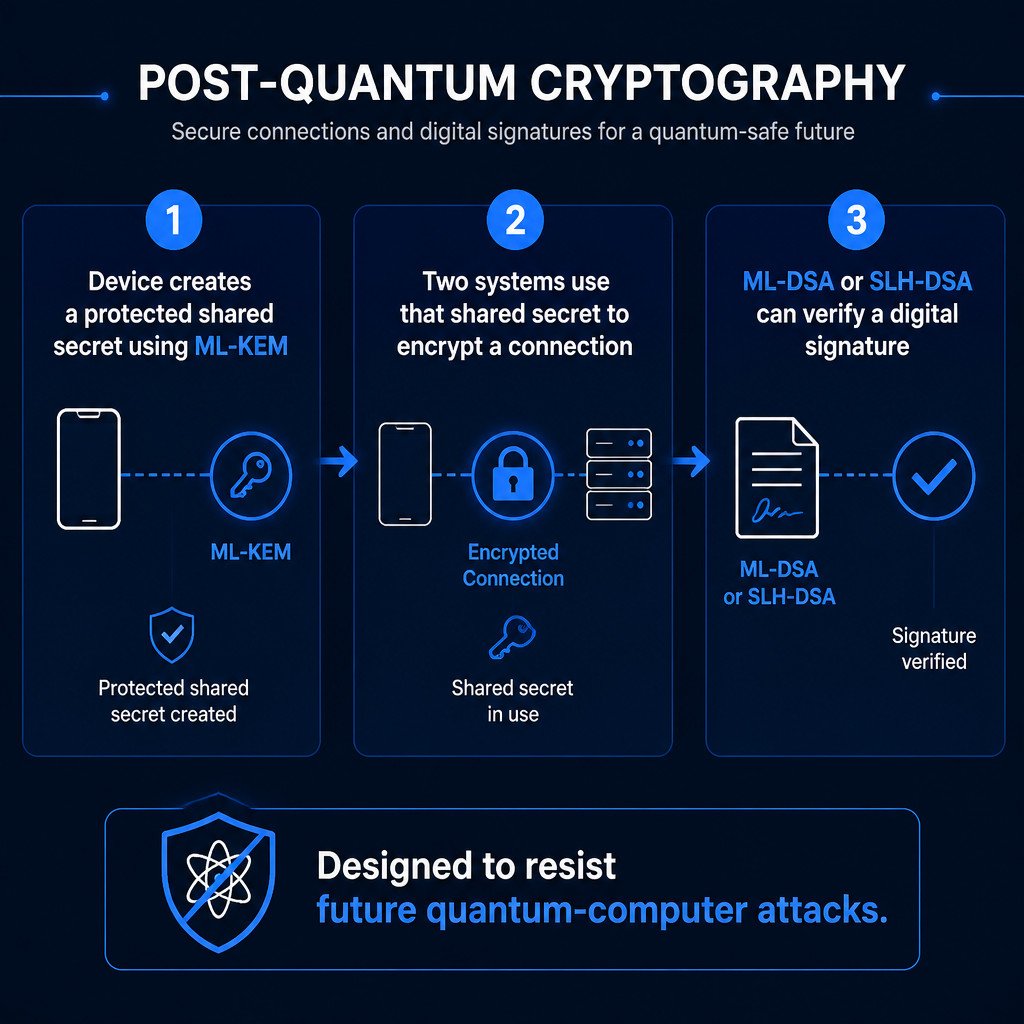
Post-quantum cryptography, usually shortened to PQC, is encryption designed to stay secure even if large-scale quantum computers become practical. The term gained fresh attention after the August 12, 2026 Pixel 11 launch highlighted support for post-quantum cryptography standards in a consumer device security component. It’s also becoming a priority for businesses and governments that need to protect information with a long useful life.
What Is Post-Quantum Cryptography?
Much of the internet’s current security depends on public-key cryptography, including RSA and elliptic-curve cryptography. These systems allow websites, apps and devices to establish secure connections and verify digital signatures. In the future, powerful quantum computers could potentially solve the mathematical problems behind many of these older systems far faster than ordinary computers can.
PQC replaces or supplements vulnerable public-key methods with algorithms based on mathematical problems thought to resist attacks from both classical and quantum computers. It isn’t encryption carried out by a quantum computer. Instead, it’s software and hardware security built for a post-quantum future.
How Does It Work?
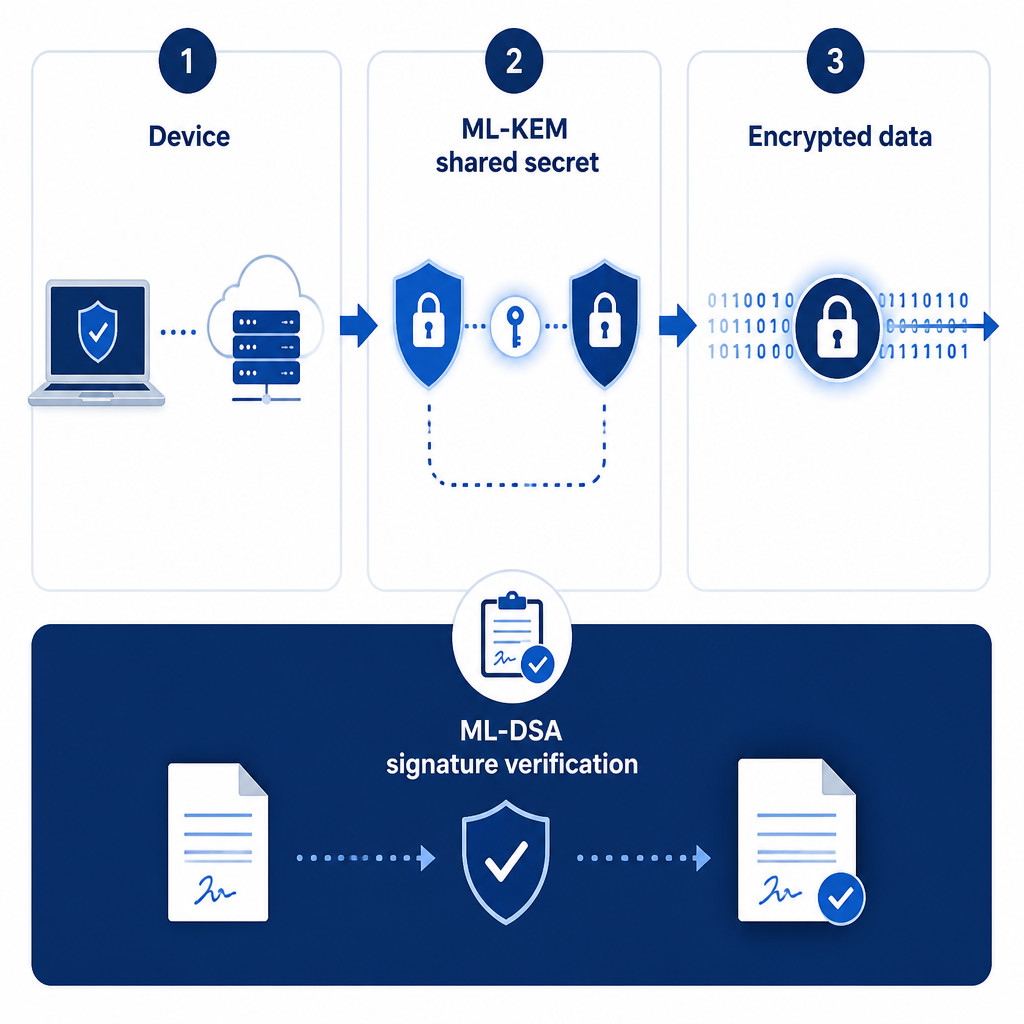
Secure communication often requires two sides to agree on a secret key they can use to encrypt data. NIST’s ML-KEM standard is a key-encapsulation mechanism designed for this task. Rather than relying on factoring large numbers or solving elliptic-curve problems, it uses a different family of mathematical problems involving structured lattices.
Post-quantum cryptography also includes digital signatures, which confirm that software, messages or updates came from the expected sender. NIST has standardized ML-DSA and SLH-DSA for this purpose. As systems migrate, they may take a hybrid approach that combines established cryptography with PQC, reducing the risks of switching too quickly.
Why Does It Matter?
Attackers can copy encrypted traffic now and try to decrypt it later if quantum technology improves. That risk is especially relevant for medical records, government data, intellectual property and other information that must remain confidential for years.
Quantum computers capable of breaking modern public-key encryption aren’t available today. But changing cryptography across browsers, cloud services, phones, certificates and connected devices takes time. Post-quantum cryptography gives organizations a practical way to begin that transition before the threat becomes urgent.