
Model Context Protocol, commonly known as MCP, is an open protocol that connects AI applications with external tools, data sources and services. It’s becoming a common way to give AI assistants controlled access to useful capabilities, such as searching a company database, checking a calendar, retrieving files or calling a business API. Interest in MCP has grown since the protocol’s July 28, 2026 specification update, which introduced major changes designed to make remote MCP services easier to secure and scale.
What Is Model Context Protocol?
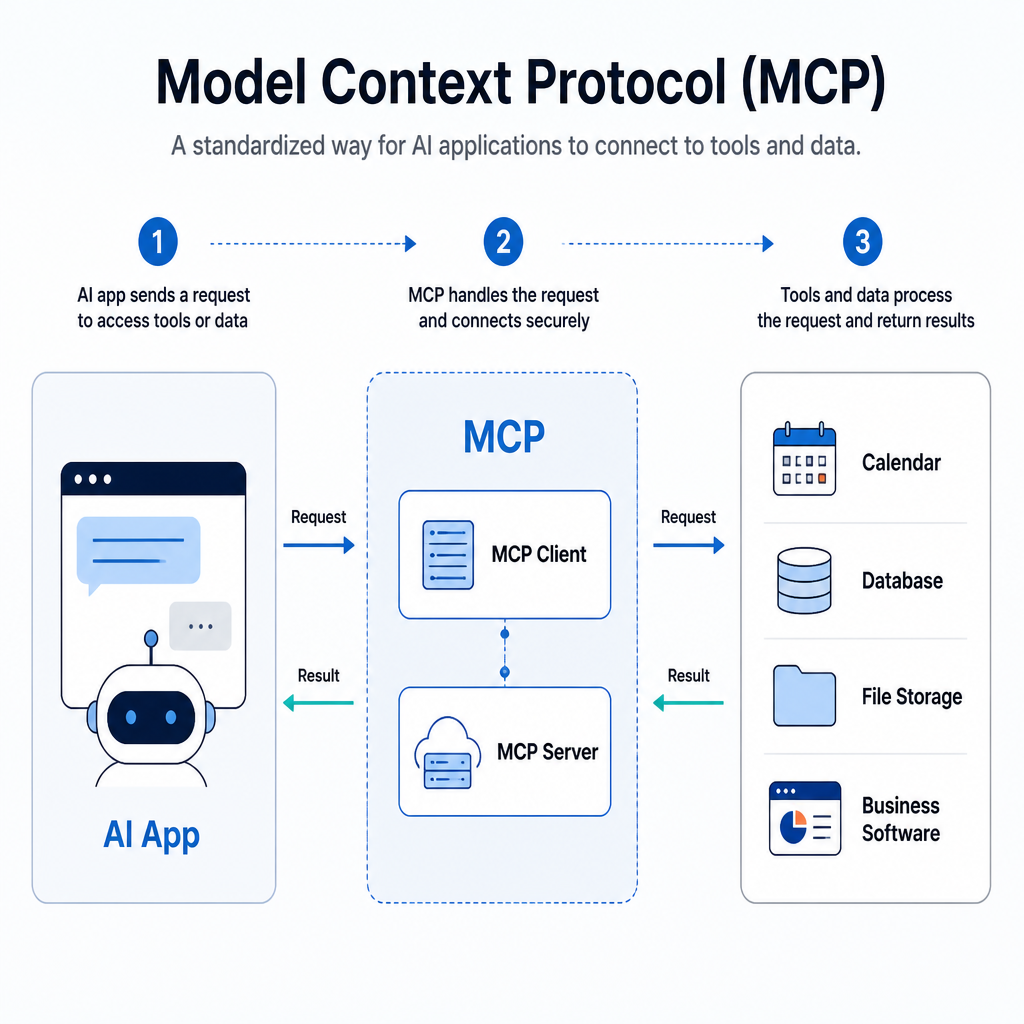
An AI model can generate text, but it doesn’t automatically know how to work with every company system or software tool. MCP provides a shared language for making those connections. Rather than requiring every AI app to have a custom integration for each service, an MCP client can communicate with an MCP server through standardized messages.
The client is the AI application, such as an assistant or agent. The server exposes approved capabilities, including tools it can run, resources it can provide and prompts it can offer. MCP doesn’t give an AI unrestricted access on its own. What’s available depends on the server and its authorization rules.
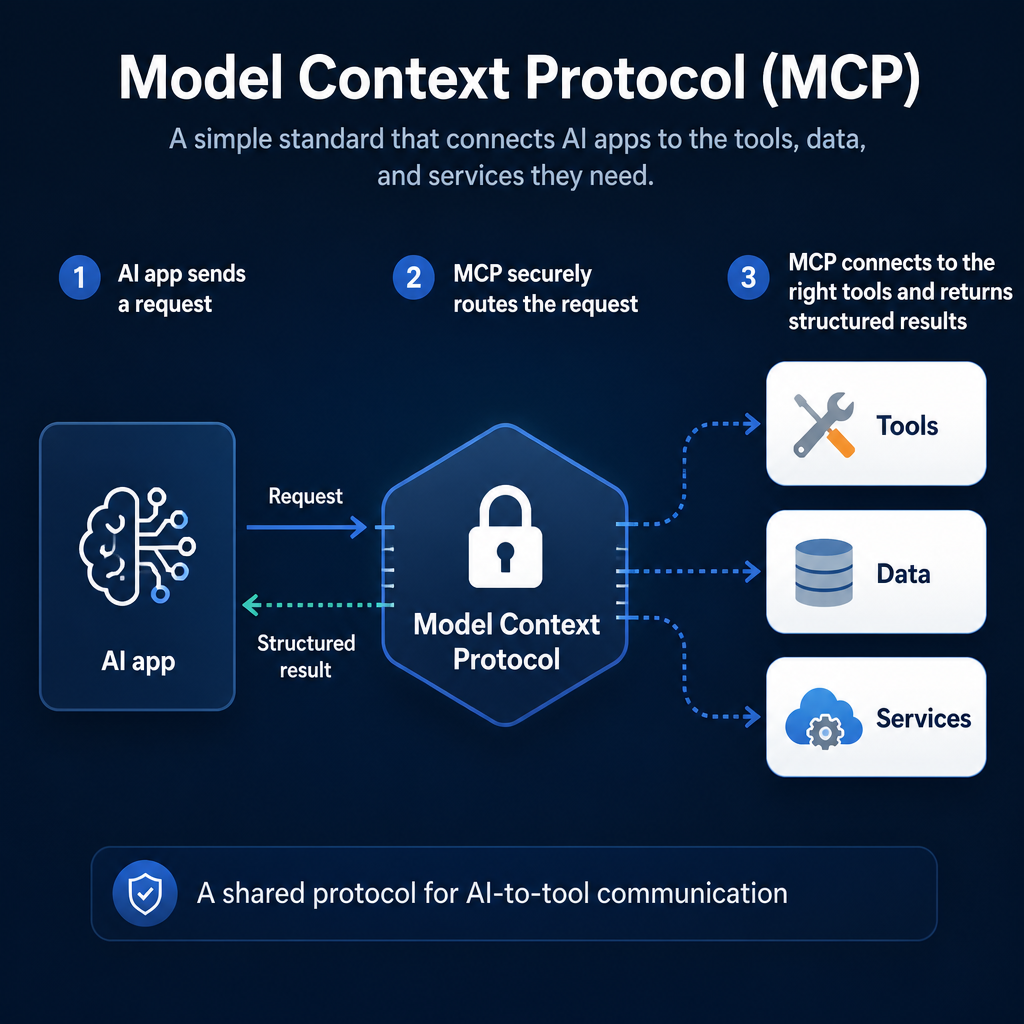
How Does MCP Work?
An AI application first discovers an MCP server or is configured to use one. The server describes the tools and resources it offers. If the AI needs something, such as a current inventory record, it sends a structured request to that server. The server carries out the permitted action and returns a structured result that the AI can use.
The latest MCP specification shifts the protocol toward a stateless core. In plain English, each request includes the information needed to process it instead of relying on an ongoing protocol session. That can make MCP servers easier to run behind ordinary web infrastructure and allow requests to be distributed across multiple server instances.
Why Does MCP Matter?
MCP can reduce the work involved in building AI agents that interact with real systems rather than only handling chat. A standard interface makes integrations more reusable, while centralized servers offer a practical place to apply authentication, permissions and auditing.
Reliability matters too. The July update adds support for cacheable lists, clearer routing information and an extensions framework for features such as long-running tasks. These changes mostly happen behind the scenes, but they help make AI-to-tool connections into infrastructure that developers can operate at a larger scale.



 and How Does It Work?)