
Model Context Protocol, better known as MCP, is an open standard that connects AI applications with the tools and information they need to carry out useful work. Interest in MCP has grown since the July 28, 2026 specification update, which made the protocol easier to operate at scale on conventional web infrastructure and introduced a clearer framework for optional capabilities.
What Is Model Context Protocol?
An AI model can generate text, but it doesn’t automatically have permission or a dependable way to read a company database, search files, check a calendar or call a business service. MCP provides a shared set of rules for making those connections.
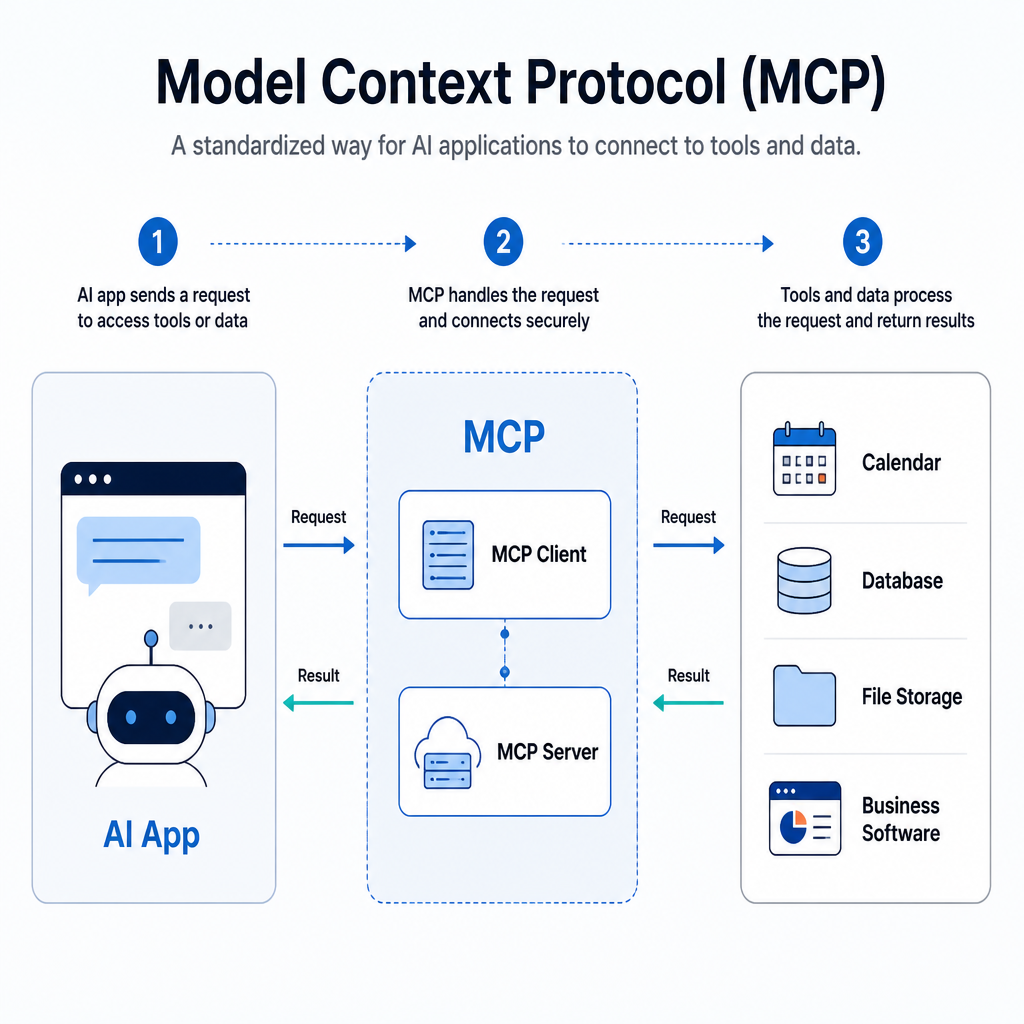
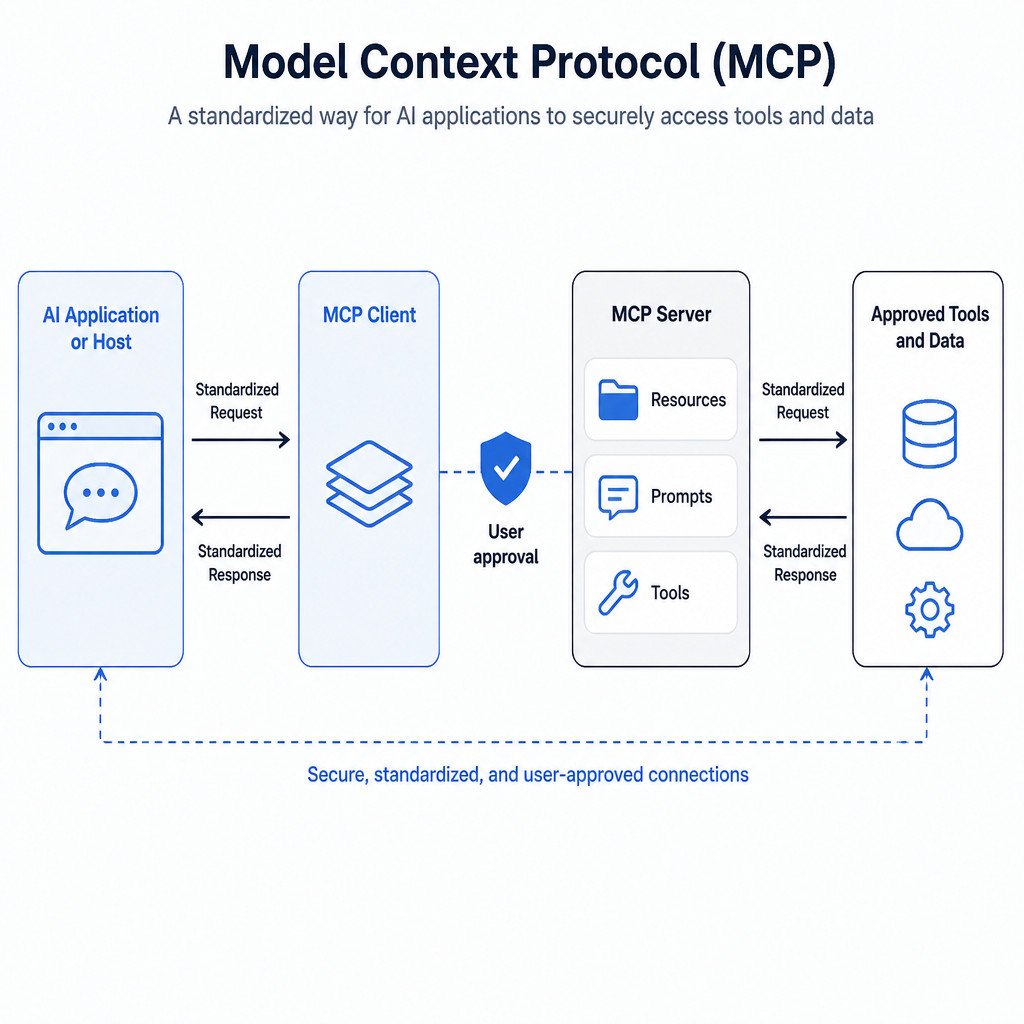
It’s often described as a universal adapter for AI tools. Rather than requiring every AI app to have a custom integration for each service, an MCP-compatible application can communicate with an MCP server that exposes particular tools, resources or prompts. That server might connect to a document library, customer-support system, coding tool or internal database.
How MCP Works
MCP follows a client-server model. The AI application serves as the host and includes an MCP client, while a separate MCP server describes what it can provide. This could be a tool for looking up an order or a resource containing product documentation.
When an AI assistant needs information or has to perform an approved action, the client sends a structured request to the appropriate server. The server checks that request, carries out the permitted operation and returns a structured result. The AI can then use the result in its response or as part of its next step.
The latest specification moves the HTTP version of MCP toward a stateless design. Each request contains the information required to process it, rather than relying on a persistent server session. For organizations managing many MCP connections, this can make load balancing and scaling easier.
Why MCP Matters
AI agents become more useful when they can work with real, current information instead of answering only from a model’s built-in knowledge. MCP gives developers a reusable method for connecting those agents to external systems while setting clear boundaries around the available tools and data.
On its own, though, MCP doesn’t make an AI trustworthy. Organizations still need authentication, authorization, carefully designed tools and human approval for sensitive actions. A shared protocol can still reduce one-off integration work and make AI tool connections more consistent across applications.
Why MCP Is Relevant Now
The July 2026 update added features including a formal extensions framework, support for long-running tasks and stronger authorization guidance. As more AI products move beyond chat-only assistants and become systems that can retrieve data and take actions, MCP is becoming an important term for both users and developers to understand.



?)