AI assistants are beginning to do more than answer questions. They can search for flights, check orders, compare insurance options, and contact customer support. That raises a practical issue for businesses and users: how does an agent prove its identity, access only what it’s permitted to see, and avoid posing as a person browsing a site? Personal Agent Protocol, or Poppy, is a proposed answer.
Sierra and Meta announced the protocol on October 6, 2026, with a draft specification published a few days later. It’s intended to be an open standard for connecting a person’s AI agent with a company.
What Is Personal Agent Protocol?
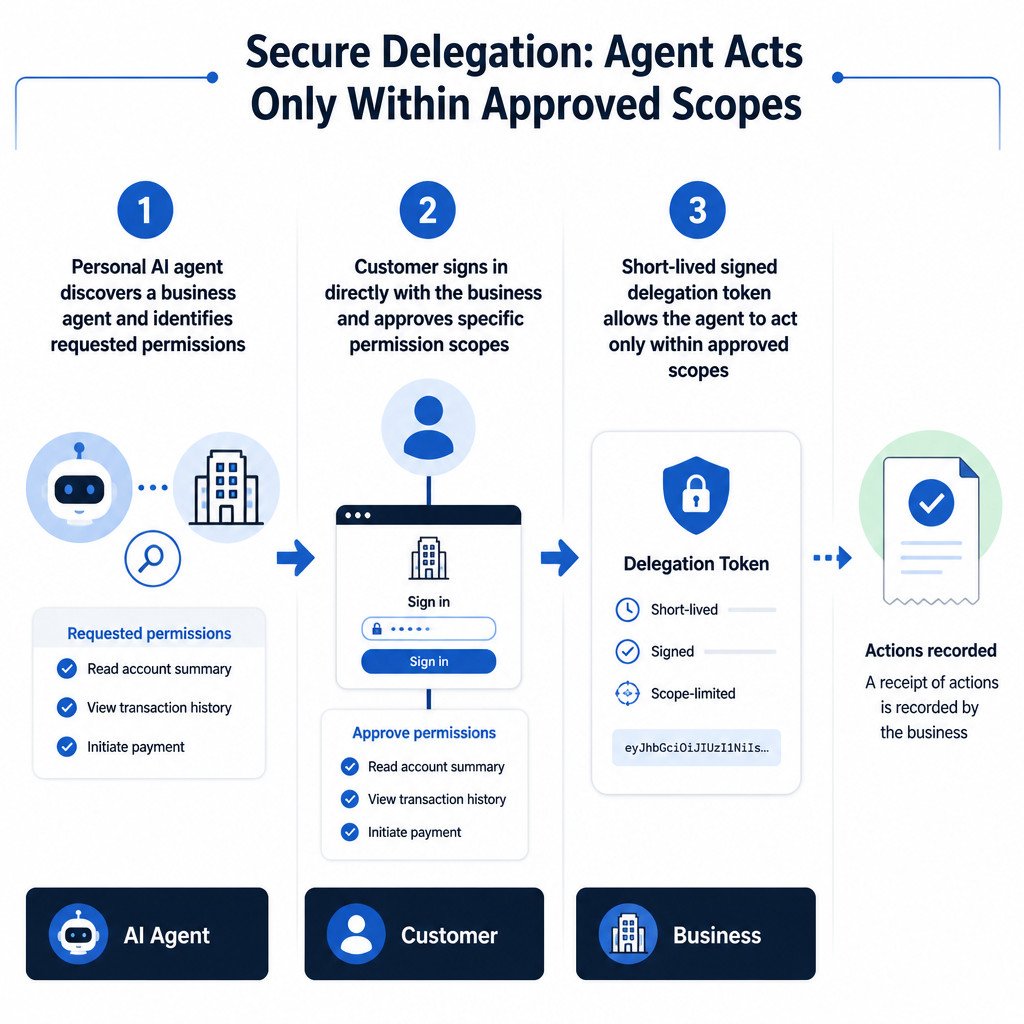
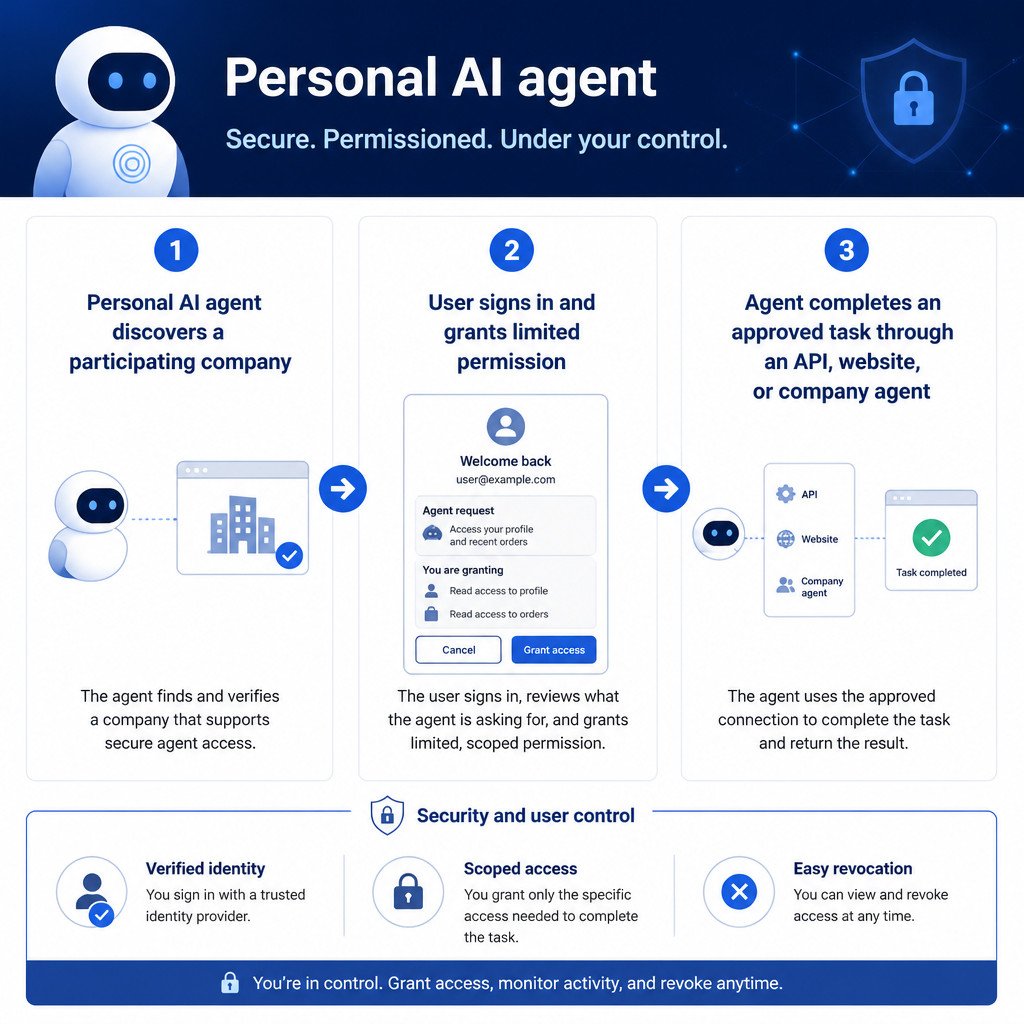
Personal Agent Protocol is a set of technical rules that allows a personal AI agent to work with participating businesses on a user’s behalf. Instead of giving an agent a password and unrestricted access, the protocol is designed to give both parties clearer controls.
A company can decide if an agent is allowed to browse public information, view account details after sign-in, make changes, or seek the user’s approval for sensitive actions. Users can grant limited access, then revoke it later.
How It Works
A participating company publishes a small discovery file known as poppy.json. It tells compatible agents how to begin a session, sign a user in, and locate available interfaces.
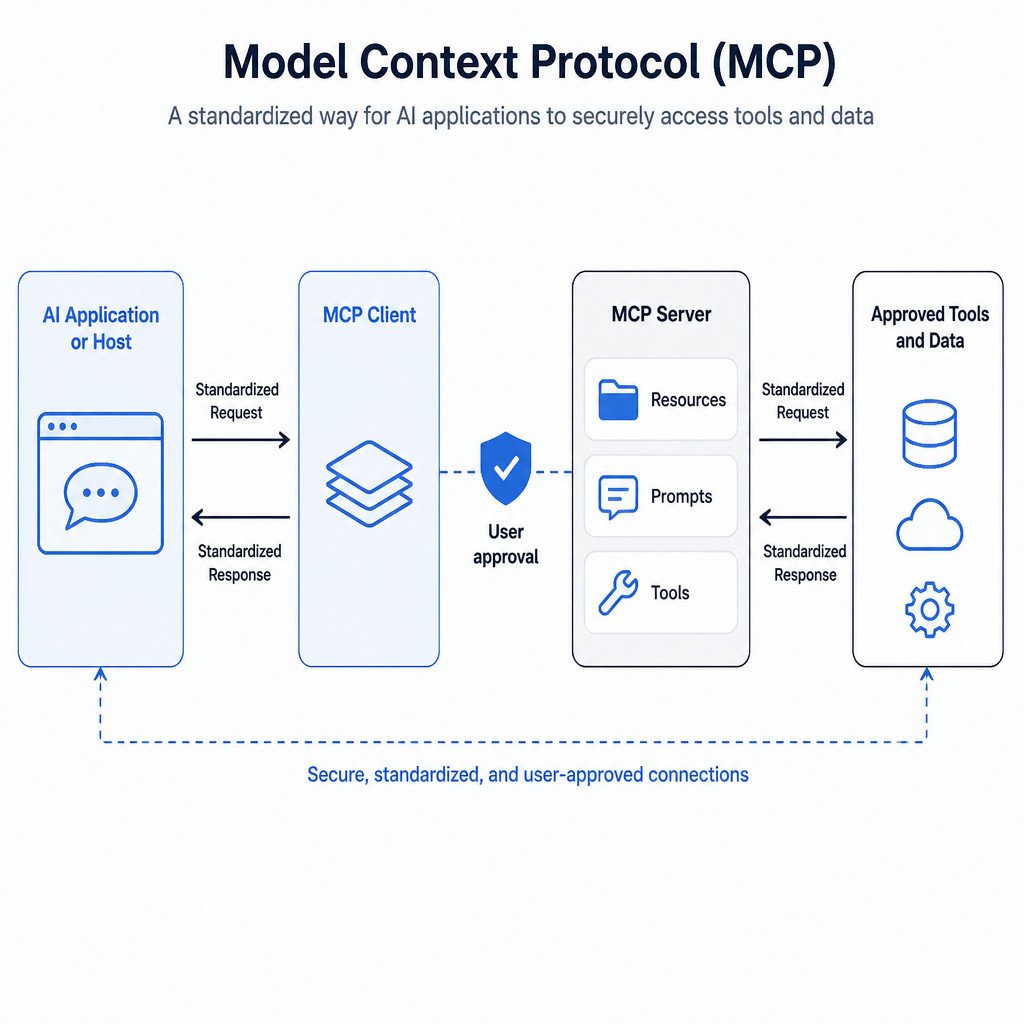
The agent can then use the route supported by the company, which may be a conventional API, a website session, or a conversation with the company’s own AI agent. The protocol relies on familiar web technologies, including HTTPS, OAuth, JSON Web Tokens, and OpenAPI. Access is linked to permissions, often called scopes, that define what the agent can do.
Why It Matters
Many agents today either imitate regular browser activity or get blocked entirely. That can be inefficient, and it makes it hard for a company to tell the difference between a customer’s authorized agent and ordinary automated traffic. Personal Agent Protocol offers a middle ground: agents identify themselves, companies set limits, and people keep control of access to their accounts.
It remains a draft rather than a completed internet standard, and its practical value will depend on adoption and security testing. Still, it has become newly relevant as businesses, payments providers, and AI companies prepare for a web where users increasingly hand routine tasks to software agents.