AI voice agent detection is gaining attention as more software agents start making phone calls for individuals and businesses. On October 8, 2026, customer-experience company Sierra introduced fleming-1, a model built to identify when a caller is likely another AI agent. The launch points to a growing challenge: over a noisy phone line, a highly convincing synthetic voice can be hard for a person to spot.
What AI Voice Agent Detection Means
AI voice agent detection examines live call audio for signs that speech was generated or delivered by an AI system instead of spoken by a human. It’s a type of synthetic-speech detection, though the aim is practical call handling rather than just deciding if an audio clip is real or fake.
A business could use it to determine if an incoming call is from a customer, an automated system, or an AI assistant acting for that customer. That context can guide the next step, such as requesting additional verification, sending the call to a particular workflow, or tracking automated-call volume.
How It Works
The detector monitors speech as a call takes place and generates a likelihood score. Rather than asking a person to catch an unnatural-sounding voice, the model assesses audio traits linked to generated speech. Those signals can be subtle, and compression, background noise, weak connections, or increasingly natural AI voices may hide them.
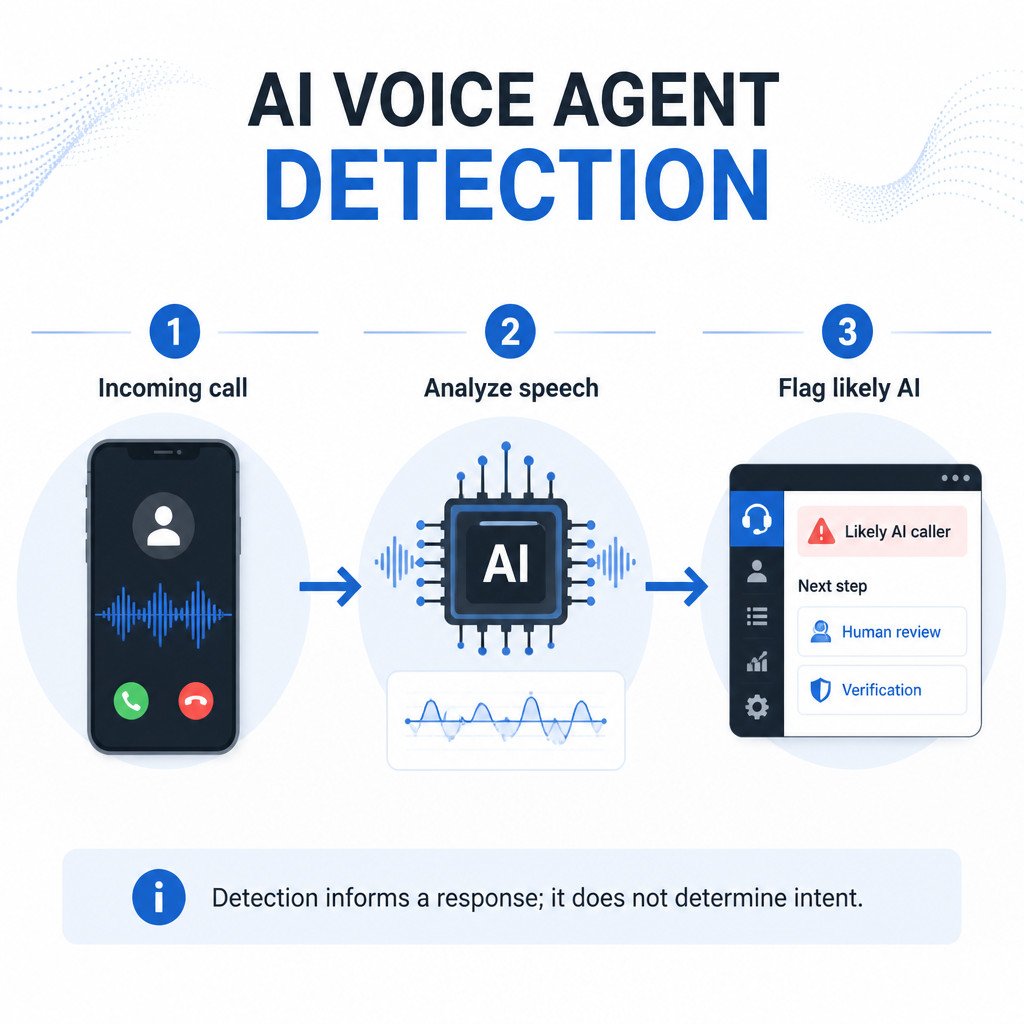
The result is generally a signal, not a final ruling. Sierra says its system is tuned conservatively to lower the risk of mistakenly flagging a real person. It’s still up to a company to decide what, if anything, should happen after a caller is identified as likely AI-generated.
Why It Matters
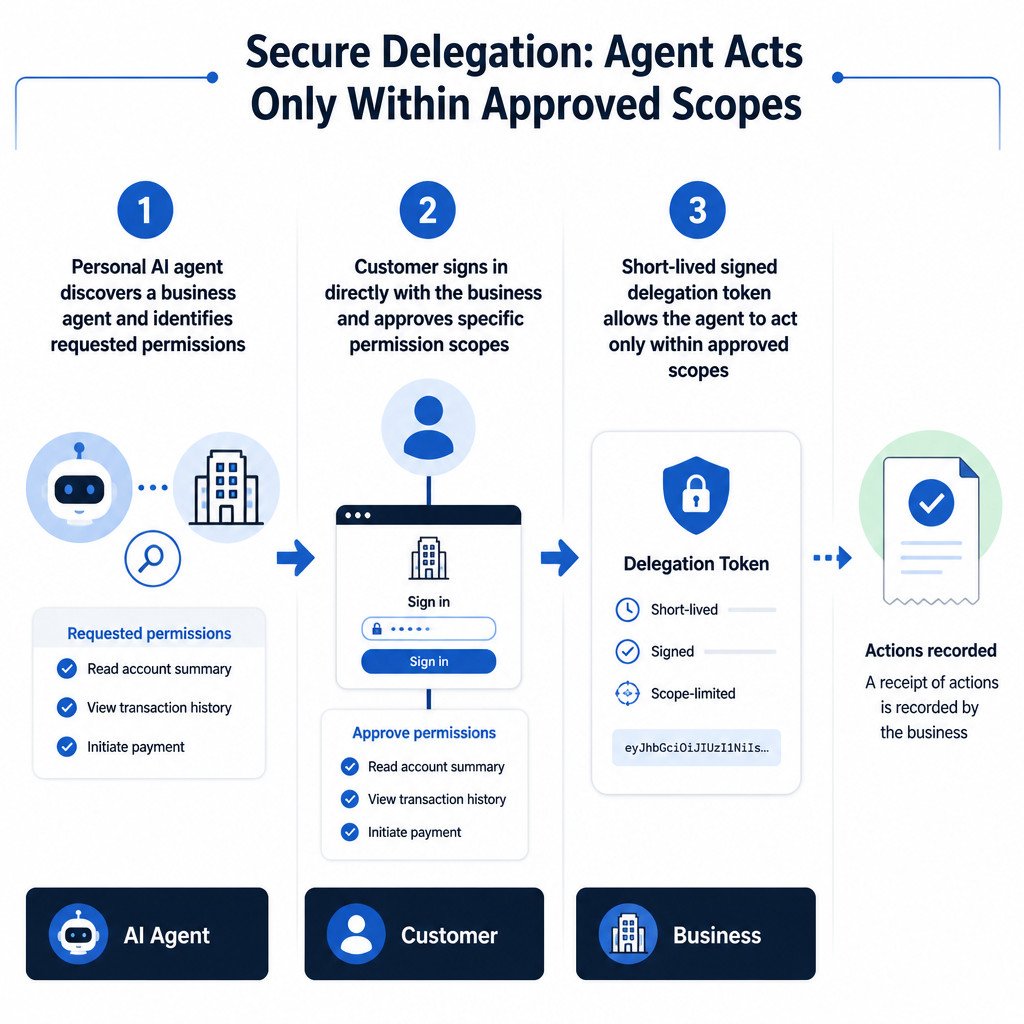
AI callers can be helpful. A personal assistant might call an airline, retailer, insurer, or healthcare provider to handle a task. Yet automated calling can also support large-scale scams, account probing, and other forms of abuse. Detection gives organizations more context without treating every AI caller as malicious.
It isn’t a complete security solution, though. A detector can’t establish who controls an agent, confirm that a customer approved a request, or determine a caller’s intent. It works best alongside identity checks, clear permissions, and phone systems that can safely accommodate both people and software agents.