
AI agents are being asked to do more than draft text or write code. On August 27, 2026, Anthropic opened a research preview of the Model Hardware Standard (MHS), a shared specification designed to help AI systems operate programmable physical equipment in research labs and advanced manufacturing. The aim isn’t to replace trained operators. Instead, MHS could reduce the custom software work required to make different machines work together. (anthropic.com)
What the Model Hardware Standard Is
MHS provides a common software interface for physical devices, including microscopes, liquid handlers, cameras, robotic arms and instruments with programmable controls. Right now, each device may rely on its own API, desktop software or vendor-specific command language. Combining several devices in one automated workflow often calls for custom integrations.
Each compatible device gets a standardized driver under MHS. This software translates between the device’s native controls and a shared set of commands. The driver also describes what the device can measure, which settings are adjustable and what operating limits must be enforced. (anthropic.com)
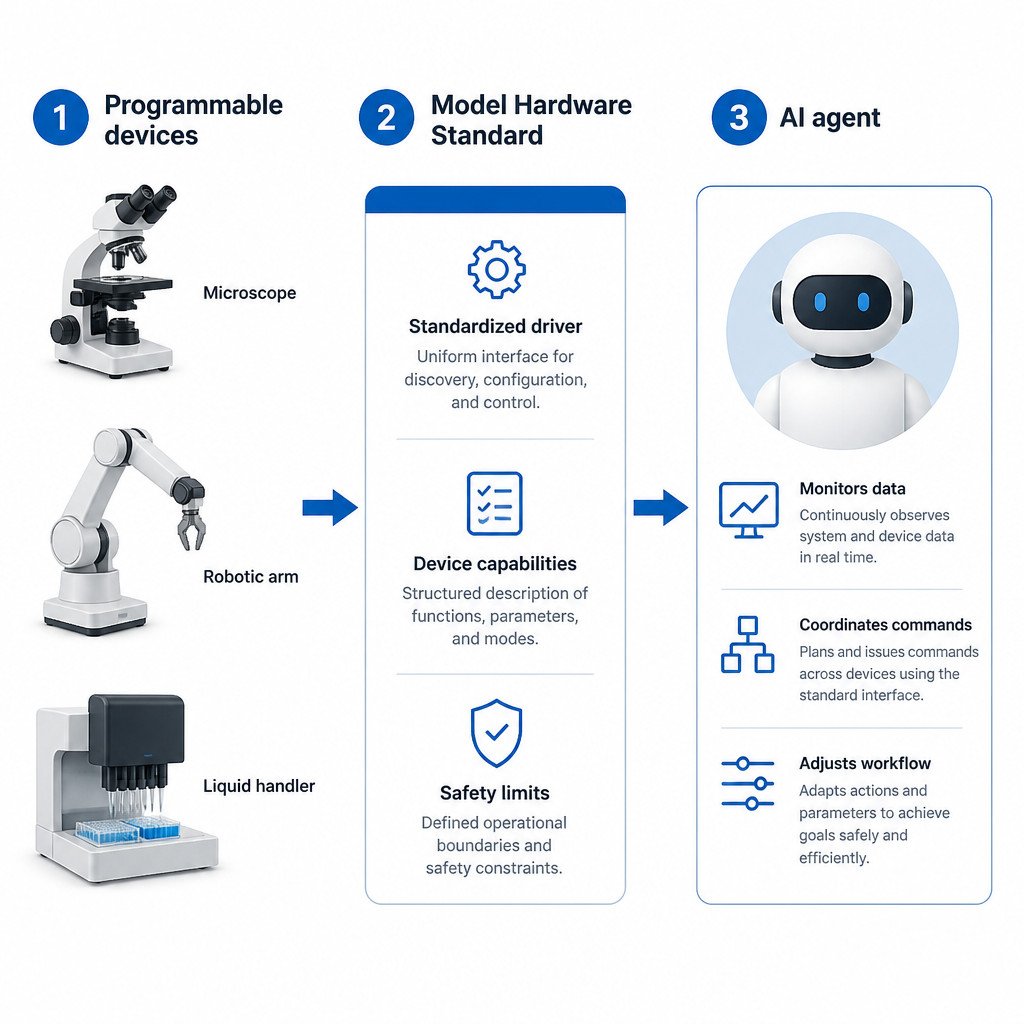
How MHS Works
An MHS driver exposes basic actions such as reading a temperature, retrieving a camera image, moving a robot arm or changing a parameter. It supplies structured information about the device as well. Natural-language notes can explain details an AI agent needs to understand, including the machine’s capabilities and safety constraints.
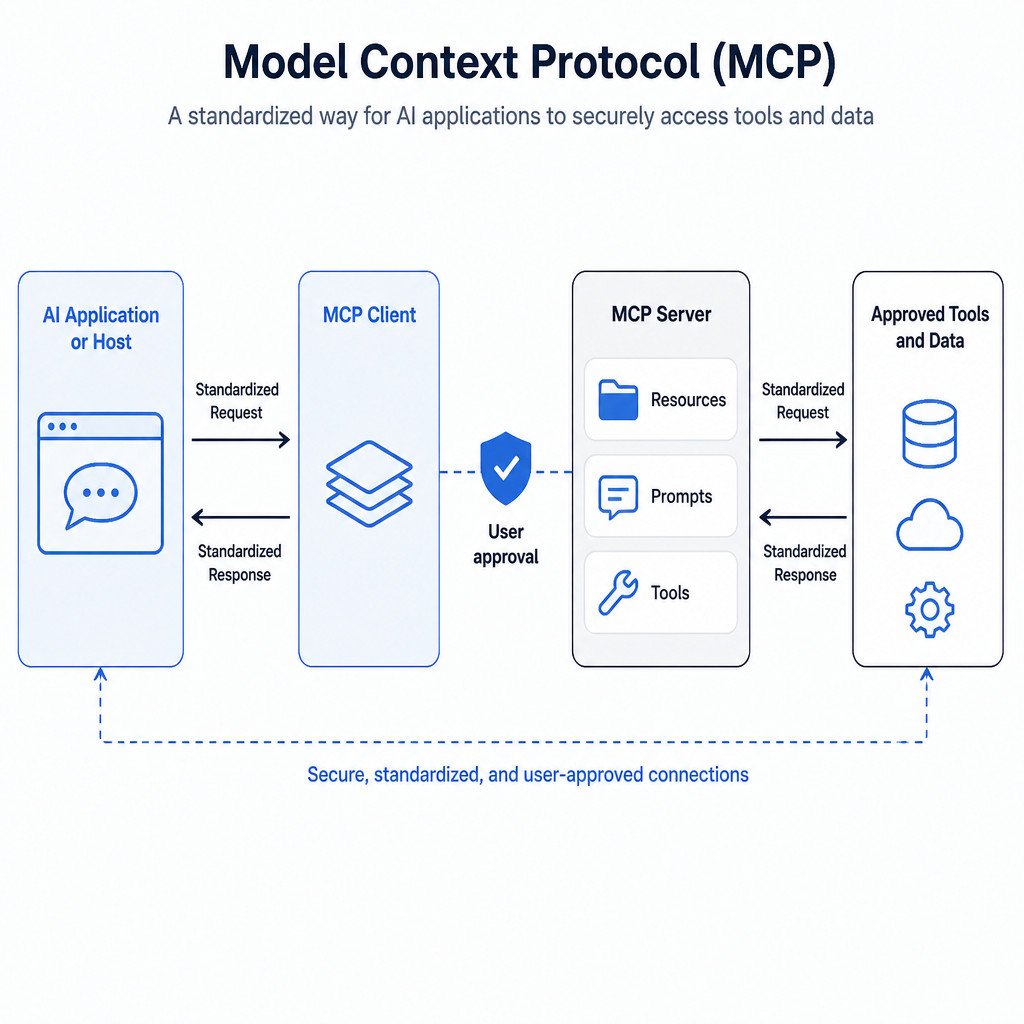
An agent can access MHS through the Model Context Protocol (MCP), a command-line interface or code-based APIs. Rather than building a separate translator for every pair of machines, developers can coordinate devices through the same shared layer. For long or time-sensitive jobs, reusable code can run sequences of driver commands, so the AI model doesn’t have to reason through every movement as it happens. (anthropic.com)
Why MHS Matters
Physical automation is often held back by incompatible equipment and expensive integration work. A common interface could make it easier to build workflows for drug discovery, quality checks, electronics testing, robotics and scientific experiments. Device status may also be easier to monitor through a single control system.
MHS remains an early research preview, rather than a finished universal standard. Anthropic says expert oversight is still necessary because AI models can misunderstand physical conditions. The company is also developing safety evaluations ahead of a planned open-source release. (anthropic.com)
?)