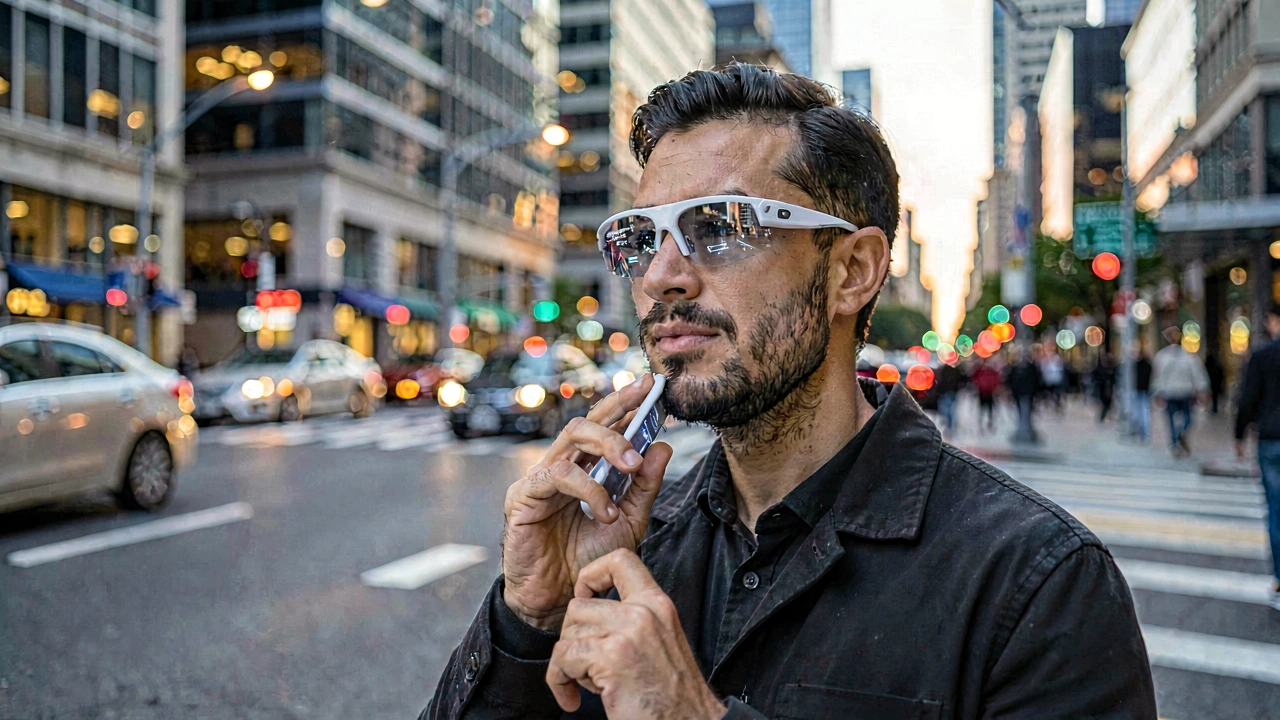
Smart glasses are getting another chance, though the sales pitch has changed. Instead of asking people to give up their phones for a computer worn on the face, the latest AI eyewear is being positioned as a hands-free companion to the smartphone.
The latest push came on July 22, when Samsung presented intelligent eyewear developed with Gentle Monster and Warby Parker at its Galaxy Unpacked event in London. The glasses run on Android XR, use Google’s Gemini for context-aware assistance, include a camera and are powered by Qualcomm’s Snapdragon AR1 Gen 1 platform. Samsung says they’re designed to provide voice-led help with messages, translation and navigation, as well as visual sharing and capturing information from the wearer’s surroundings.
What stands out isn’t simply that another company has announced smart glasses. It’s that the framing is becoming consistent across the industry. AI is moving closer to the moment someone needs it, while the phone remains the main connected device.
The screen is no longer the starting point
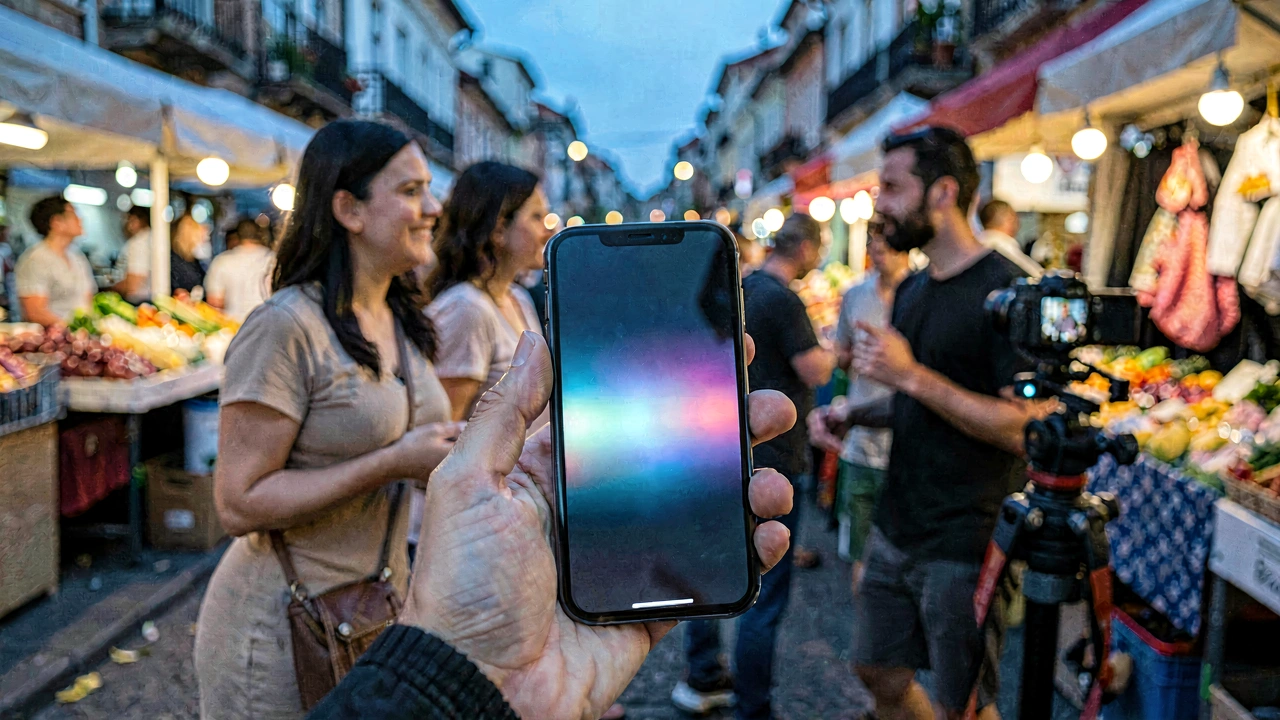
Smartphone assistants usually wait for a tap, an app launch or a typed prompt. Smart glasses start somewhere else: with what the wearer is seeing, hearing and doing. A camera supplies visual context, while microphones and speakers allow for a conversational exchange. The paired phone can take care of connectivity, apps and more demanding processing.
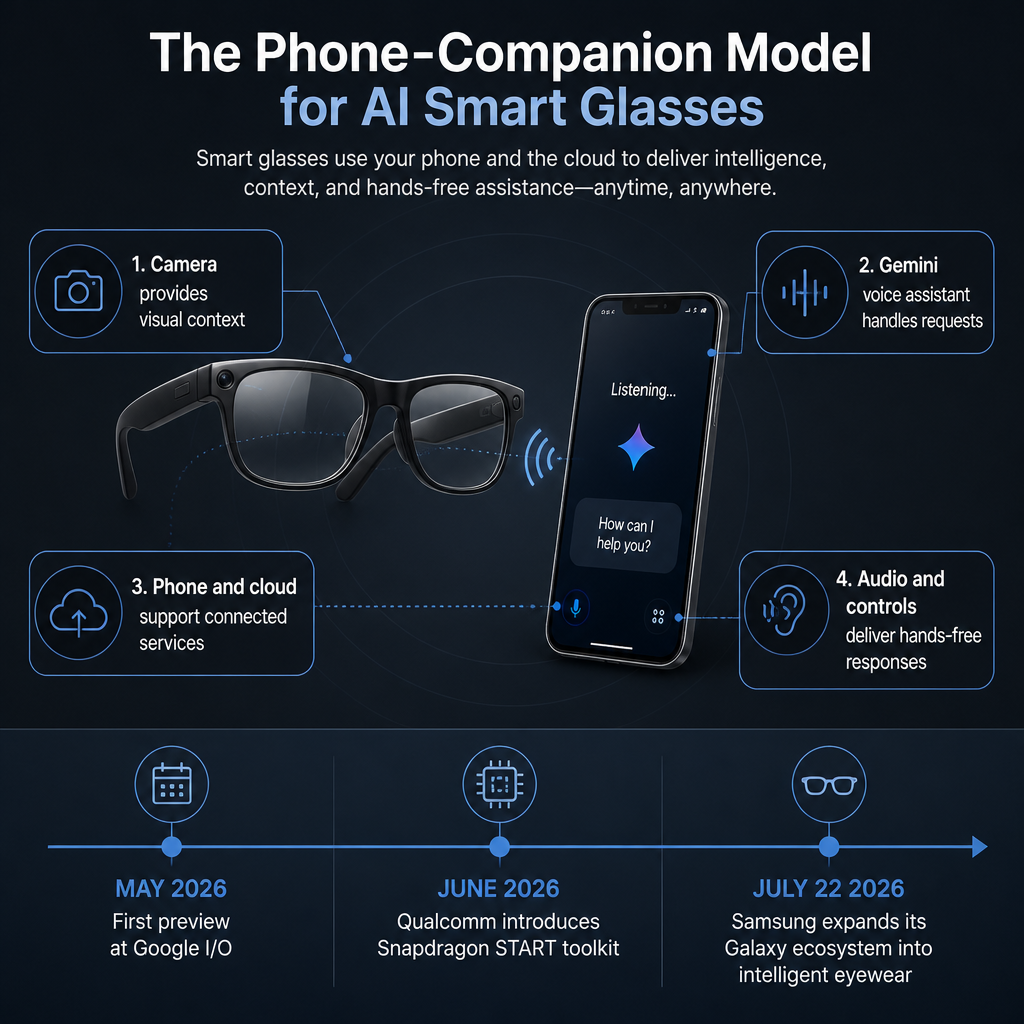
Samsung’s pitch shows how that approach differs from putting a miniature phone screen in front of someone’s eyes. The company describes situations where looking down would be awkward, such as asking for directions while walking, translating a sign or conversation, summarizing a long message, or capturing a whiteboard during a meeting.
The glasses aren’t autonomous. Samsung and Google have previously described the device as a smartphone companion, and many of the advertised features rely on network access, compatible devices or supported apps. That limitation may work in the category’s favor. A companion design can keep the frame thinner and lighter than a standalone headset, while letting buyers continue using the apps and accounts already on their phones.
Fashion is becoming part of the hardware plan
Samsung’s choice of partners is another telling detail. Gentle Monster and Warby Parker are eyewear brands rather than traditional consumer-electronics companies. Their involvement suggests smart-glasses makers have learned a blunt lesson from earlier attempts: even a useful wearable will fail if people don’t want it on their face all day.
Samsung says the new frames are made for everyday use, with a thin, lightweight build and up to nine hours of battery life on a charge. Rather than showing one obviously technical frame, the company presented distinct designs from Gentle Monster and Warby Parker. Style, fit, prescription-lens options and social acceptability are becoming just as important as the AI features.
Why the trend is picking up now
The ecosystem behind these products is also getting easier to build. In June, Qualcomm introduced Snapdragon START, a toolkit designed to help brands bring personal AI devices to market, beginning with smart glasses. The system combines wearable hardware modules with software that can connect to companion phone apps and cloud services.
That could open the market to more than a small group of giant technology companies. If eyewear brands can work with proven components and concentrate on fit, design and useful services, AI glasses may begin appearing in forms that people already recognize.
The next test is straightforward: can these devices provide useful help often enough to justify wearing a camera and microphone on your face? Samsung’s July reveal suggests the industry’s answer isn’t “replace your phone.” For now, it’s “make the phone easier to leave in your pocket.”
For product details and availability caveats, see Samsung’s July 22 announcement.