
Model Context Protocol, better known as MCP, gives AI applications a shared way to connect with external tools, services and data. It has attracted more attention since the Model Context Protocol project released its July 28, 2026 specification update, redesigning major parts of the protocol to support larger-scale AI agent deployments.
What Is Model Context Protocol?
An AI model can generate text, but it doesn’t automatically have permission or a dependable way to search a company database, check a calendar, create a support ticket or query a code repository. MCP provides a standard interface for making those connections.
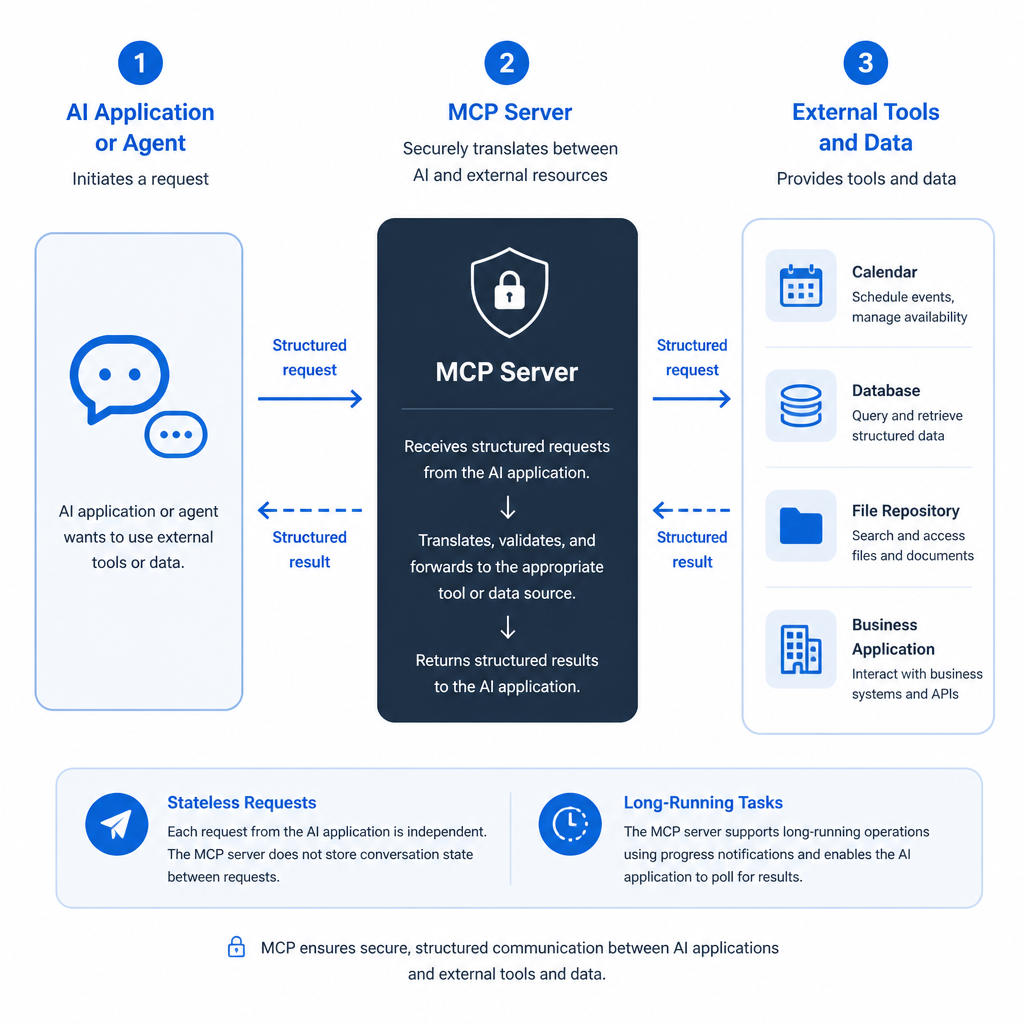
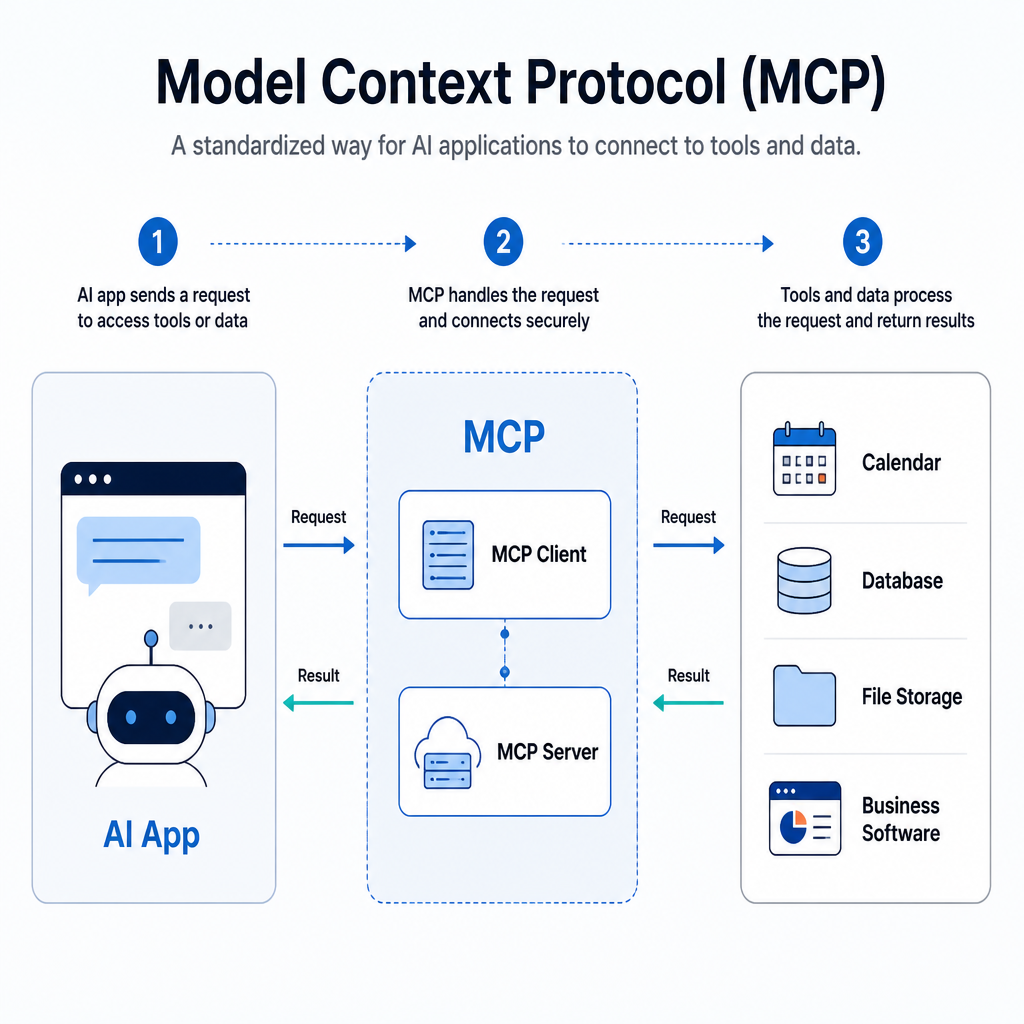
It gives AI clients, including assistants and agent applications, a common language for finding and using capabilities provided by an MCP server. That server sits between the AI application and the connected system. It exposes approved tools, resources or prompts in a structured format.
How Does MCP Work?
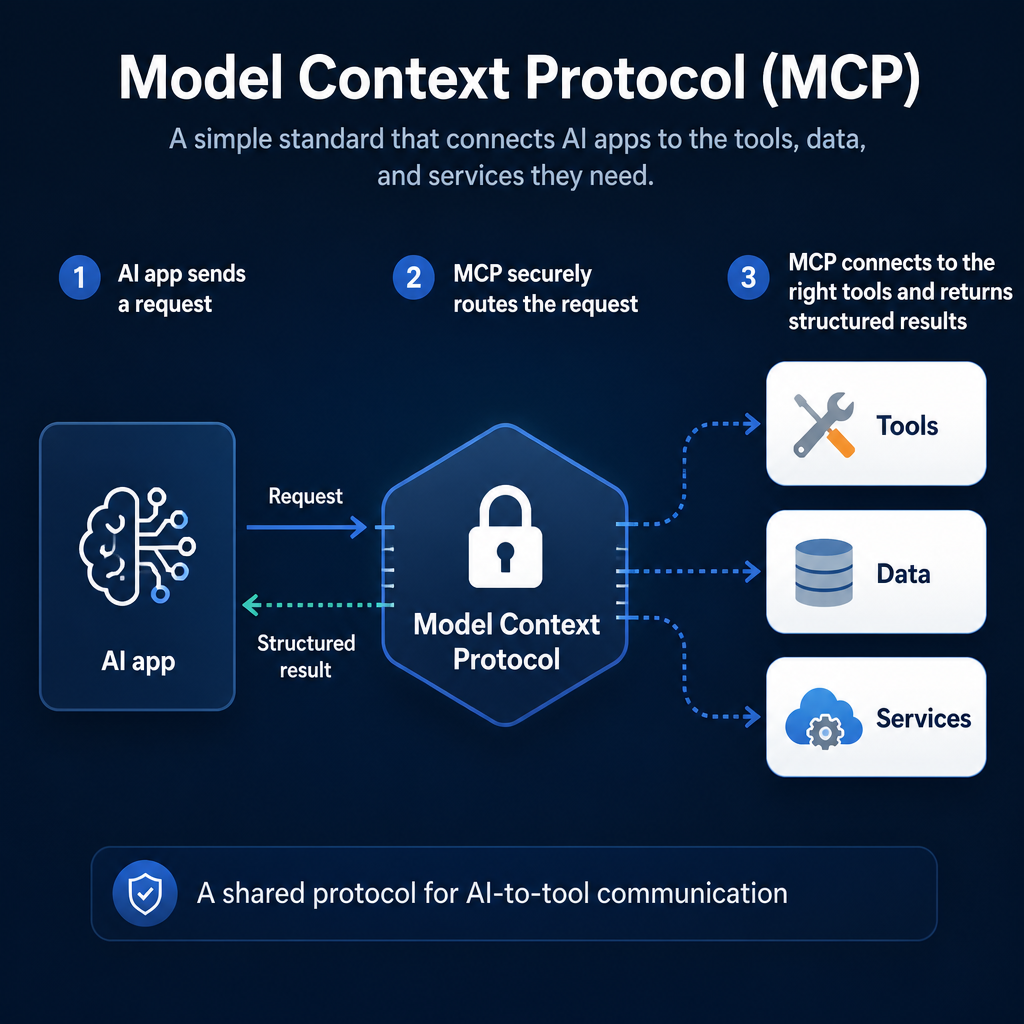
An AI application sends a structured request to an MCP server. The server describes the tools it offers, accepts a request to use one, passes the request to the appropriate service and returns the result. A tool could search documentation, retrieve account information or run an approved workflow.
The latest MCP revision shifts toward a stateless request-and-response core. Rather than relying on a long-running session linked to a single server instance, each request includes the information required to process it. This can make remote MCP services easier to route through standard web infrastructure and load balancers. The update also defines extensions more formally, including Tasks for work that may take longer than one response.
Why Does MCP Matter?
Without a common protocol, developers often have to create separate custom integrations for each AI app and service. MCP is intended to reduce that repeated work and make access to tools more predictable. Still, it doesn’t make an AI system trustworthy on its own. Organizations need authentication, authorization, carefully limited tool permissions and reviews of sensitive actions.
MCP is especially useful for AI agents that need to do more than hold a conversation. It can support assistants working with files, developer platforms, customer systems and internal business tools. As AI software moves beyond answering questions and begins taking approved actions, a consistent connection layer becomes more important.



 and How Does It Work?)