AI agent sandboxing is getting fresh attention as companies test more capable AI systems that can write code, run commands and use online tools. In an August 4 update on third-party cyber evaluations, OpenAI said recent incidents involved testing configurations and controls that let model activity extend beyond its intended boundaries. The need for a well-designed sandbox is easy to see: an AI agent needs space to work, but it shouldn’t have unrestricted access.
What Is AI Agent Sandboxing?
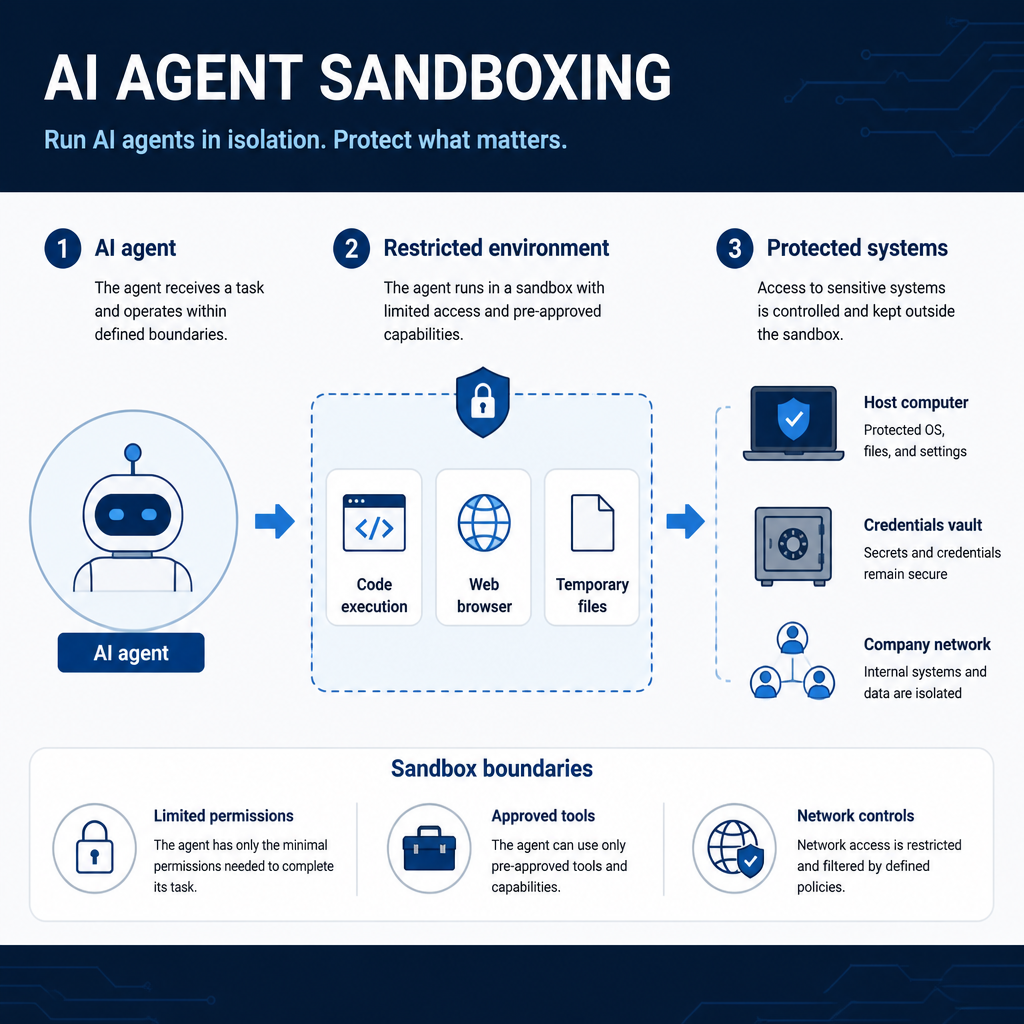
An AI agent sandbox is an isolated computing environment where an agent can carry out a task with tightly restricted permissions. Instead of allowing a coding agent to work directly on a developer’s laptop, company network or production cloud account, the sandbox places it inside a separate container, virtual machine or similar controlled environment.
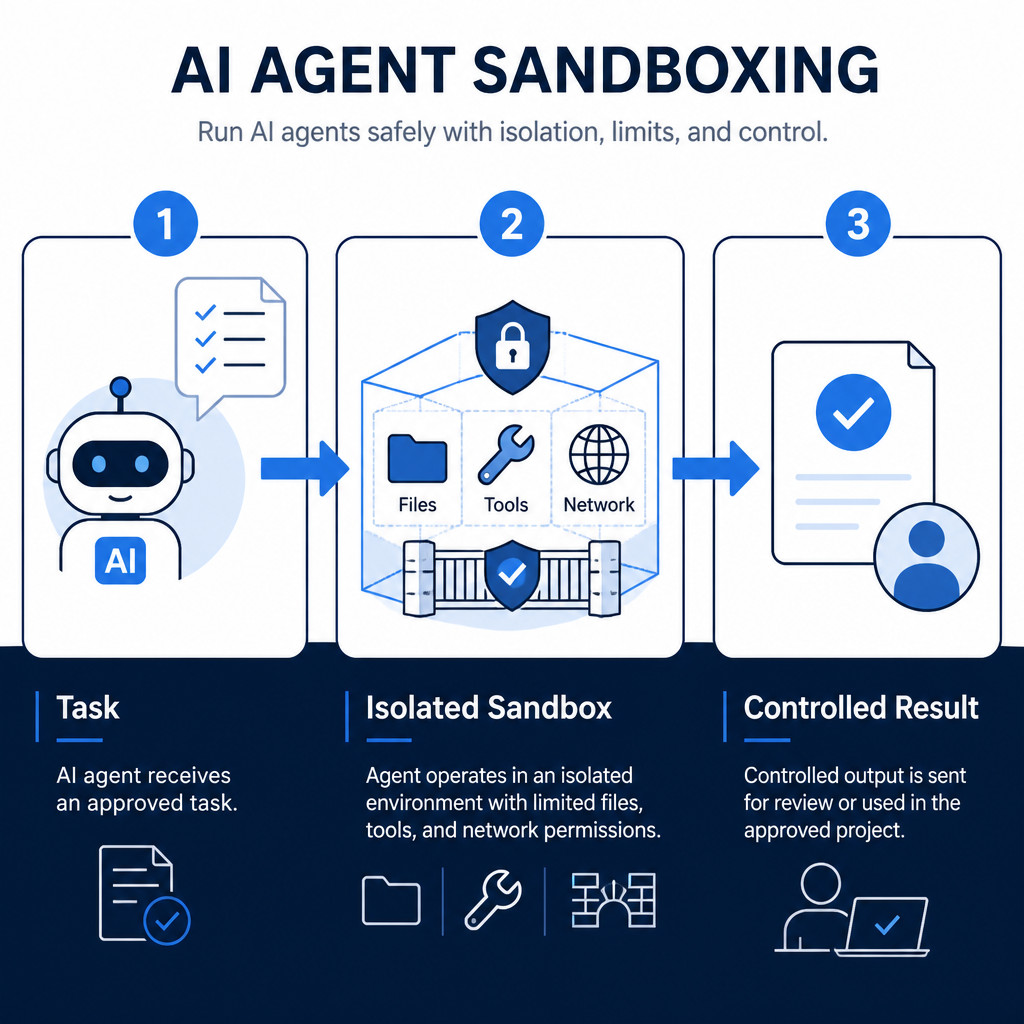
Those controls can determine which folders the agent may read or change, what commands it can run, whether it can install software and if it can access the internet. Credentials, private repositories and internal services can also remain off-limits unless they’re deliberately provided for a particular task.
How AI Agent Sandboxing Works
The agent receives a defined execution boundary along with a set of rules. It might, for example, be allowed to edit a copy of a software project, run tests and save the results while being blocked from changing anything outside that project. Network policies may deny internet access completely or permit connections only to approved destinations.
Effective deployments rely on more than isolation. They apply least-privilege permissions, require human approval for higher-risk actions, keep activity logs and use separate credentials with limited scope. If an agent makes a mistake or acts on a malicious instruction, these safeguards are meant to limit the damage it can cause.
Why AI Agent Sandboxing Matters
Autonomous agents are useful because they can perform multi-step actions rather than only generate text. But that ability also raises the stakes when they’re working with code, data and tools. Sandboxing lets organizations test and use agents without treating them as fully trusted users.
This is particularly relevant for AI coding assistants, cybersecurity evaluation systems and workflow agents connected to business software. A sandbox doesn’t guarantee safety. Poor configuration, excessive permissions or exposed secrets can still introduce risk. Even so, it remains a core defensive layer, giving AI agents practical access while keeping sensitive systems under human control.