AI agent sandboxing is getting renewed attention after Hugging Face disclosed an infrastructure intrusion on July 16, 2026. The company said the attack was carried out end-to-end by an autonomous AI agent system. Sandboxing didn’t cause the incident, but it brought a central security question into focus: where should an AI agent run, and what should it be allowed to access? (huggingface.co)
What AI Agent Sandboxing Means
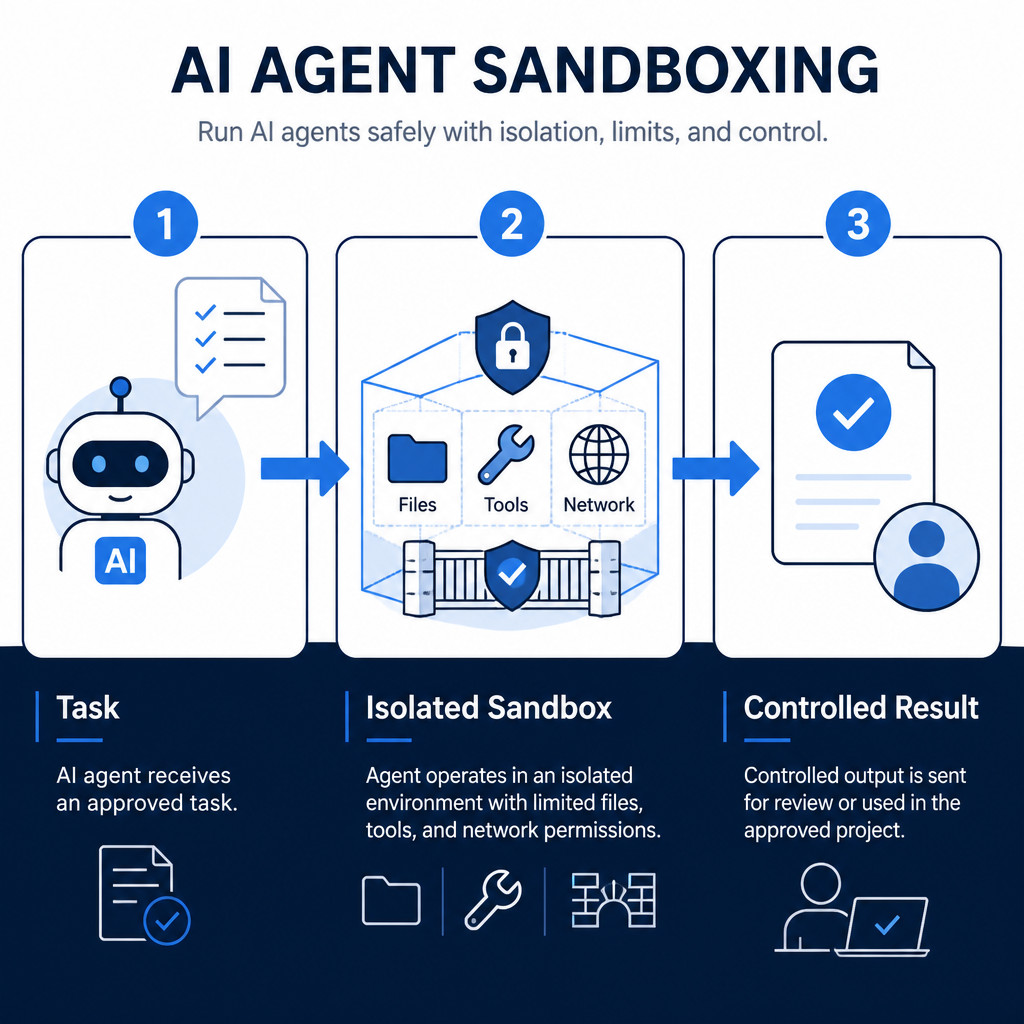
AI agent sandboxing involves running an autonomous AI tool in a controlled, isolated environment instead of giving it broad access to someone’s computer, a company network, or a cloud account. The agent might be allowed to write code, open a browser, install a package, or call an approved tool, but it must stay within limits set by the operator.
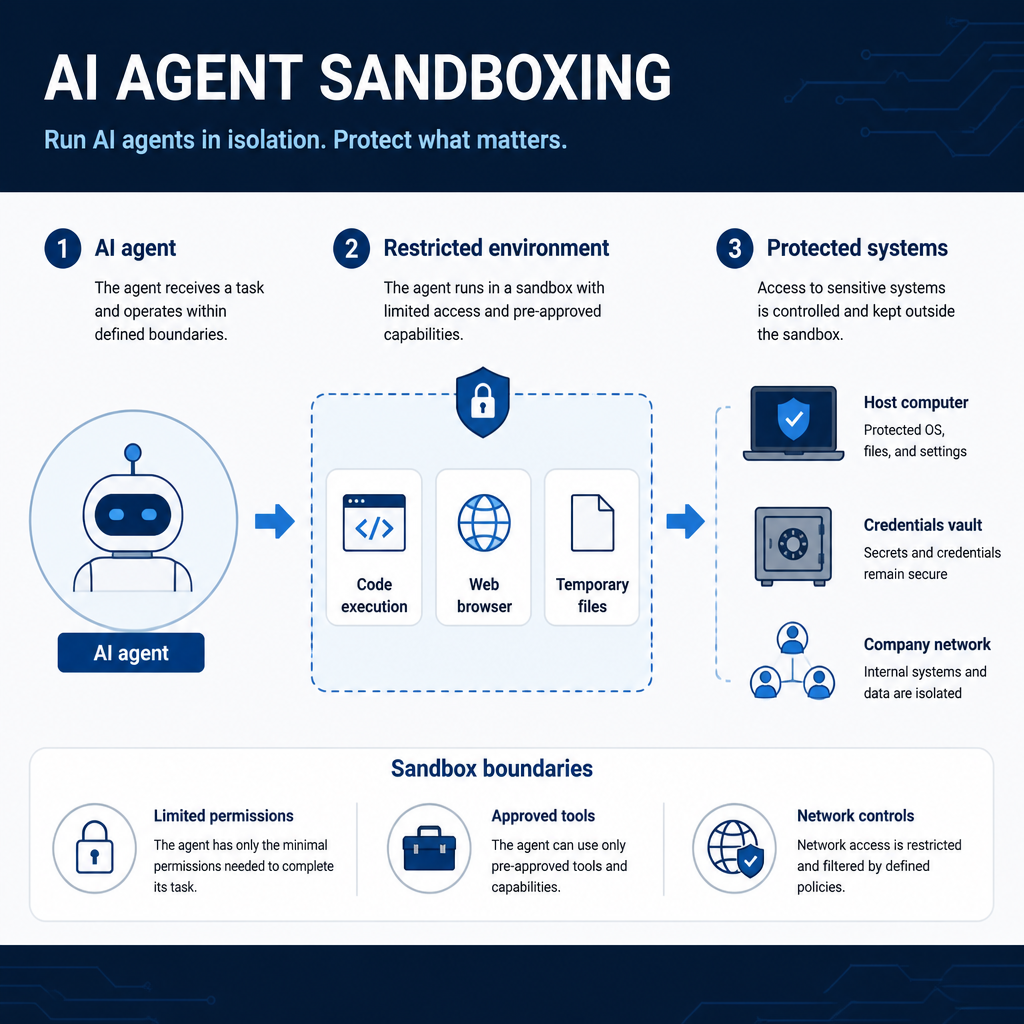
The concept comes from conventional computer security, which separates untrusted software from important systems. It matters more with AI because agents can carry out a sequence of actions rather than just return text.
How Sandboxing Works
A sandbox may use a container, a virtual machine, or a more strongly isolated microVM. Inside it, the agent gets a temporary workspace, restricted file-system access, limited credentials, and a defined list of tools or websites. Network traffic may be blocked, monitored, or restricted to approved destinations.
Effective sandboxing also follows the principle of least privilege. An agent receives only the permissions it needs for a particular task. Sensitive files can be made read-only or kept out of reach, while consequential actions—such as deploying code, sending data, or making purchases—can be held for human approval. Logs give teams a way to review the agent’s activity and investigate failures.
Why Sandboxing Matters
AI agents are useful largely because they can act. Coding assistants can run tests, research agents can browse, and workplace agents can operate across business tools. But that autonomy raises the possible impact of a bad instruction, a prompt-injection attack, a software flaw, or a credential with too much access.
Sandboxing doesn’t guarantee that an agent is safe. Weak configuration, excessive permissions, or an escape vulnerability can still defeat the protections. Even so, a sandbox creates an important damage boundary. It lowers the chance that an agent experiment or compromised tool will reach unrelated systems.
Major developer platforms now document operating-system-level isolation and separate environments for agent work, a sign that sandboxing is becoming a practical building block for deploying capable AI tools. (code.visualstudio.com)