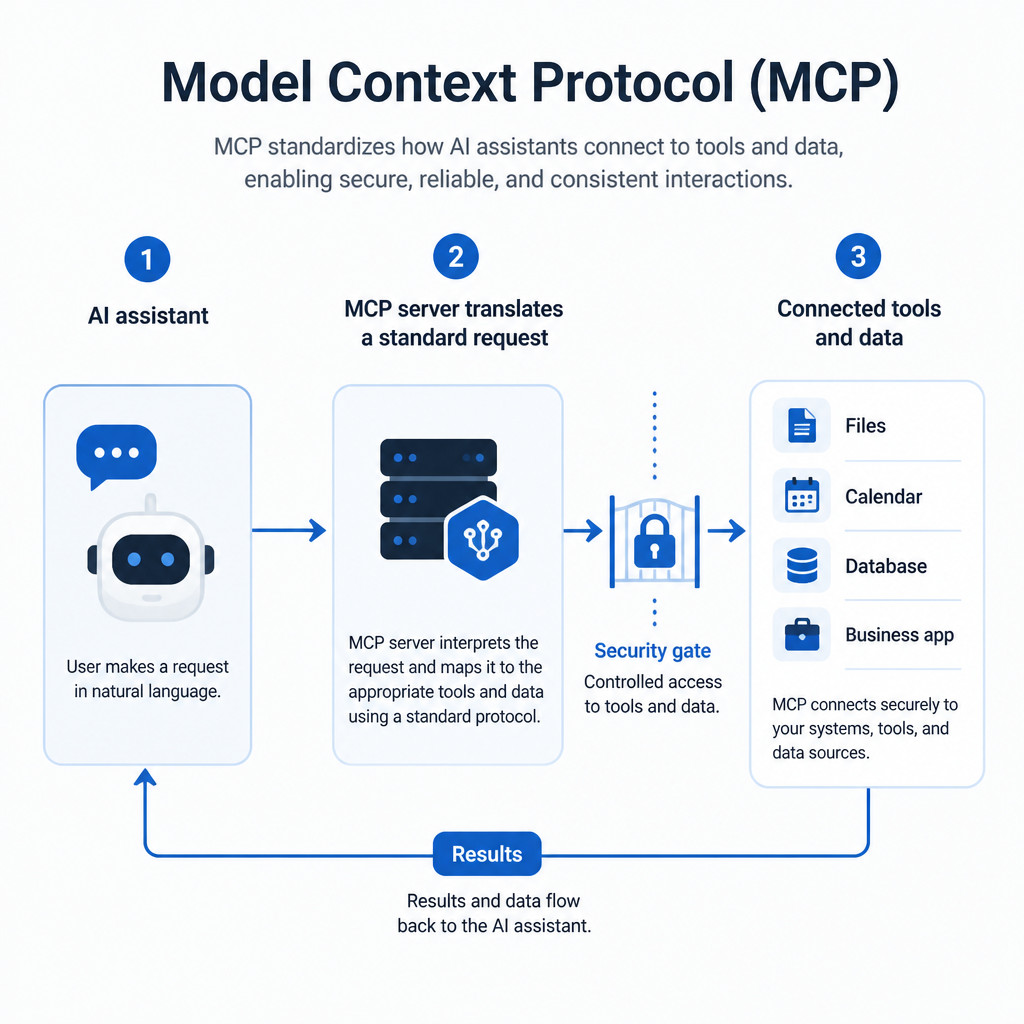
AI assistants are becoming places where people get work done, rather than tools they use only to ask questions. That shift creates a practical problem. A plain-text response isn’t always enough when someone needs to review a document, change a booking, explore a map, or approve an action. MCP Apps address this by putting interactive tools directly inside an AI conversation.
The concept gained more relevance after the July 28, 2026 update to the Model Context Protocol (MCP). That update formalized a versioned framework for extensions, including MCP Apps. MCP is an open protocol that helps AI systems connect to external tools and data.
What MCP Apps Are
MCP Apps are interactive user interfaces delivered by an MCP server and displayed within a compatible AI chat host. Instead of providing only text or raw data, a tool can present a dashboard, form, chart, design canvas, map, or multi-step workflow inside the conversation.
They’re an optional extension to MCP, rather than a replacement for the core protocol. Availability depends on whether the AI client or host application supports them.
How MCP Apps Work
An MCP tool declares that it has an associated user-interface resource, usually an HTML-based interface. When an AI model chooses to use the tool, the chat host retrieves that interface from the MCP server and renders it inline, typically inside a sandboxed frame.
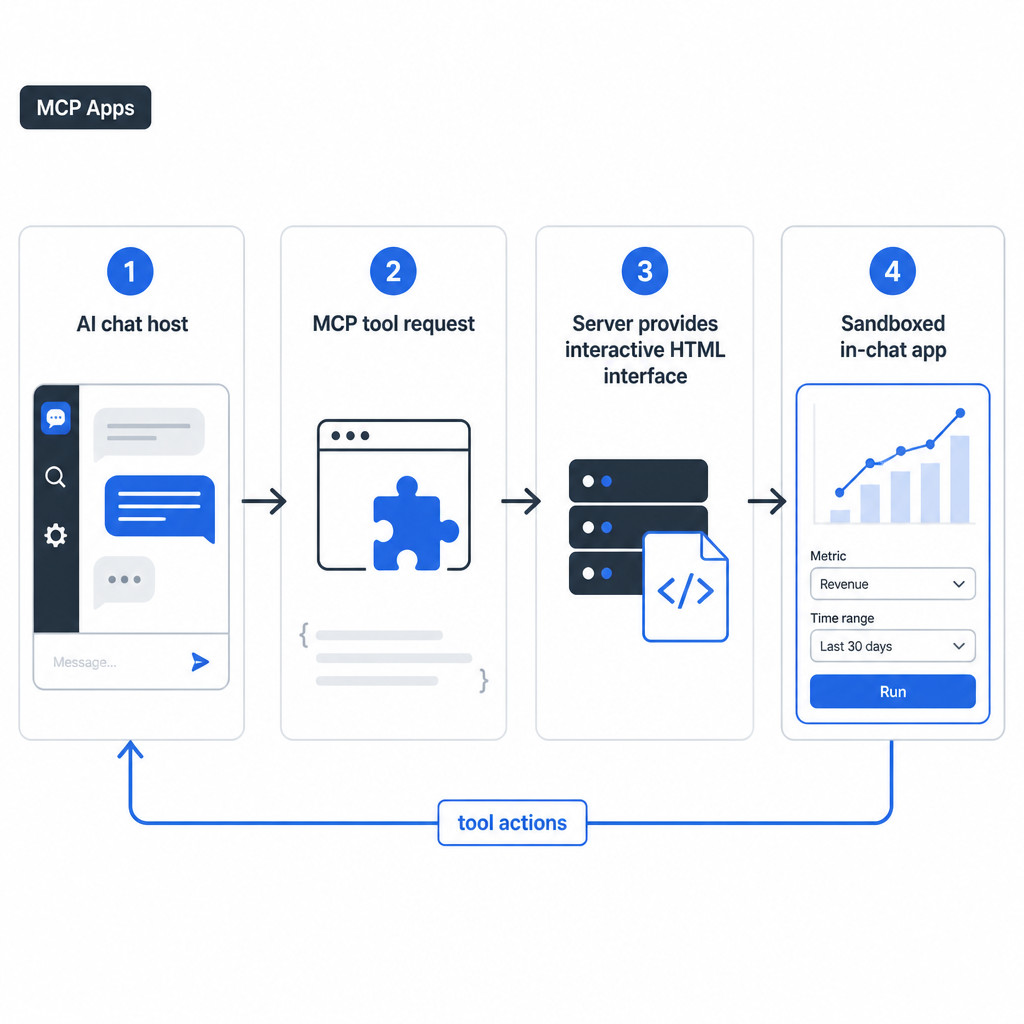
The interface can receive the tool’s results, then send follow-up actions through the host. A travel tool, for instance, could display choices in a form instead of producing a long list of options. The user can select one without leaving the chat, and the AI keeps the surrounding conversational context.
Why MCP Apps Matter
MCP Apps make AI tool use easier to see and act on. Users can inspect information, change inputs, and confirm consequential actions through an interface designed for the task, rather than depending entirely on an assistant’s written summary.
For developers, the extension provides a shared pattern for creating these in-chat experiences across compatible hosts. As AI agents handle more multi-step tasks, interactive interfaces can give people a useful checkpoint between an agent’s recommendation and a real-world action.