
Model Context Protocol, better known as MCP, is an open protocol that connects an AI assistant with external tools and data. More people may be hearing about it following the July 28, 2026 MCP specification update, which made the protocol easier to operate at scale and strengthened its authorization approach.
What Is Model Context Protocol?
An AI model can write, summarize, and reason using information provided in a chat. It doesn’t automatically have access to company files, calendars, databases, or development tools, though. MCP supplies a common set of rules for creating those connections.
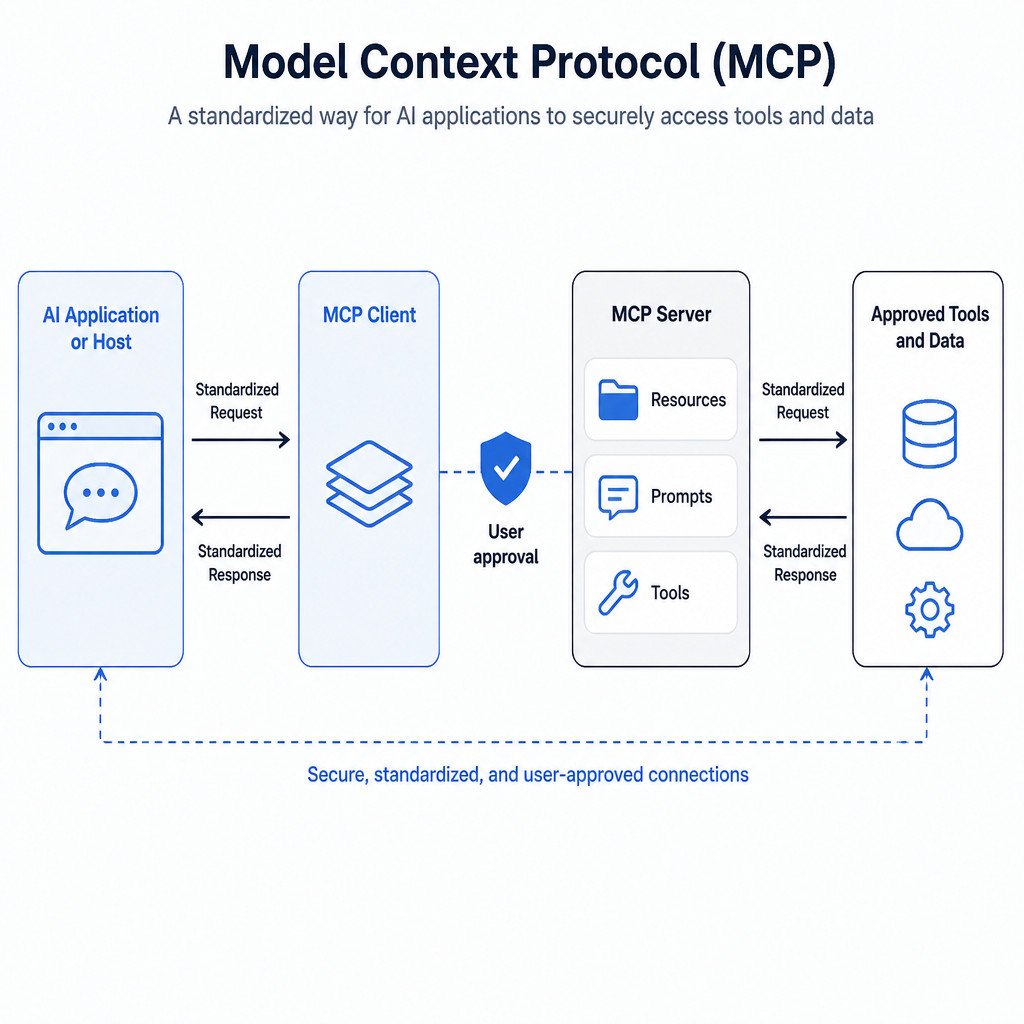
Think of MCP as a shared connector language. Rather than building a custom integration between every AI app and every service, a developer can create an MCP server that provides approved capabilities. Those might include searching documents, checking inventory, creating a support ticket, or reading a calendar.
How MCP Works
An MCP client, such as an AI assistant or coding tool, sends a structured request to an MCP server. The server lists the tools, resources, or prompts it provides and manages the connection to the underlying system. When the assistant needs information or wants to perform an action, it can call an available tool with specific arguments. The server then returns the result for the assistant to use.
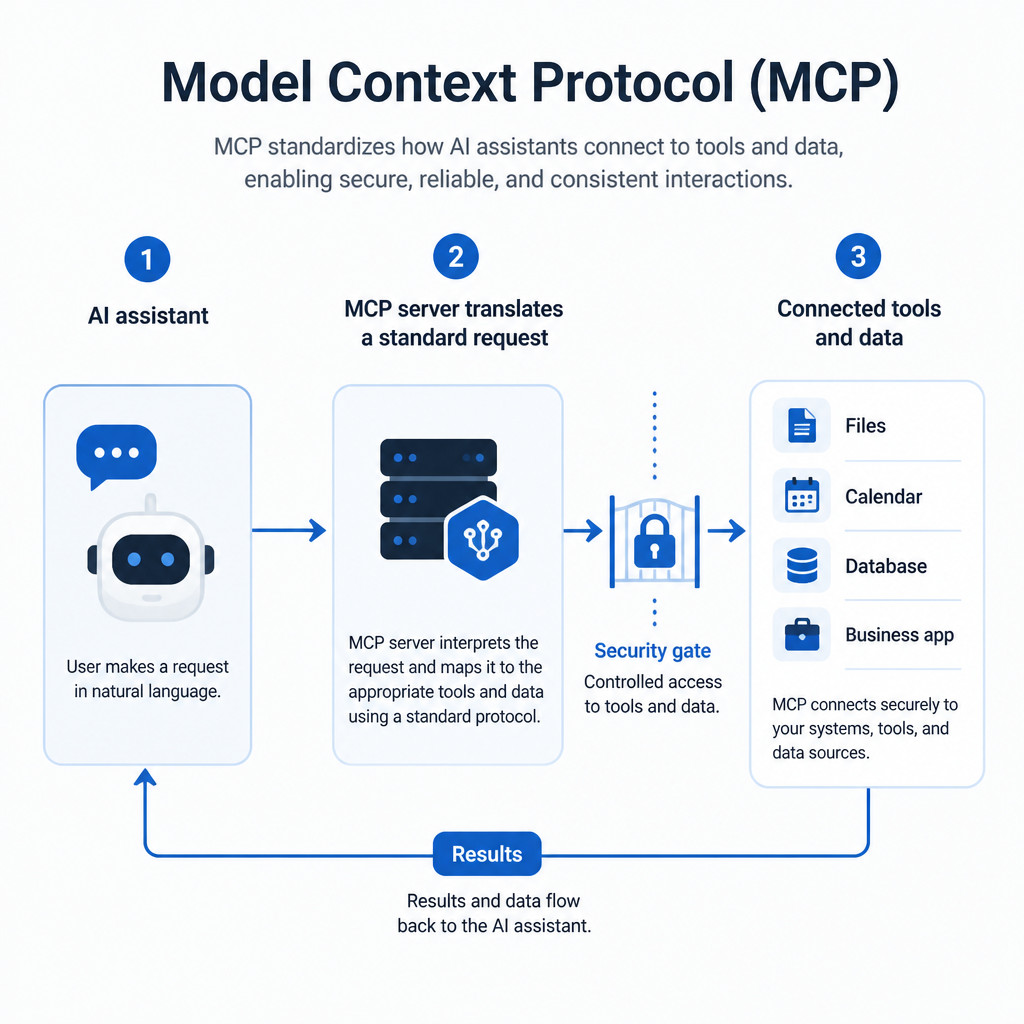
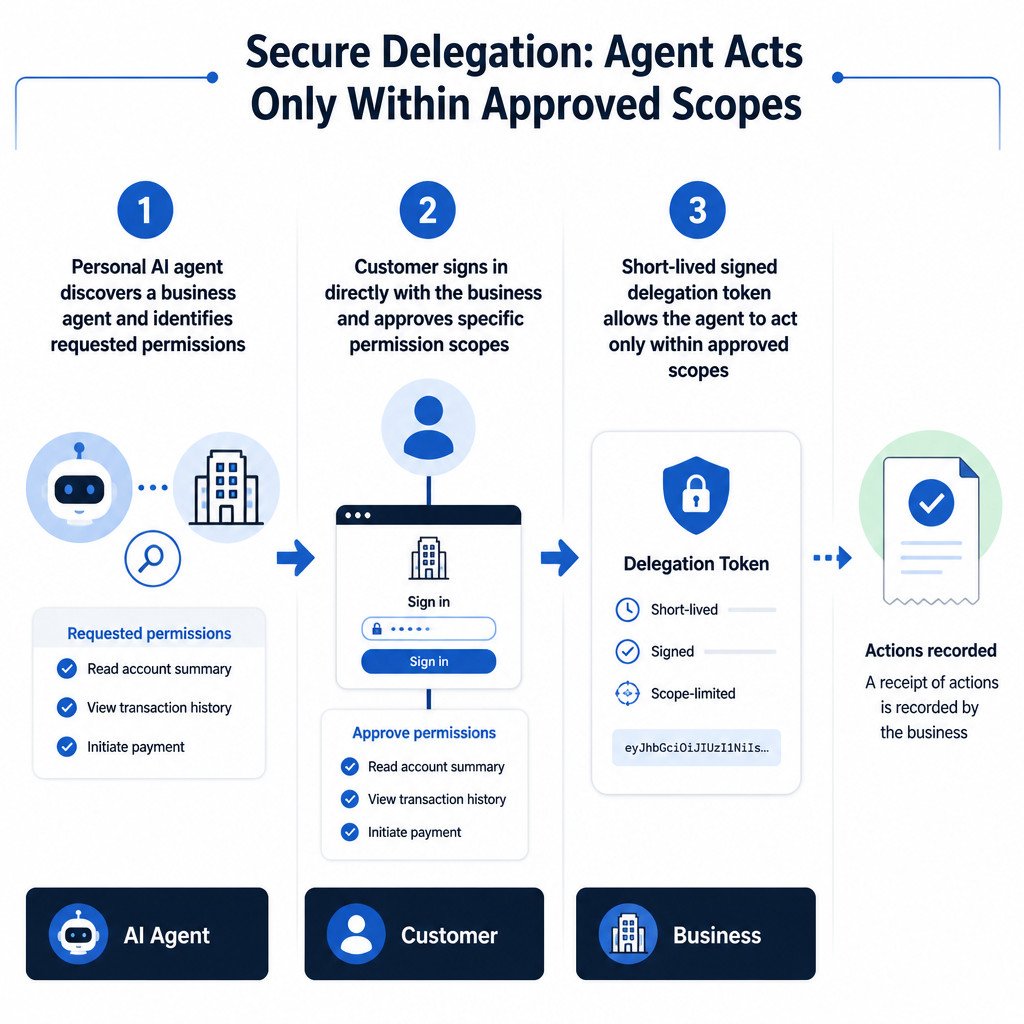
The assistant doesn’t receive unrestricted access by default. In a well-designed MCP setup, available actions are clearly defined, while authentication and authorization determine who can use them.
Why MCP Matters
MCP can make AI assistants more useful by allowing them to work with current, relevant information instead of relying only on text already included in a conversation. For organizations, it offers a more consistent way to connect AI products with internal systems while accounting for permissions and auditing.
The latest specification shifts MCP toward a stateless request-and-response design. Individual requests can therefore be handled by different server instances, which may simplify load balancing and improve reliability in larger deployments. The update also introduces clearer extension mechanisms and further hardens authorization.
Where MCP Is Used
MCP appears in AI coding assistants, enterprise search, customer support workflows, data analysis, and agent-style software that can carry out approved actions. It doesn’t make an AI system inherently accurate or safe. Instead, it provides the plumbing developers need to connect AI with real tools in a more standardized way.

?)