The surprising true story of India’s computing pioneer and the machine that quietly changed a nation’s future.
Summary: India’s first computer, the HEC-2M, arrived at the Indian Statistical Institute in Kolkata in 1956. But the man who made it happen was Prasanta Chandra Mahalanobis, a visionary statistician who saw computing as India’s path to modern science. What followed was a homegrown revolution most textbooks never mention.
I stumbled onto this story while researching Indian science history late one night, and I genuinely could not believe how little coverage it gets. Here was a country, fresh out of colonial rule, quietly assembling one of Asia’s first working computers while most of the world assumed computing was strictly a Western pursuit.
The story deserves more than a footnote. Let’s walk through it properly.
The Short Answer Most People Get Wrong
Search “who invented the first computer in India” and you’ll find a mix of answers, some pointing to the HEC-2M at the Indian Statistical Institute (ISI) in Kolkata, others mentioning TIFRAC at the Tata Institute of Fundamental Research in Mumbai. A few articles throw out names without much context.
Here’s the cleaner version of the truth.
India’s first computer was not invented inside India. The HEC-2M was designed and built by British Tabulating Machine Company (BTM) in the UK and imported to ISI Kolkata in 1956. It was the first digital computer to operate on Indian soil.
The first computer designed and built in India was TIFRAC (Tata Institute of Fundamental Research Automatic Calculator), completed in 1960 at TIFR in Mumbai. It was India’s first indigenously developed computer.
Two different milestones. Both matter.
The Man Behind India’s First Computer: P.C. Mahalanobis
If one person deserves the title of India’s computing pioneer, it’s Prasanta Chandra Mahalanobis, founder of the Indian Statistical Institute.
Mahalanobis was already internationally recognized for the Mahalanobis Distance, a statistical measure still used in data science today. But in the early 1950s, he recognized something most Indian scientists hadn’t yet: large-scale data analysis needed machines, not just mathematicians.
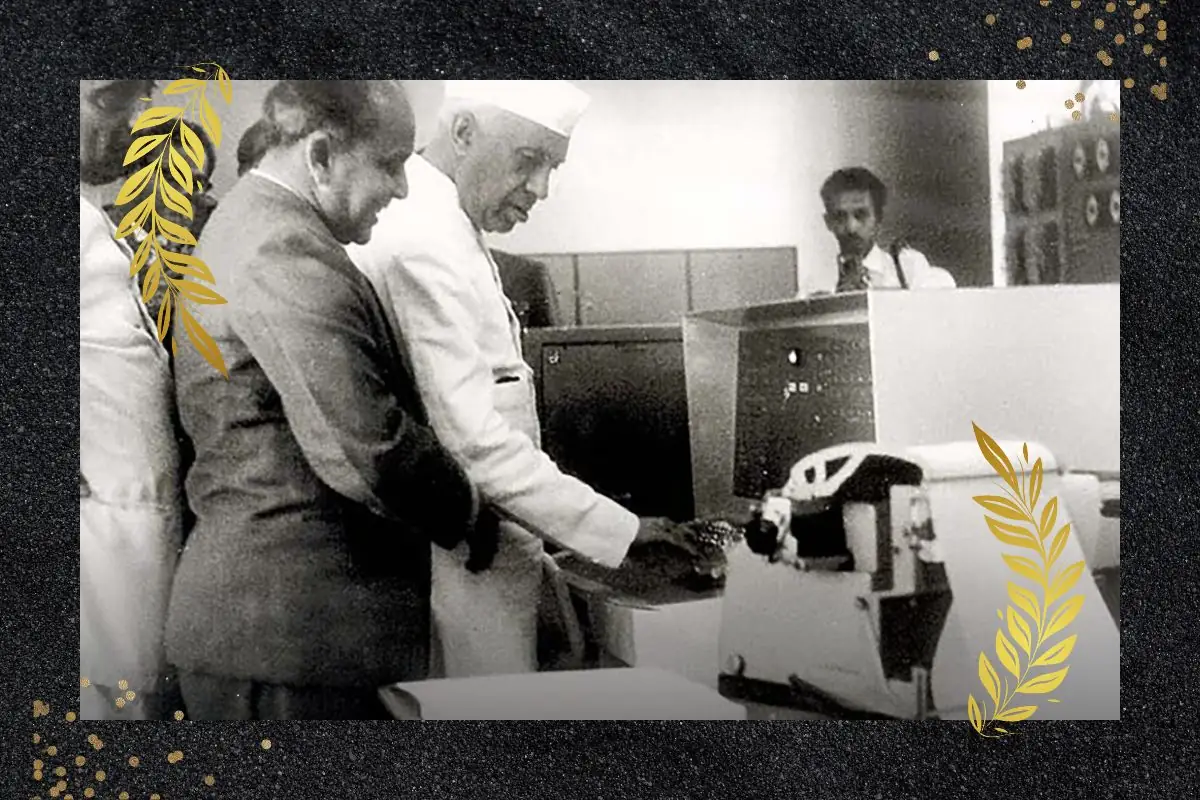
He pushed for acquiring a computer at a time when the technology was barely a decade old globally and practically unknown in Asia. Through institutional backing and government support under Prime Minister Jawaharlal Nehru, ISI secured the HEC-2M from BTM in the UK.
When it arrived in Kolkata in 1956, India entered the computing age.
What strikes me about Mahalanobis is that he wasn’t a computer scientist by training. He was a statistician with the foresight to see what computation could do for a developing nation. That combination of vision and institutional drive is exactly what made the difference.
The HEC-2M: India’s First Working Computer
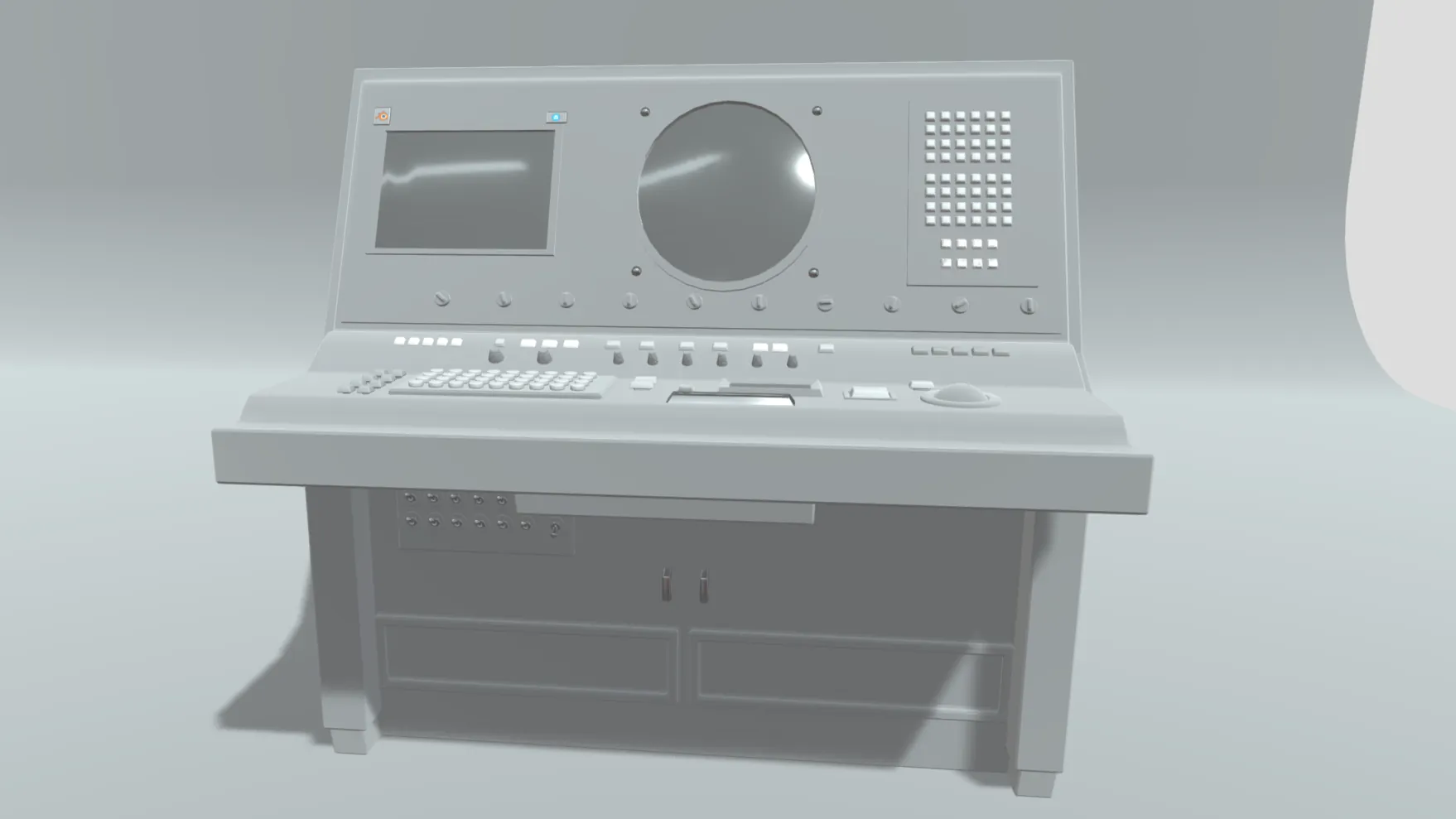
The Hollerith Electronic Computer Model 2M was not a glamorous machine by any modern standard. It filled an entire room, required careful temperature control, and processed data using vacuum tubes that failed with frustrating regularity.
But it worked. And in 1956, that was everything.
ISI used the HEC-2M primarily for statistical calculations supporting India’s Second Five Year Plan. Mahalanobis was deeply involved in national economic planning at the time, and the computer gave his team a processing capacity that would have taken dozens of human calculators weeks to match.
The machine ran successfully for several years before being retired as more capable systems became available.
Key facts about the HEC-2M at ISI Kolkata:
- Arrived in India in 1956, making it the first digital computer on Indian soil
- Built by British Tabulating Machine Company in the UK
- Operated at the Indian Statistical Institute, Kolkata
- Used for statistical and economic planning calculations
- Ran on vacuum tube technology, standard for that era
TIFRAC: The First Computer Built in India
While ISI was operating the HEC-2M, a parallel effort was underway in Mumbai.
The Tata Institute of Fundamental Research began designing its own computer in the late 1950s. The team, led by R. Narasimhan, one of India’s earliest computer scientists, spent years building TIFRAC from scratch using locally sourced components wherever possible.
TIFRAC became operational in 1960 and was formally inaugurated by Prime Minister Nehru in 1962. It remained in service until 1964.
R. Narasimhan’s contribution is often underappreciated outside academic circles. He didn’t just oversee the construction of a machine. He built the intellectual foundation for computer science in India, later contributing to early programming languages and computing education at TIFR.
TIFRAC represented something the HEC-2M couldn’t: proof that Indian scientists could design, build, and operate complex computing systems entirely on their own terms.
Why This History Gets Muddled
Part of the confusion around “who invented the first computer in India” comes from how the question gets framed.
“First computer in India” and “first computer built in India” are different questions with different answers. Some sources conflate the two. Others focus narrowly on one institution without acknowledging the other. A few older articles contain outright errors that spread through copy-paste journalism.
There’s also a tendency to center computing history almost entirely on American and British contributions, which means Indian milestones get compressed into brief mentions rather than full stories.
Mahalanobis, Narasimhan, and the teams at ISI and TIFR built something genuinely significant. They did it during a period when India had limited resources, limited infrastructure, and no domestic computing industry to draw from. That context matters.
What Came Next: India’s Computing Trajectory
The work at ISI and TIFR didn’t exist in isolation. It seeded the next generation of Indian computer scientists and institutions.
1961 saw the establishment of India’s first university computer center at the University of Calcutta. By the 1970s, the Department of Electronics had launched programs to develop India’s domestic computing capacity. The 1980s brought software export policy changes that positioned India as a global IT services hub, a shift that eventually produced companies like Infosys, Wipro, and TCS.
None of that trajectory is disconnected from what Mahalanobis pushed for in 1956. The roots run deep.
Today, India ranks among the world’s leading producers of software engineers and IT professionals. The country’s digital infrastructure spans rural broadband initiatives, UPI payment networks processing billions of transactions monthly, and a growing domestic semiconductor ambition.
It started with a room-sized machine in Kolkata and a statistician who believed computation was worth fighting for.
A Note on Other Names You Might Encounter
Some searches surface Rangaswamy Narasimhan (same R. Narasimhan mentioned above) as “the inventor of India’s first computer,” which is accurate in the specific context of TIFRAC. Others mention Vijay Bhatkar, who led the development of the PARAM supercomputer in 1991, a different and later milestone. PARAM was India’s first supercomputer, not India’s first computer.
These are all real achievements. They just answer different versions of the question.
Key Facts
- The HEC-2M, installed at ISI Kolkata in 1956, was the first digital computer to operate on Indian soil
- P.C. Mahalanobis, founder of the Indian Statistical Institute, drove the acquisition of India’s first computer
- TIFRAC, completed in 1960 at TIFR Mumbai, was the first computer designed and built entirely in India
- R. Narasimhan led the TIFRAC development team and later shaped computer science education in India
- Prime Minister Nehru inaugurated TIFRAC in 1962, signaling national commitment to computing
- India’s first university computer center opened at the University of Calcutta in 1961
- The PARAM supercomputer, developed in 1991 by Vijay Bhatkar, was India’s first supercomputer, a separate milestone
- Mahalanobis Distance, developed by P.C. Mahalanobis, remains a foundational concept in modern data science
- India’s early investment in computing helped lay the groundwork for its $250 billion IT services industry today