The latest GTA 6 trend isn’t another leak. Instead, criminals are using the game’s enormous hype as a way to deliver malware.
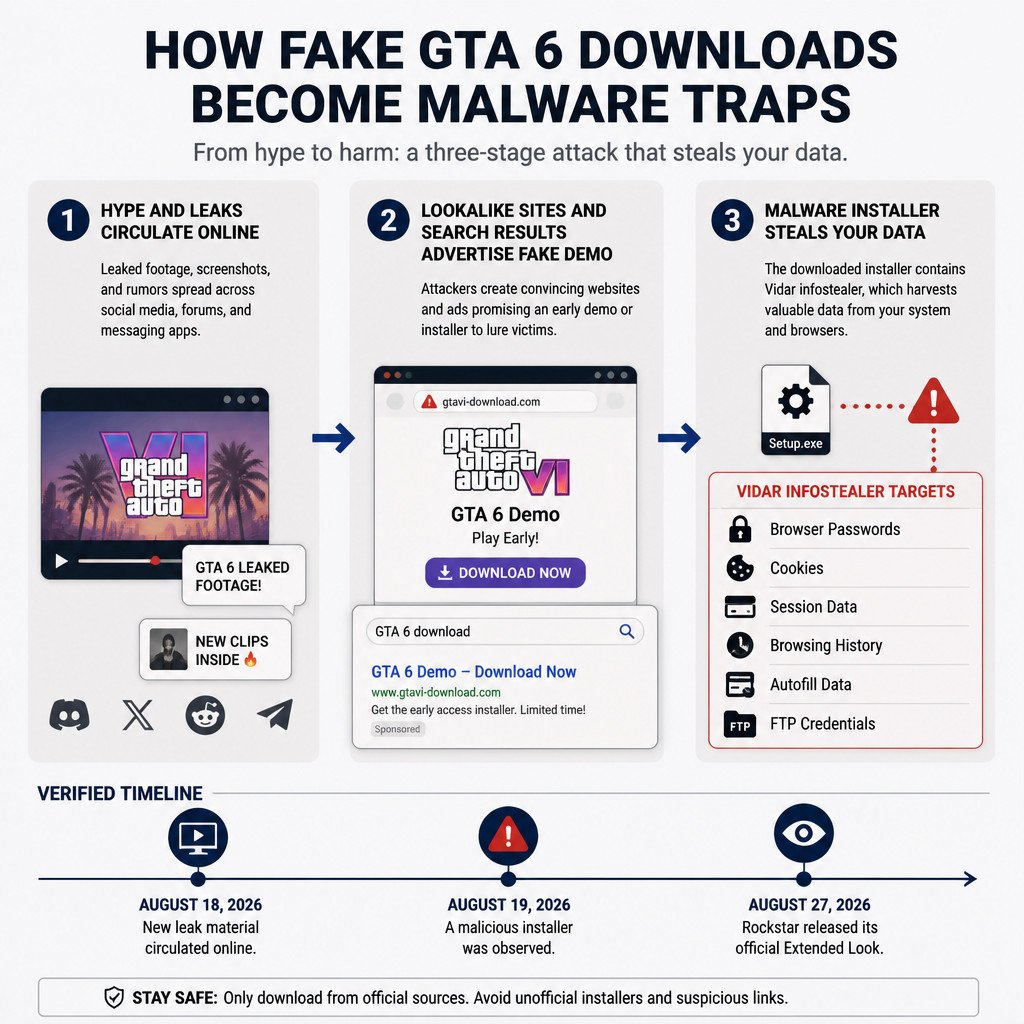
After new footage and map material linked to Grand Theft Auto VI began circulating on August 18, 2026, cybersecurity researchers discovered fake websites advertising a playable demo or leaked build. The timing worked in the scammers’ favor. Fans were already hunting for unofficial footage, and Rockstar was preparing to release its official Extended Look on August 27.
According to Malwarebytes, a malicious file named gta6_installer.exe was first detected on August 19. It wasn’t a game installer. The file belonged to the Vidar infostealer family, a type of malware built to collect information stored in web browsers.
Why the scam seems convincing
The fake sites copied Rockstar-style artwork and displayed buttons labeled “Play Now” or “Official Download.” Some even appeared next to legitimate GTA 6 coverage in search results, which made them difficult to spot at a glance.
This tactic is known as SEO poisoning. Criminals build pages around popular search terms, then try to position them where curious users are likely to click. A delayed and highly anticipated game makes ideal bait because demand for “leaks,” demos, and early access far exceeds the number of legitimate downloads available.
The current wave also benefited from a messy information environment. Some unauthorized GTA 6 material was circulating, while other clips were reportedly recycled or created with AI. With all of that mixed together, users may struggle to tell a genuine leak from a fake download page designed to steal their data.
What the malware can steal
Malwarebytes said the sample it analyzed searched for saved passwords, session cookies, browsing history, autofill information, and FTP credentials. Researchers identified 19 targeted browsers, including Chrome, Edge, Firefox, Brave, Opera, and Vivaldi.
Session cookies are especially valuable to attackers. In some cases, they can provide access to an account as though the victim were already logged in, even if multi-factor authentication is enabled. The malware may leave few visible signs, too. Researchers found no obvious startup mechanism or window shown to the user.
The wider technology trend
GTA 6 may be the immediate trigger, but the pattern goes well beyond one game. Cybercriminals are turning online anticipation into an attack surface. Similar scams can target unreleased phones, game updates, AI tools, streaming events, and viral product rumors.
Rockstar’s official channels say GTA 6 will launch on PlayStation 5 and Xbox Series X|S on November 19, 2026. The company hasn’t announced a downloadable PC demo. The safest rule is straightforward: treat any “free leaked build,” early-access installer, or unofficial demo as hostile unless it comes directly from an official publisher or recognized store.
As hype becomes more valuable, the first security check around a viral technology story may no longer be whether the news itself is real. It may be whether the download was created to steal something from the person searching for it.