Consumer AI is taking on a more consequential role by handling the small, repetitive jobs scattered across calendars, inboxes, notes and search tabs. The latest sign came on July 24, when Meta announced that task-oriented features would begin rolling out for Meta AI in select markets through its app and meta.ai.
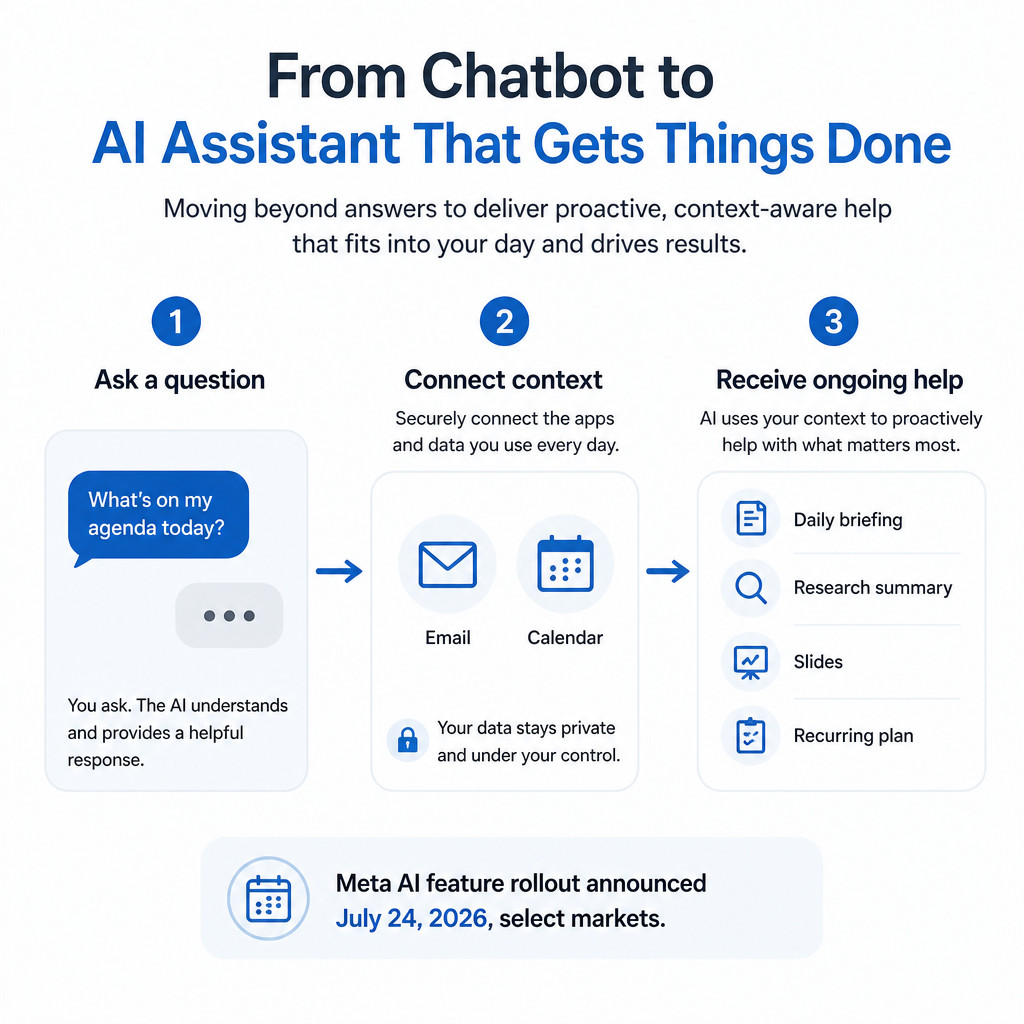
What makes the update notable isn’t the arrival of yet another chatbot. It changes how people are expected to interact with one. Rather than waiting for a new prompt each time, Meta AI can make plans, connect to email and calendar apps, prepare research, create slides and provide recurring updates, including a daily briefing or weekly meal plan.
Meta AI begins following through
In its July 24 announcement, Meta said the new experience is powered by Muse Spark 1.1 and can continue working after a user gives the initial instruction. Someone planning a birthday dinner, for instance, could ask the assistant to check availability, find options and suggest a plan. Meta also says users can guide a report, presentation or plan as it’s being created.
That marks a clear change. Generative AI first caught on as a tool for drafting, explaining and brainstorming. Now, the next product contest centers on persistence. Can an assistant keep track of an assignment, work with the context a person has authorized and come back at the right time with something useful?
Why task-taking AI is gaining attention
Task-taking AI has become an industry priority, but personal planning makes the idea easy for everyday users to understand. A calendar-aware assistant doesn’t have to master every complicated workflow to prove useful. Catching a double booking, putting together a morning brief or keeping an ongoing plan up to date are familiar jobs that people already handle manually.
Meta’s rollout also brings agentic AI into a mass-market product instead of limiting it to specialist coding tools or enterprise automation suites. That distinction matters. The most useful AI products may not be those that deliver the flashiest answers. They could be the ones that quietly take a few routine decisions off a person’s plate each day.
Trust matters as much as intelligence
For assistants like these, access is part of the product. An AI can’t organize someone’s day in a meaningful way without seeing at least some appointments, messages, preferences or other personal context. Permissions and data controls therefore become central to the experience, along with clear confirmation before the assistant takes any consequential action.
Meta says users can decide how they use Meta AI, and it offers Incognito chats for private conversations. Even so, consumers should treat connected AI tools like any other service that has access to an inbox or calendar. Review what’s being shared, begin with low-stakes tasks and check the results before depending on them.
What comes next
The first test is whether these features are dependable enough to become habits. If they are, the chatbot window may no longer remain the main interface for consumer AI. The assistant that comes out ahead could be the one that needs fewer prompts, understands more context and recognizes when it shouldn’t act.