Google’s Pixel 11 launch on August 12, 2026 was, on the surface, a phone announcement. The more interesting story was the kind of AI Google put front and center. Rather than treating Gemini as a separate destination, where users open a chatbot and type a question, the new Pixel features work around what people are already watching, saying or recording.
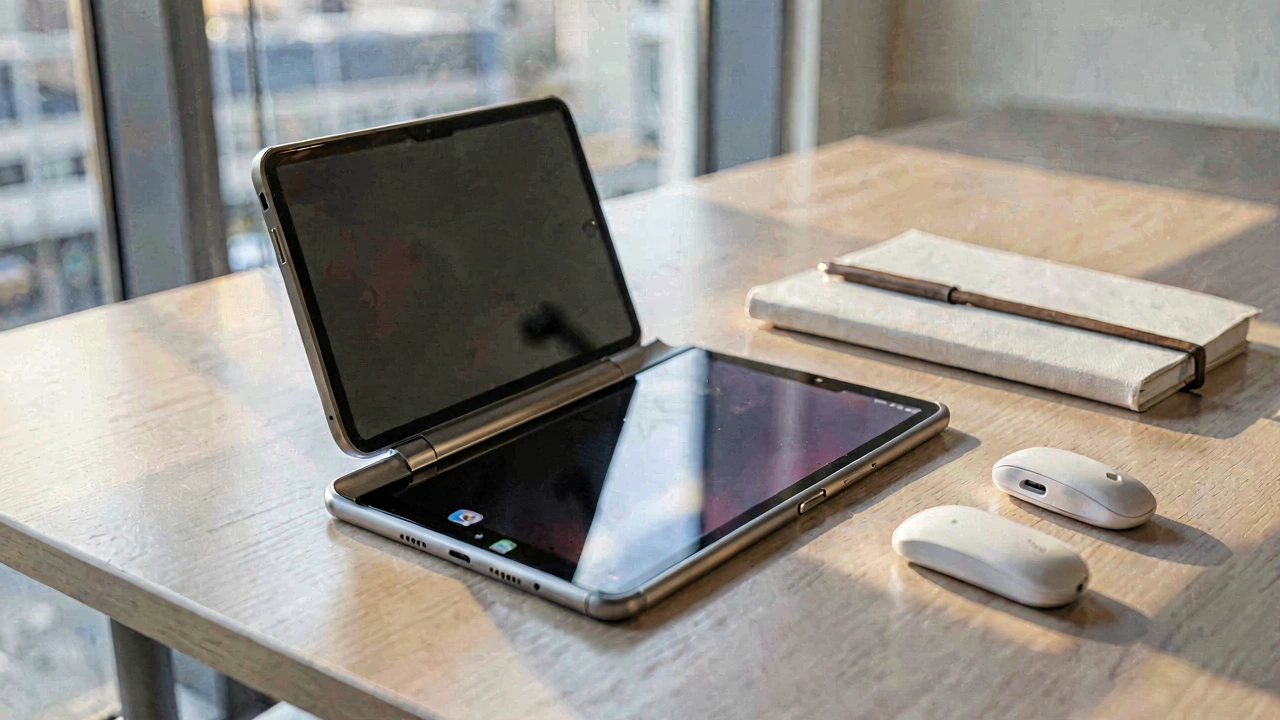
That points to a broader smartphone trend. AI is increasingly meant to reduce the small interruptions that pull people away from a conversation, video or real-world moment. Google unveiled the Pixel 11, Pixel 11 Pro, Pixel 11 Pro XL and Pixel 11 Pro Fold alongside the Pixel Watch 5, but the most revealing additions were practical language, voice and camera tools.
AI moves beyond the app
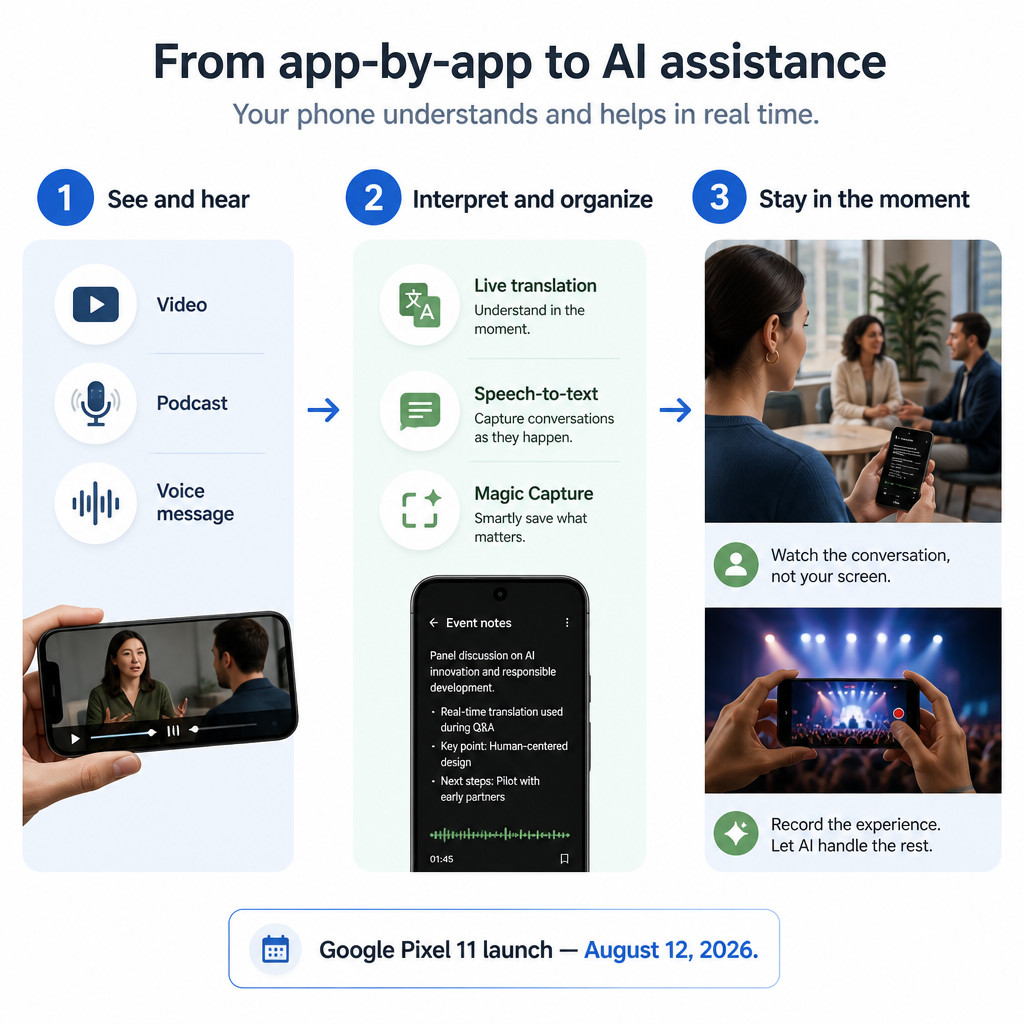
The Pixel 11 lineup adds live translation for videos, podcasts and voice messages. Translation is no longer being presented only as a travel feature or something that requires a separate app. It’s becoming part of everyday media use, potentially making a clip, voice note or interview understandable without forcing someone to stop and copy text between services.
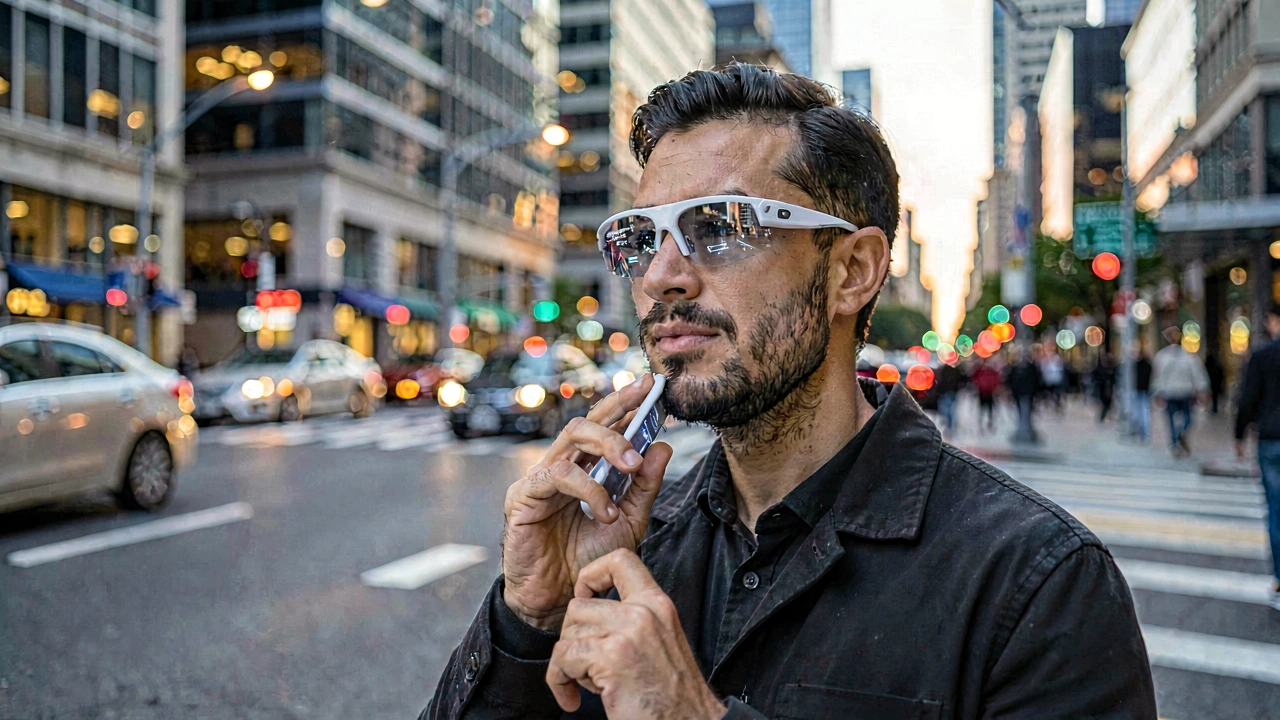
Google also demonstrated sign-to-text capabilities and Rambler, an upgraded speech-to-text feature powered by Gemini. Its purpose will be familiar to anyone who has dictated a message in a hurry. The software is designed to handle filler words, formatting and spoken corrections in a more natural way.
There’s still difficult interpretation happening behind the scenes, so users should expect occasional mistakes and check anything important before sending it. Even so, the interface is changing. People can speak normally instead of memorizing a rigid set of commands.
The camera becomes an AI capture system
Google’s new Magic Capture mode sends a similar signal. With one press of the shutter button, it can automatically take both photos and video. The Pixel 11 Pro models also add camera tools such as faster low-light capture.
These features aren’t centered on generating a fully synthetic scene. The pitch is more practical: let the phone preserve an event while the person holding it spends less time operating the camera.
That difference matters. The strongest consumer AI features may not be those that ask people to create something from scratch. Instead, they may quietly take care of timing, transcription, translation and organization at moments when a phone would otherwise require several taps.
Why the trend is gaining attention
Smartphone makers need convincing reasons to make annual upgrades feel useful, and AI has become their main answer. Google’s August 12 launch is drawing attention because it brings several visible examples together in one device family, including audio and video translation, converting spoken thoughts into usable text, and capturing still images and footage at the same time.
Trust is the next test. Real-time AI must be accurate enough for language and accessibility tasks. Users also need transparency about when sensitive material is being processed, along with an easy way to override the software when it makes a mistake.
If those hurdles can be cleared, the smartphone could become less of an app launcher and more of a responsive tool that helps people stay present.