Smartphone launches tend to focus on cameras, displays and battery life. Google’s Pixel 11 unveiling on August 12, 2026 is getting attention for another reason. It strengthens the industry’s push to make phones act before users have to ask.
The new Pixel family arrives as Google builds what it calls Gemini Intelligence into Android. The aim goes beyond putting a better chatbot on a handset. Google wants an assistant that understands context, works across apps and offers help when it may be useful. Google’s Pixel 11 launch is the latest high-profile hardware showcase for that idea.
Smartphones are becoming less reactive
For most of the mobile era, the routine has been familiar. Wake the phone, open an app, search, tap through menus and finish the task. Generative AI initially followed much the same pattern, appearing as one more place to visit for answers or image creation.
Proactive AI has a broader goal. Rather than waiting for a carefully worded request, the software can connect signals already available on the device, such as a conversation, calendar entry, location, travel plan or unfinished task. The useful result isn’t a longer AI response. It’s less time spent jumping between apps and handling routine administrative work.
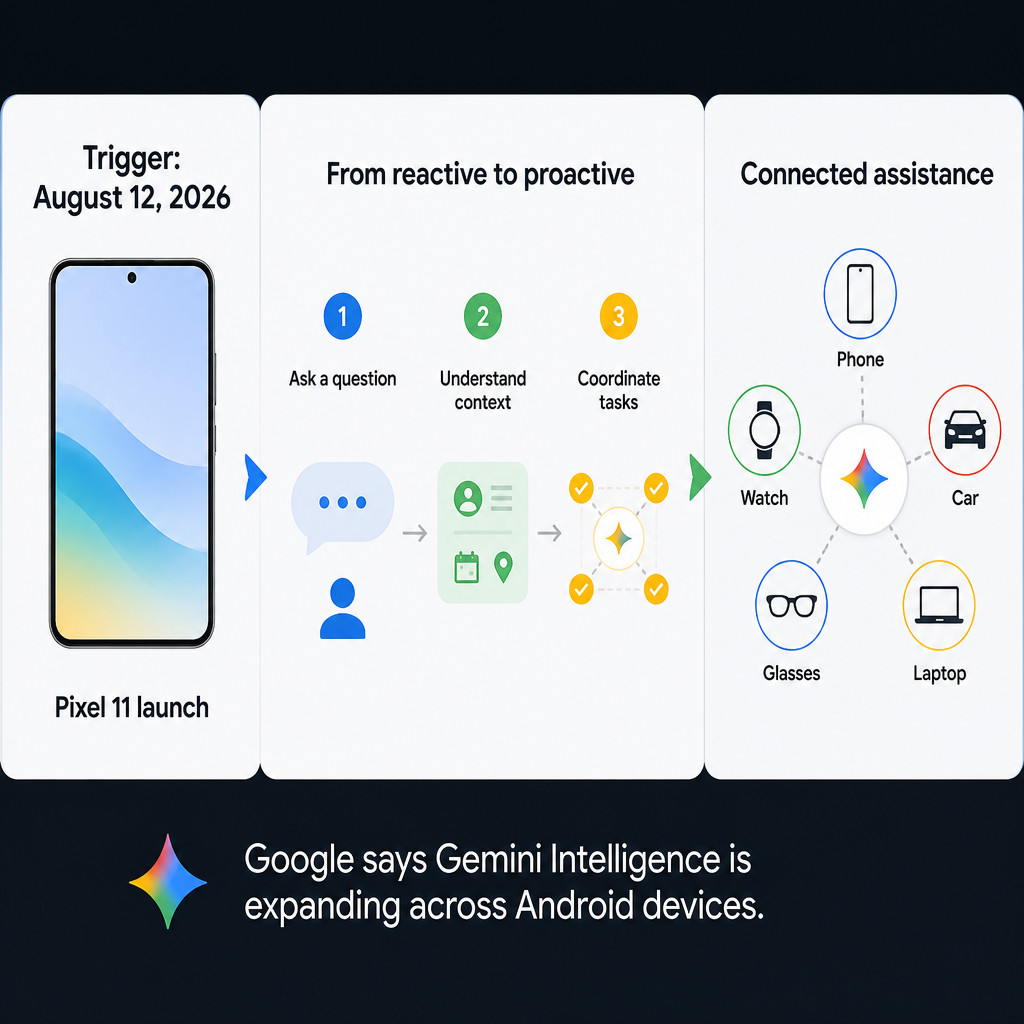
Google outlined this direction in May when it introduced Gemini Intelligence for Android, including multi-step automation in supported food and rideshare apps. The company also said the experience would start on select Samsung Galaxy and Google Pixel phones, then expand to watches, cars, glasses and laptops. Google’s announcement stands out because it describes Android as an “intelligence system,” rather than just an operating system.
Why the trend is gaining momentum
The Pixel 11 matters because it gives that software strategy a physical showcase. Consumers may not buy a phone because of the phrase “agentic AI.” They can, however, see the appeal of a device that prepares a food order, finds the right travel detail or suggests a timely action without sending them through several apps.
There’s more at stake, too. A phone that draws on a wider range of personal context can be genuinely helpful, but it needs clear permissions, visible limits and a simple way to stop it. Moving from answering questions to taking action is where AI assistants become more useful—and where errors carry greater consequences.
What comes next
- Useful actions over flashy demos: Can AI complete everyday tasks reliably?
- Cross-device continuity: Will assistance follow users across phones, watches, cars and glasses without becoming distracting?
- Control and privacy: Will people understand which data an assistant can access and when it’s allowed to act?
Google isn’t alone in developing more capable mobile AI, but the Pixel 11 launch makes the direction clear. The next smartphone race will increasingly come down to how much work a device can take off a user’s plate before they even reach for an app.