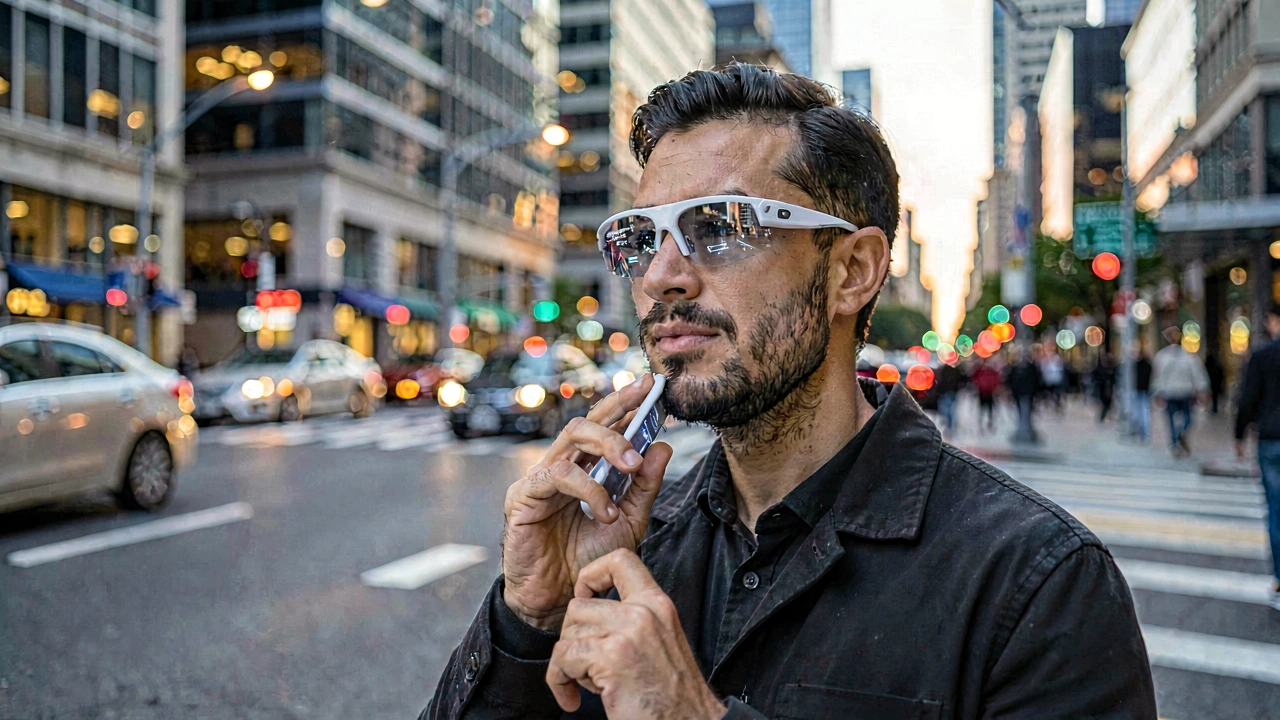
Smart glasses are no longer being sold as miniature phones for your face. A more interesting shift is underway: they’re becoming a new interface for AI, able to hear, see and respond while the phone remains in your pocket.
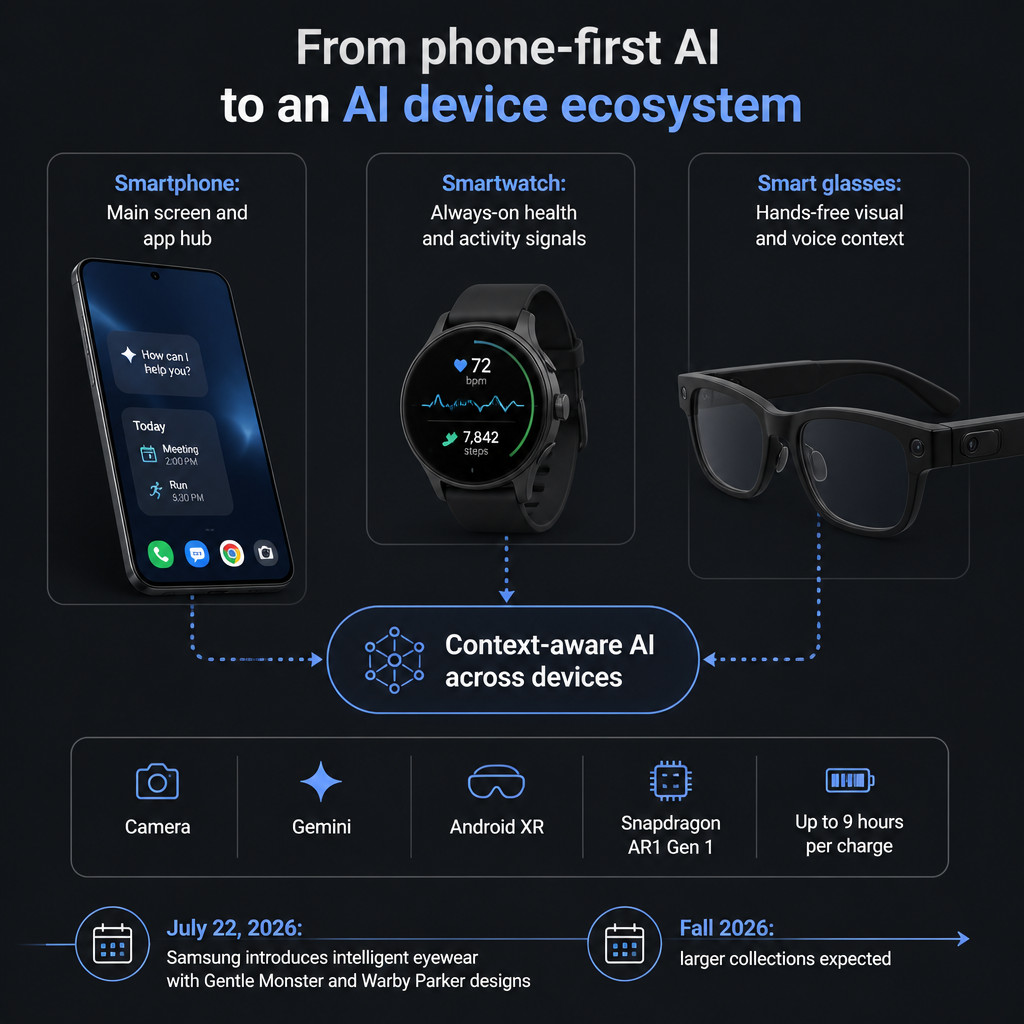
Samsung gave the trend fresh momentum on July 22, introducing intelligent eyewear at Galaxy Unpacked in London. The company showed two designs created with Gentle Monster and Warby Parker, building on the Android XR concepts that Samsung, Google and Qualcomm have been developing together.
What matters here is less Samsung’s move into another gadget category and more what it says about the direction of personal AI. Rather than asking people to open an app, type a prompt and examine a screen, companies want assistance to appear while users are walking, travelling, working or talking.
The phone is becoming the hub
Samsung’s glasses are lightweight, camera-equipped frames with touch controls and Gemini integration. According to the company, they can run for up to nine hours on a charge, and the charging case can provide up to seven additional full charges. Qualcomm says the glasses use its Snapdragon AR1 Gen 1 platform, designed for compact augmented-reality and AI eyewear.
Those details matter because smart glasses have always faced a basic problem. Useful features require cameras, microphones, processors, connectivity and enough battery capacity, but the finished product still needs to feel like ordinary eyewear. Samsung is addressing that trade-off directly by working with fashion-focused frame makers instead of treating design as an afterthought.
The broader idea is continuity across devices. A phone is still the better choice for detailed tasks and anything that benefits from a large screen. A watch can gather health and activity signals during the day, while glasses add hands-free voice interaction and visual context. Used together, these devices could help an AI assistant understand what someone is doing without making them repeatedly reach for a handset.
Why the timing feels different
Smart glasses have been around in various forms for years. This time, though, the hardware is arriving as AI assistants become better at natural conversation, image understanding and handling multi-step requests. A camera and microphone are no longer just novelty features. They can serve as inputs for an assistant that responds to the wearer’s surroundings.
Samsung isn’t alone in pursuing this idea. Meta has continued expanding its camera-and-speaker glasses, and Snap has demonstrated consumer AR glasses under its Specs brand. The category is now dividing along two paths. One focuses on display-free glasses built around audio, cameras and AI assistance. The other aims for more advanced AR devices that place digital images directly in the wearer’s view.
The hardest test may be social
Samsung’s announcement doesn’t mean smart glasses have answered the category’s toughest questions. Privacy indicators, camera etiquette, comfort, prescription-lens options and battery life will all affect whether people choose to wear them every day. The AI responses must also be useful enough to justify putting another connected device on someone’s face.
Even so, the July 22 reveal sends a clear signal. The next stage of personal AI may not revolve around one device replacing the smartphone. Instead, several smaller devices could share context, with smart glasses serving as the most immediate and least screen-dependent of them.