Smart glasses are moving closer to the mainstream once again. But the near-term winner may not be the pair that puts the largest virtual screen in front of your eyes. It could be the one that looks and feels like ordinary eyewear while quietly extending the phone already in your pocket.
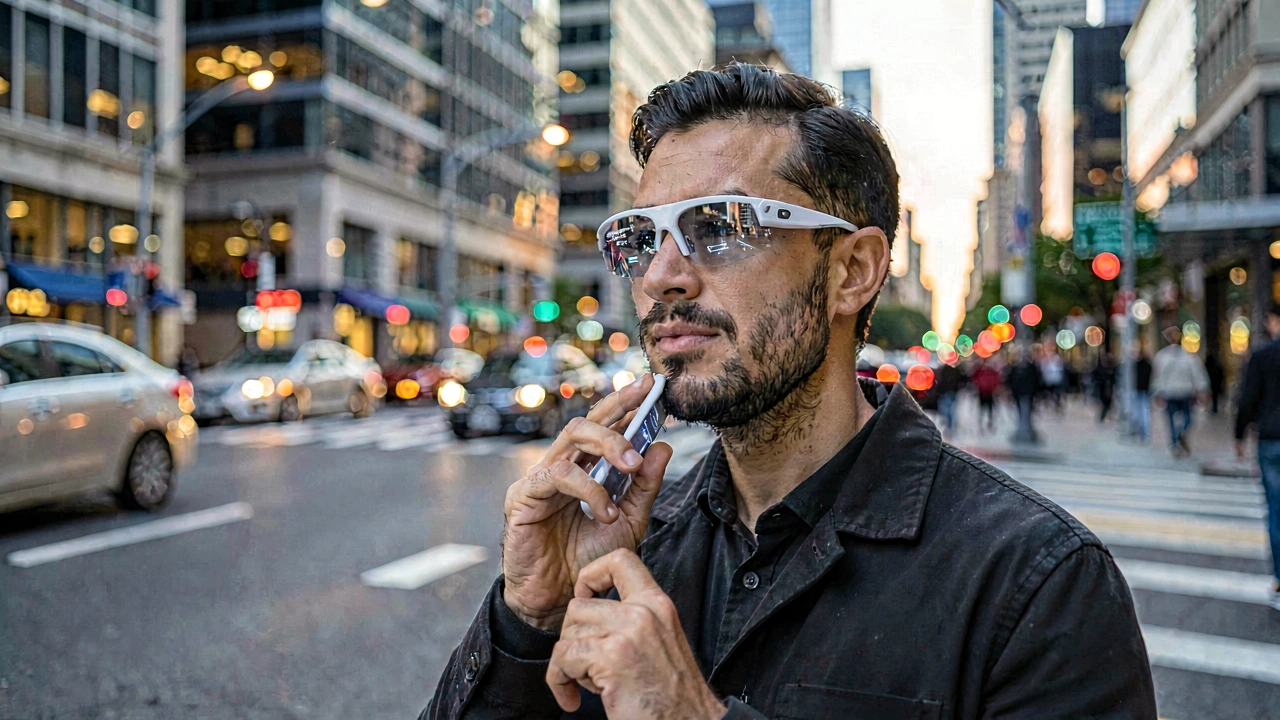
Samsung pointed in that direction on July 22 at its Galaxy Unpacked event in London, where the company revealed more about its intelligent eyewear. Developed with Gentle Monster and Warby Parker, the glasses are meant to work alongside a Galaxy phone, offering voice interaction and phone connectivity in a familiar glasses design.
The smart-glasses race is shifting toward restraint
Samsung’s new details matter because they show how the category is splitting. The glasses have a camera, sensors, microphones, speakers and Qualcomm’s Snapdragon AR1 Gen 1 platform. Still, Samsung isn’t presenting them as a standalone spatial computer.
Instead, the company says its design work centered on weight, balance, thickness, durability and power efficiency. Those may be less glamorous concerns, but they’re the ones that determine whether people will actually wear a device on their face.
Samsung also says the eyewear can last up to nine hours on a charge, while the case can provide up to seven additional charges. That’s a very different proposition from display-heavy augmented-reality headsets, where bright screens, tracking hardware and extra processing make comfort and battery life much harder to manage.
Samsung isn’t driving this shift alone. At Google I/O in May, Samsung and Google previewed the eyewear as part of a broader effort to bring AI into an everyday form factor. Snap’s $2,195 Specs, announced in June, takes the other route: see-through AR glasses with a display, hand and voice controls, and considerably more hardware to wear. Together, the two approaches show that smart glasses are no longer a single product category headed toward one obvious destination.
Why the phone companion approach makes sense
For most people, a phone is still the better place for typing, reading, editing, payments and private work. Smart glasses have an advantage in moments when pulling out that phone feels awkward, such as capturing a quick view, hearing directions, taking a call, asking for help with something in front of you, or getting a short answer without breaking eye contact.
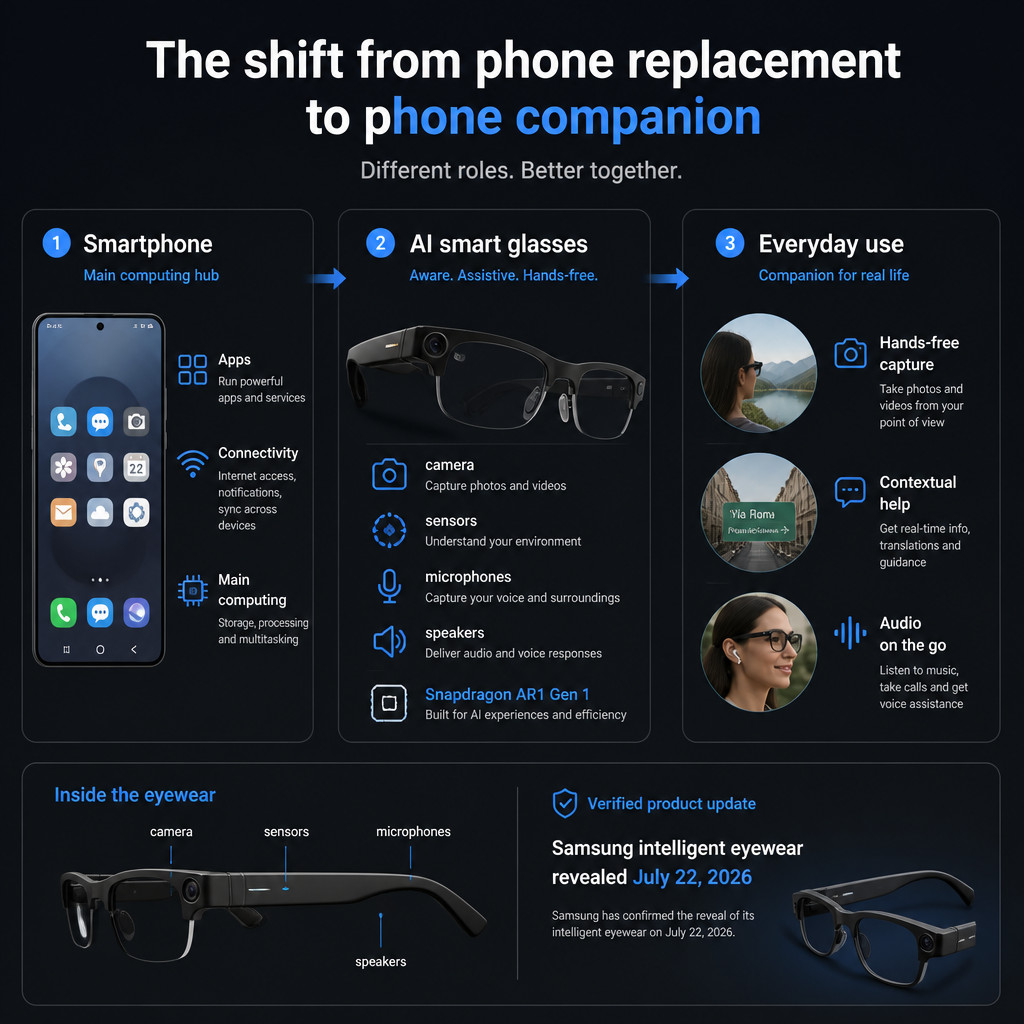
That makes camera-and-audio AI glasses a more practical first step than trying to replace the phone entirely. They can rely on the handset for connectivity, accounts and heavier computing, which helps keep the wearable lighter and simpler. In effect, the glasses become an ambient input and output device rather than a tiny laptop strapped to someone’s face.
What comes next
The real test is whether these products can earn people’s trust. Always-available cameras bring privacy concerns, while AI assistance has to respond quickly enough to help without becoming intrusive.
Samsung’s latest reveal does suggest that the industry has learned an important lesson from earlier smart-glasses efforts. Before consumers accept computing in their line of sight, they first have to accept wearing the hardware all day.
The next phase of smart glasses may be less about dazzling AR overlays and more about something deceptively difficult: making glasses that people forget they’re wearing.