AI agents increasingly need to work with websites, whether they’re checking information, reading pages, collecting data, or carrying out defined workflows. That demand has sparked interest in the agent-first browser, which is built mainly for software agents rather than people clicking through tabs. Cloudflare brought the concept into focus on August 6, 2026, when it introduced Kitesurf, a browser designed for AI-agent workloads.
What Is an Agent-First Browser?
An agent-first browser is a web-rendering system designed for an AI program that needs to interact with online content. It’s related to a headless browser, meaning it can run without a conventional browser window. Its priorities, though, are different from those of Chrome, Safari, or Firefox. An AI agent needs useful page content, screenshots, structured results, and dependable automation. It doesn’t need themes, extension stores, synced bookmarks, or smooth scrolling.
Kitesurf is Cloudflare’s take on this model. The stateless browser runs on Cloudflare Workers and is meant to scale across large numbers of short-lived agent tasks.
How Does It Work?
An application sends the browser a task, such as opening a URL, extracting HTML, or taking a screenshot. The browser retrieves the page and renders enough of it to complete that task, then sends back a result the AI system can use. Since the work is machine-oriented, the browser can give up pixel-perfect visual fidelity and many human-facing features in exchange for lower resource use.
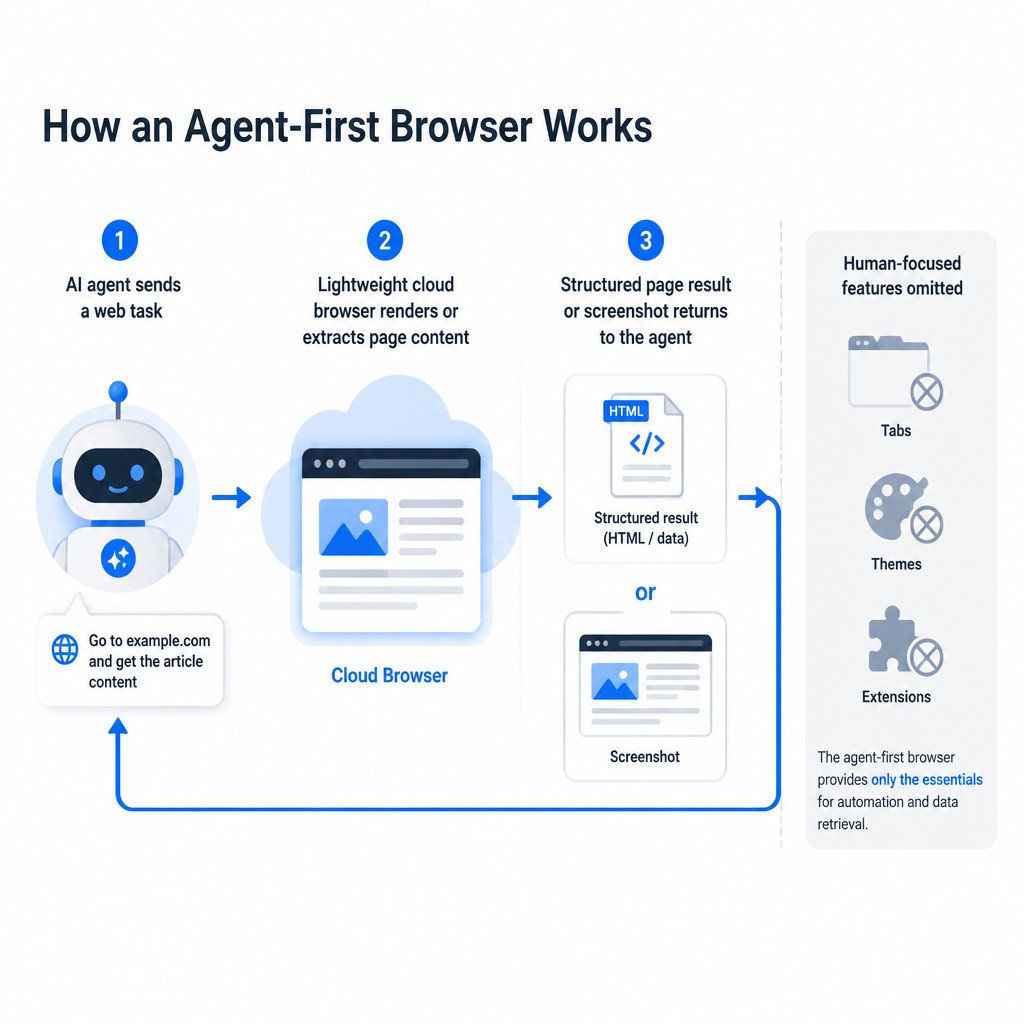
That tradeoff matters. Running a full Chromium instance for every AI-agent session can become expensive when an application has to process many web pages at once. A lighter browser can make bursty workloads, including page monitoring or research gathering, easier to run at scale.
Why Does It Matter?
Agent-first browsers are part of the infrastructure behind practical AI agents. They could support customer-service assistants that look up account information, research tools that inspect public pages, testing systems that verify websites, and back-office automation.
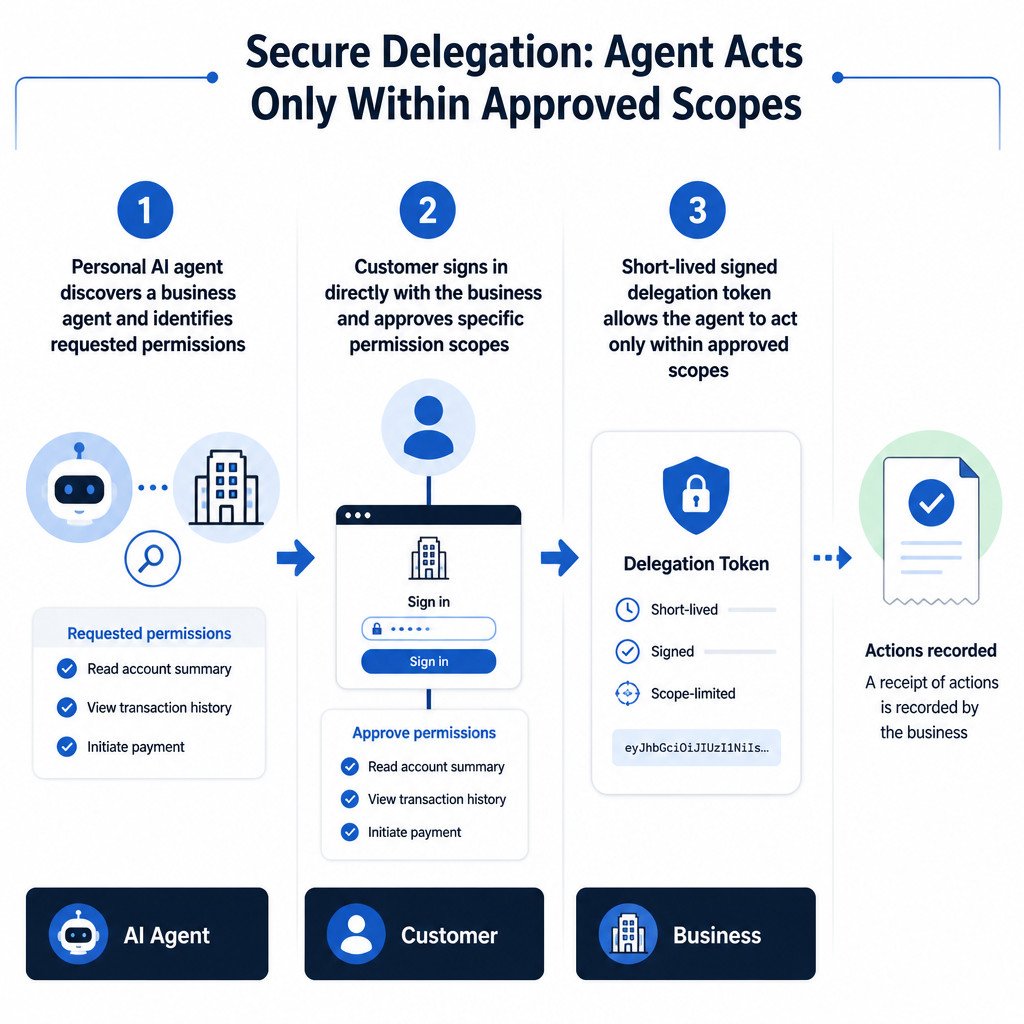
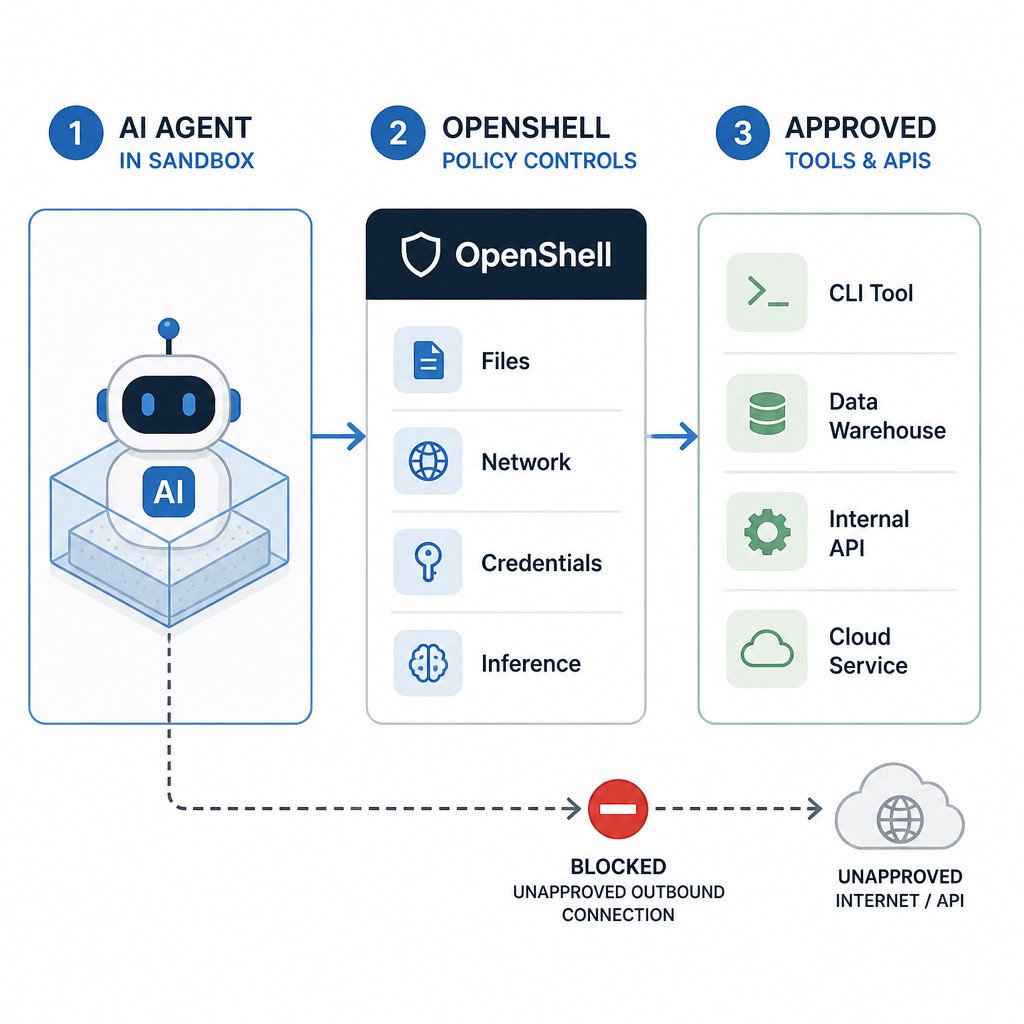
They don’t make an agent trustworthy on their own. Developers still need to set permissions, add safeguards, and defend against threats such as malicious instructions embedded in web pages.
The idea has become newly relevant as AI agents move beyond chat interfaces and need dependable ways to work with the web. Agent-first browsers are intended to make that access more efficient and better suited to the job.