AI supernodes are drawing new attention as cloud companies build infrastructure for models that are too large and demanding for a conventional server. On September 22, Alibaba said it had brought its M890 AI Supernodes online at commercial scale and introduced its next-generation Zhenwu V900 processor. The announcement reflects the industry’s move toward more tightly integrated AI hardware. (alibabagroup.com)
What Is an AI Supernode?
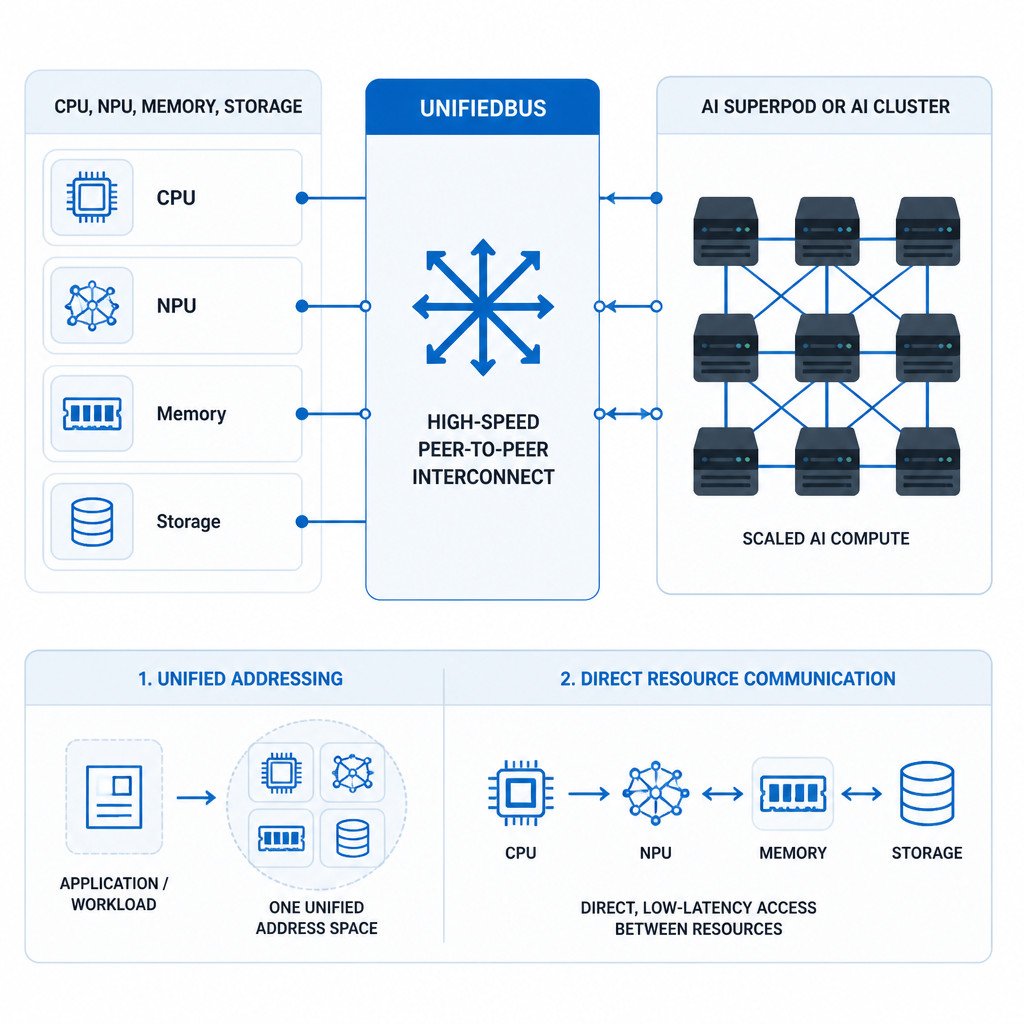
An AI supernode is a closely connected group of AI accelerators, specialized chips that handle machine-learning calculations, built to operate more like one large computer than a set of separate servers. It typically brings together accelerators, CPUs, high-bandwidth memory, networking hardware, and cooling in a single scale-up design.
The term isn’t a universal standard, and vendors may apply it to systems of different sizes. The basic idea remains the same: place many processors close together and link them at very high speed, allowing them to share work with less delay.
How an AI Supernode Works
Large AI models spread calculations, data, and model weights across many chips. During training, those chips must repeatedly exchange results to remain synchronized. During inference, when a trained model generates an answer, a single request may also be divided across multiple accelerators.
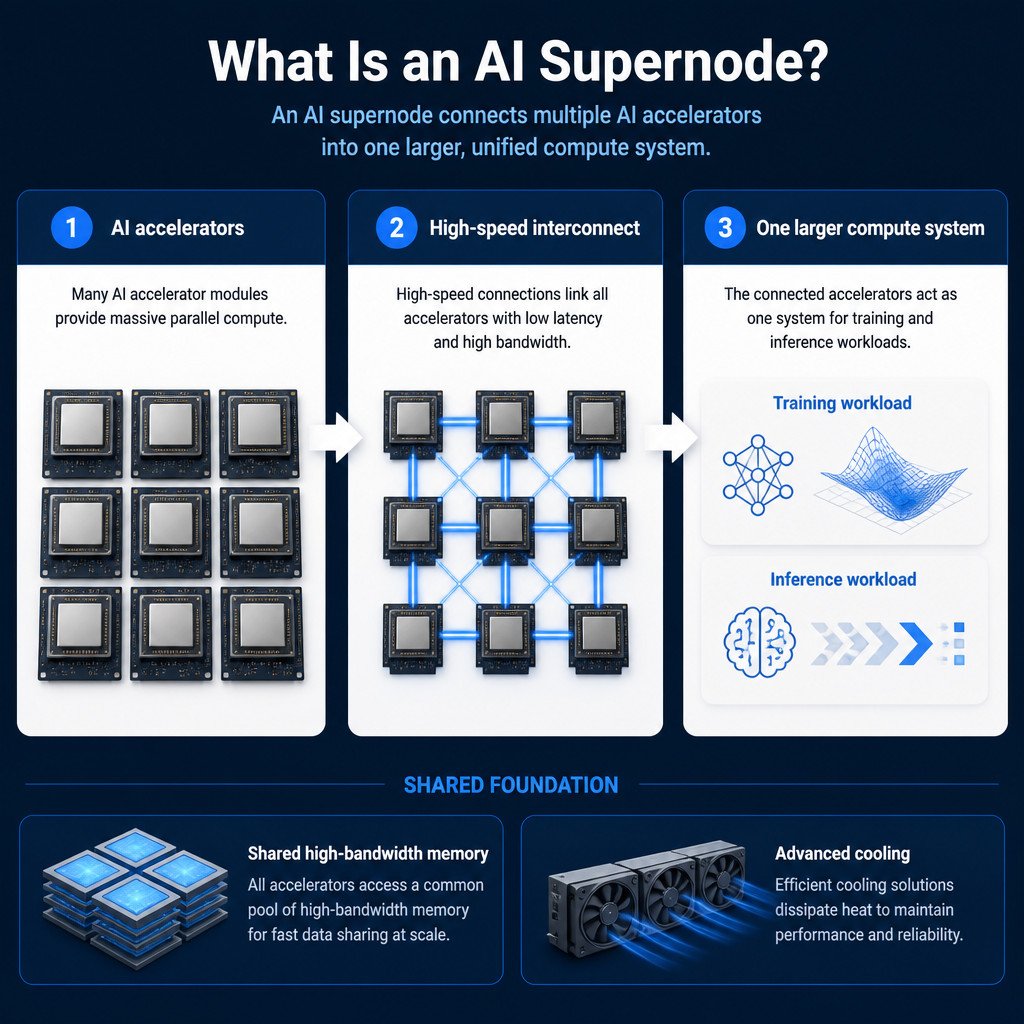
In a typical cluster, much of that traffic moves over a network between separate servers. A supernode relies on a faster internal interconnect and coordinated software, so data can move more directly among its accelerators. That helps ease a major bottleneck: chips waiting to exchange information rather than doing calculations.
Why It Matters
Adding more chips doesn’t automatically make AI faster. As systems expand, moving model data can become as difficult as the computing itself. Supernodes are meant to raise throughput for very large training jobs and reduce the latency of serving large models, while concentrating power delivery and cooling in hardware designed for dense AI workloads.
They are mainly used in hyperscale data centers, cloud AI platforms, and research systems, not consumer devices. Alibaba’s recent announcements are one example of a wider infrastructure race. Companies are designing chips, servers, and interconnects together because modern AI performance increasingly depends on the full system, not only an individual processor. (alibabagroup.com)