AI systems are increasingly being asked to handle private documents, financial records, health information, source code, and proprietary business data. As a result, confidential inference has become a more prominent term. It gained fresh attention on November 9, 2026, when Google introduced TPU 8tx, a system built for confidential AI inference and private model tuning. (blog.google)
What Is Confidential Inference?
Confidential inference uses confidential-computing hardware to protect data while an AI model is actively producing an answer. Inference is the stage in which a trained model takes an input, such as a prompt, image, or database record, and generates an output.
Encryption usually protects data while it is stored and while it moves across a network. The harder part is data in use, because information normally needs to be available in a computer’s memory during processing. Confidential inference is meant to limit exposure during that stage as well.
How Confidential Inference Works
The workload runs inside a hardware-based trusted execution environment, or TEE. It is an isolated processor area intended to protect the code and data loaded into it. Memory encryption helps keep sensitive material unreadable outside that protected environment, including to parts of the underlying infrastructure that would normally manage the workload. (docs.cloud.google.com)
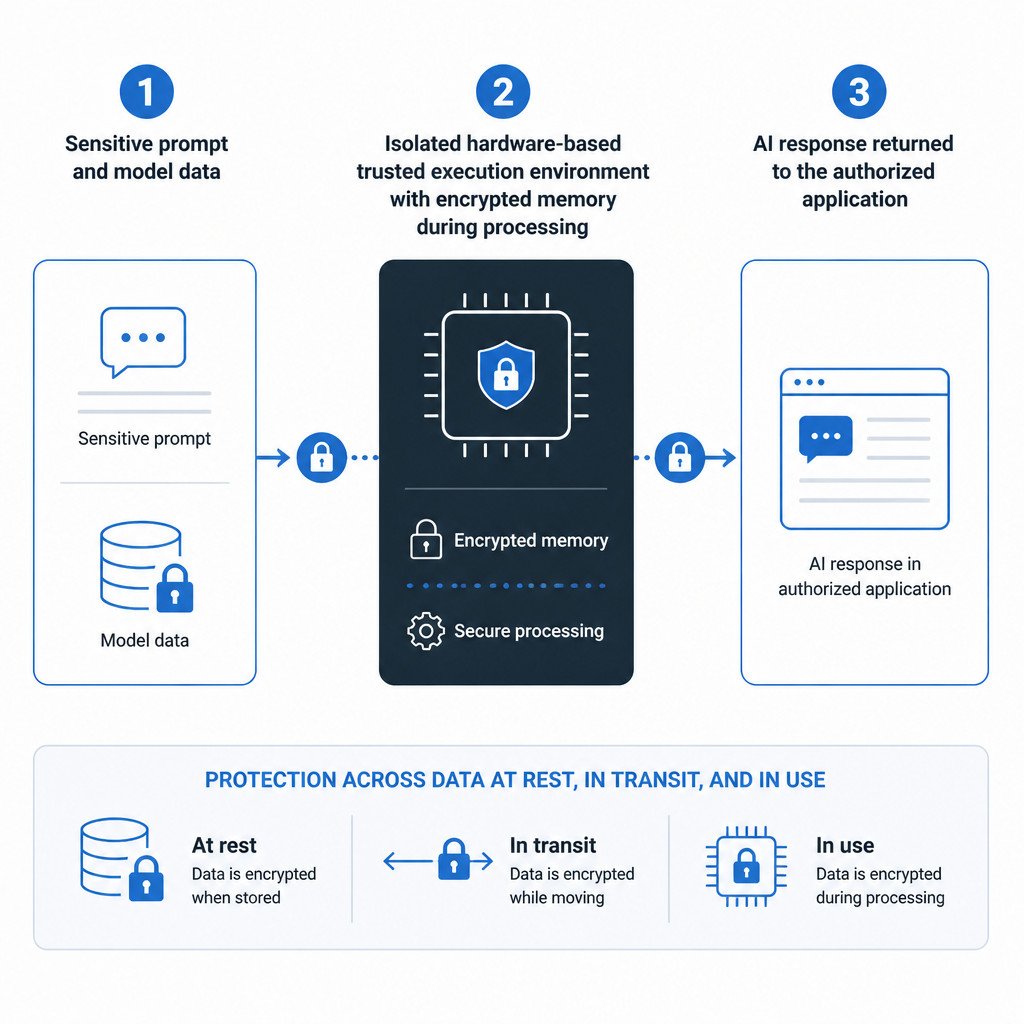
In an AI workload, protected material may include a user’s prompt, supporting documents, model weights, and intermediate calculations. The model handles the request inside the isolated environment, then sends its result back to the authorized application.
Why It Matters
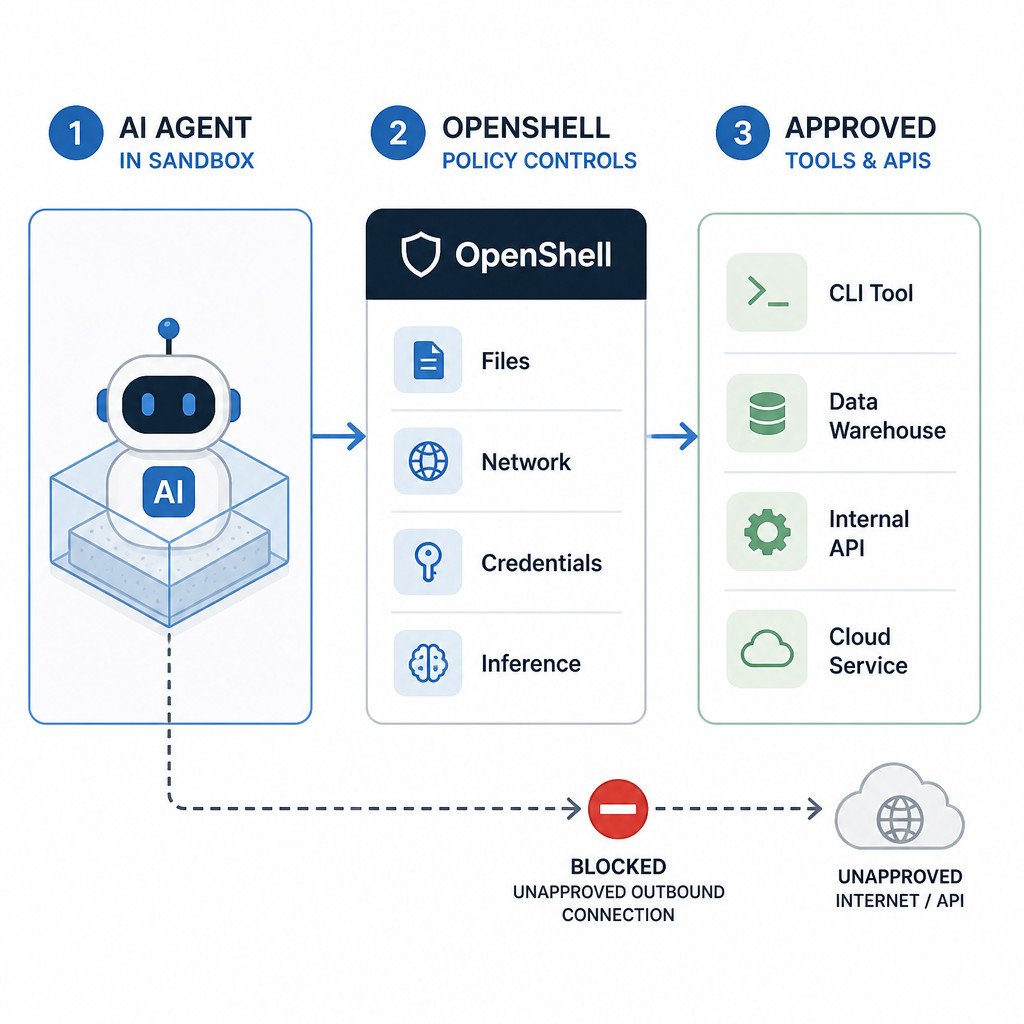
Many organizations want AI assistance but can’t casually expose sensitive inputs to shared infrastructure. Confidential inference can provide a hardware security layer for internal knowledge assistants, regulated document analysis, fraud detection, and AI agents that work with company systems.
It isn’t a cure-all for AI security. It won’t automatically stop a poorly designed application from sending data to the wrong person, prevent a model from making mistakes, or make unsafe prompts harmless. Instead, it addresses a specific risk: protecting sensitive data and model assets while computation is underway.
As businesses move AI agents beyond experiments and into systems handling real operational data, securing data in use is becoming as relevant as securing it at rest and in transit.