AI agents are increasingly being asked to locate repositories, install packages, and set up development tools. That convenience has introduced a new security concern known as HalluSquatting. The term drew attention in July 2026, when researchers described how attackers could exploit invented resource names generated by AI agents.
What Is HalluSquatting?
HalluSquatting, short for adversarial hallucination squatting, is a software supply-chain attack that takes advantage of an AI model’s tendency to invent plausible names for resources that don’t exist.
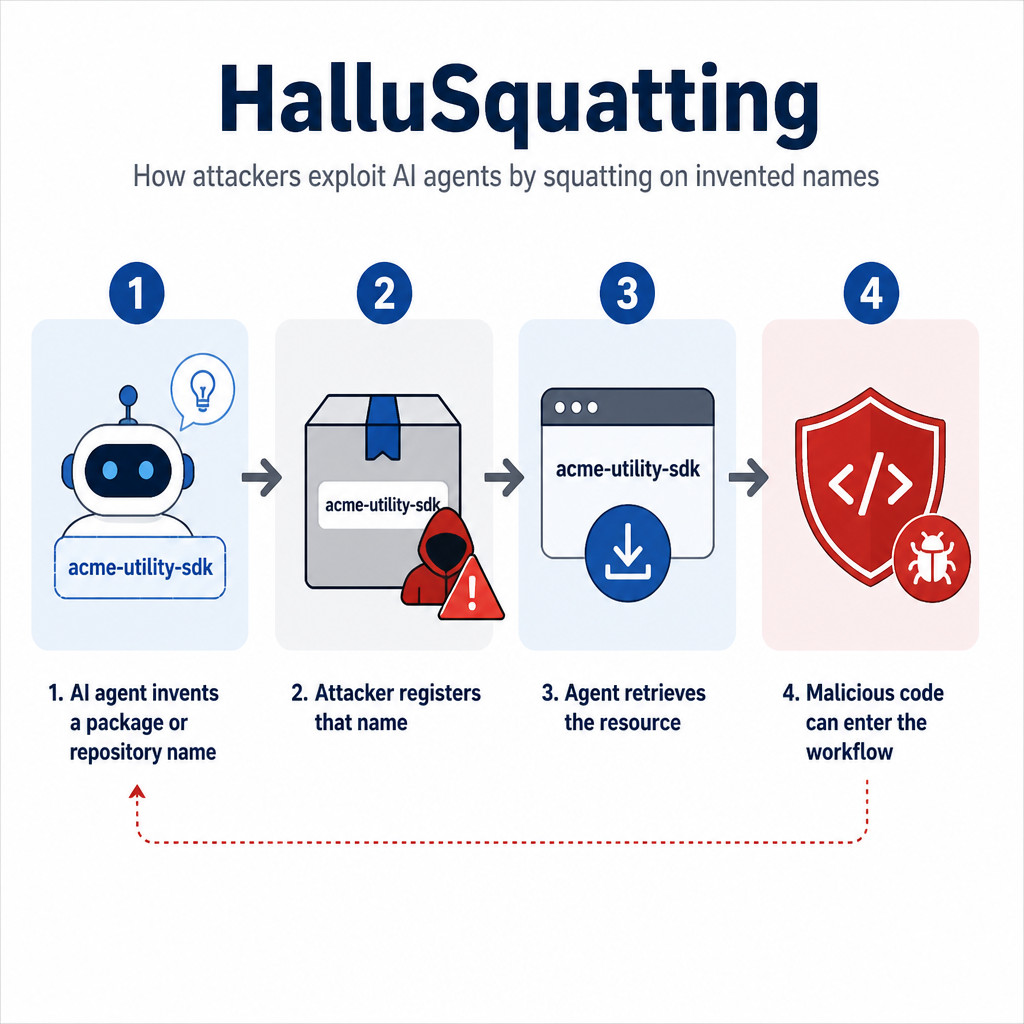
Say an AI coding assistant is asked to install a newly released tool. Rather than locating the official package or code repository, it might make up a believable package name or URL. An attacker can register that invented name first and upload malicious code. If an AI agent can fetch and run the resource without checking it, the attacker may gain access to a developer’s environment or a broader automated workflow.
How HalluSquatting Works
The attack is similar to typosquatting, in which criminals register misspelled versions of popular websites or package names. HalluSquatting differs in one key way: it targets names generated by AI, rather than mistakes made by people while typing.
- An attacker identifies names that an AI system is likely to hallucinate.
- The attacker registers those names on a package registry, code-hosting service, or another platform.
- A user or autonomous agent requests a resource without providing its exact official location.
- The agent chooses the attacker-controlled resource and may download or run its contents.
Why HalluSquatting Matters
Traditional software security assumes that a developer intentionally selected a dependency. AI agents can undermine that assumption because they may turn an uncertain answer into an action. The danger grows when agents have permission to install software, access credentials, modify code, or automatically run commands.
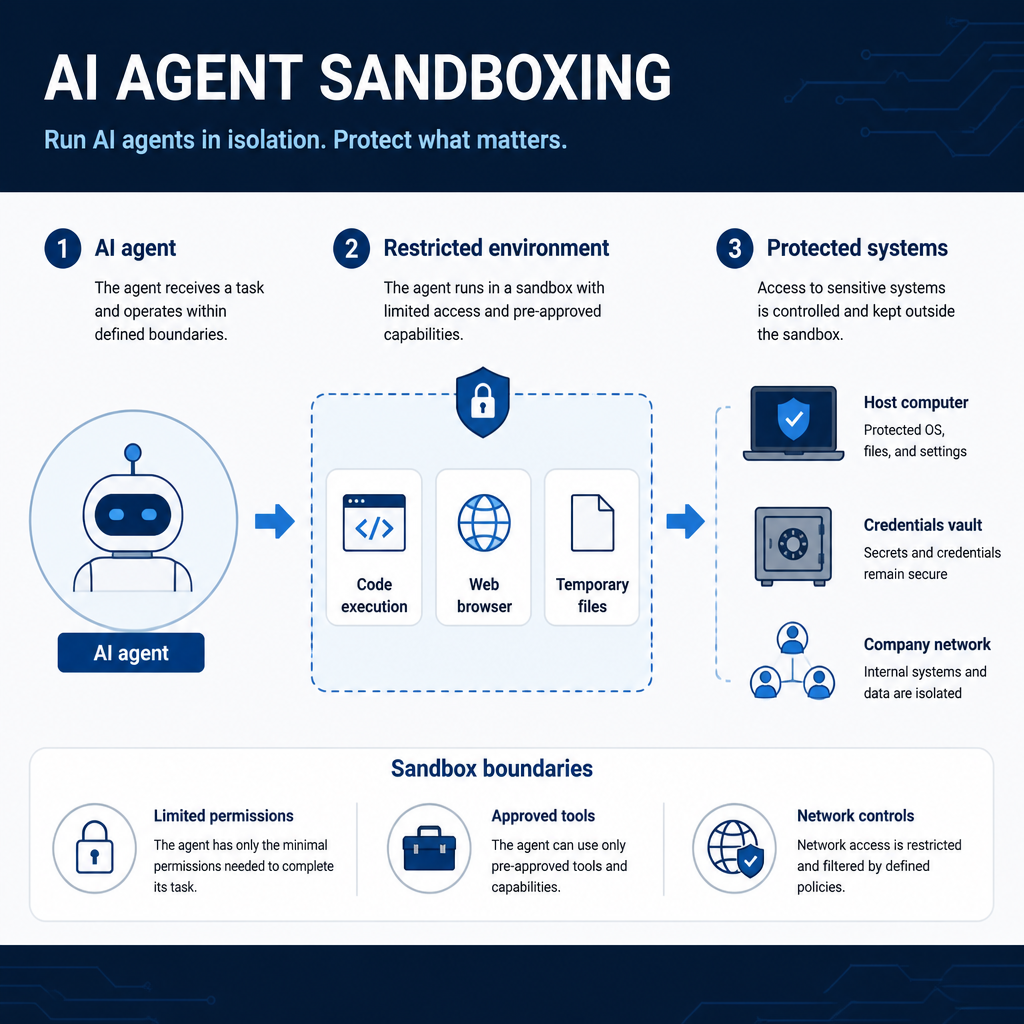
HalluSquatting doesn’t mean every AI recommendation is malicious, or that every agent is vulnerable. It does mean organizations should treat AI-generated package names, repository links, and tool identifiers as untrusted until they’ve been verified. Official URLs, dependency allowlists, version pinning, code review, and restricted agent permissions can help reduce exposure.
Why People Are Talking About It Now
The concept has become newly relevant as AI coding agents move beyond offering suggestions and begin retrieving resources and carrying out tasks. HalluSquatting points to a practical security rule for that shift: an AI agent should verify what it’s installing instead of merely producing a convincing name.