
AI agents are being asked to handle more than writing text or analyzing data. They’re beginning to coordinate laboratory instruments, cameras, and robots. That presents a practical challenge, since physical devices often rely on different software interfaces. On August 27, 2026, Anthropic opened a research preview of the Model Hardware Standard, or MHS, a shared specification designed to help AI agents use those devices more safely and easily.
What the Model Hardware Standard Is
MHS is an early common interface connecting AI software with programmable physical equipment. It’s intended for devices including liquid handlers, microscopes, robotic arms, cameras, and manufacturing tools.
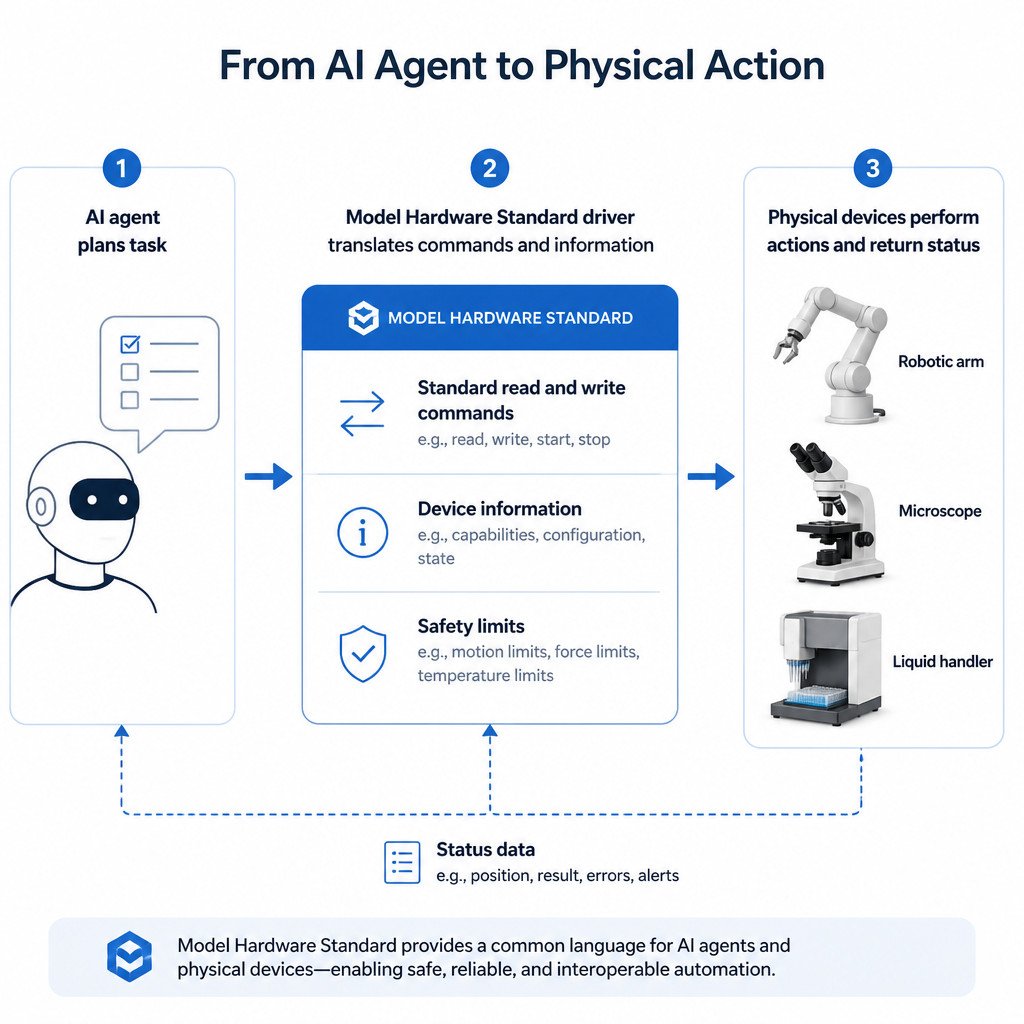
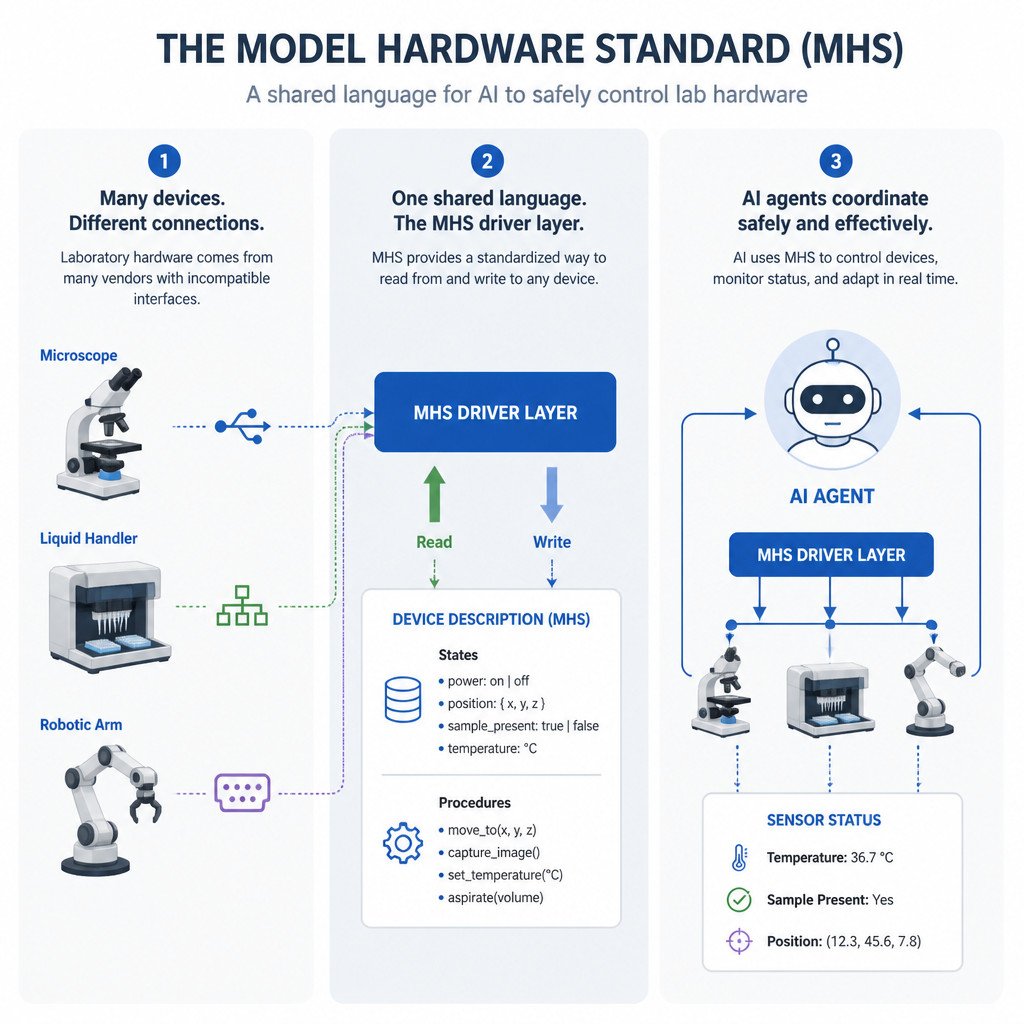
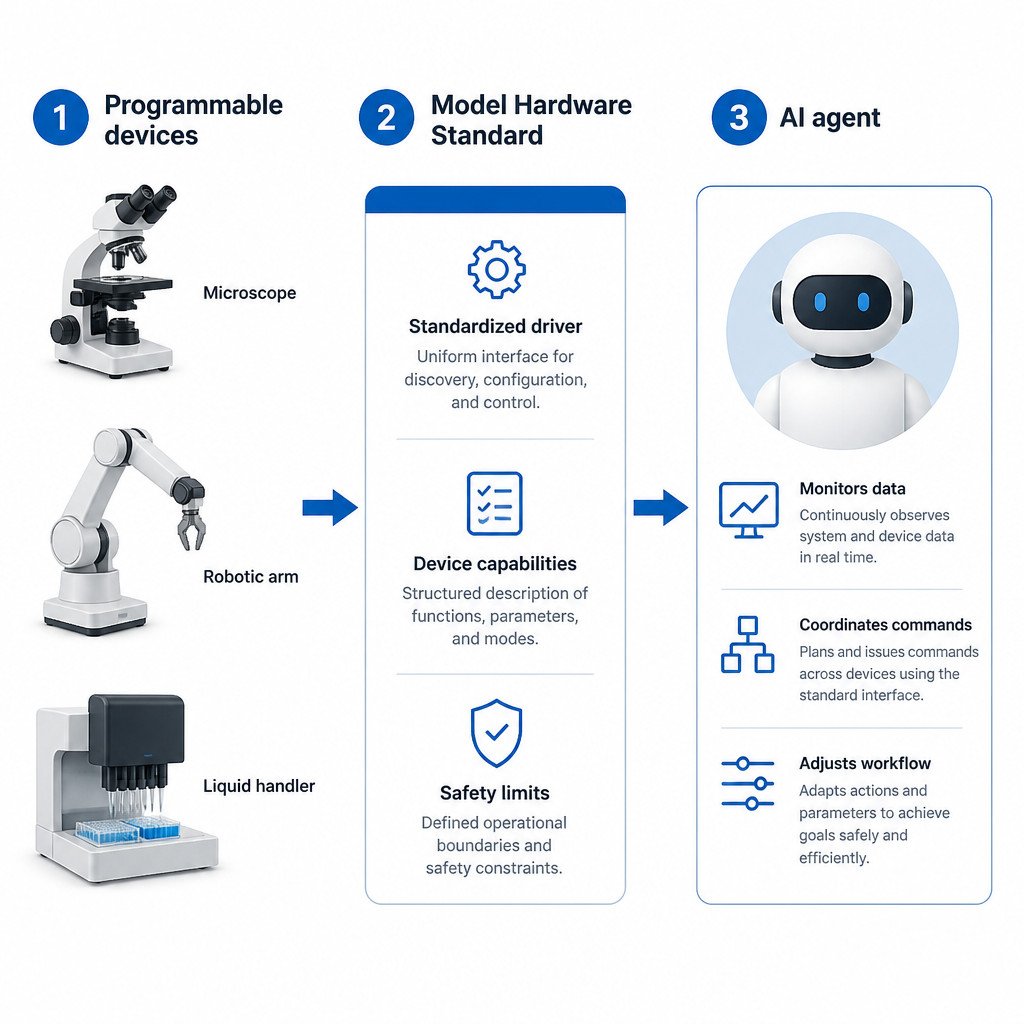
Instead of creating a custom connection for each device and AI system, developers can describe a piece of equipment once using an MHS driver. The driver works as a translator, presenting hardware in a consistent format even if it comes from another vendor or runs on older control software.
How MHS Works
MHS relies on basic operations such as reading a value and writing a setting. For example, an agent could read a temperature, camera image, or robot position, then write a new temperature, movement command, or flow rate.
The driver supplies a structured description of what the device can measure, which settings can be changed, and what operating limits must be enforced. An AI system needs more than a command list. It also needs to understand what the equipment can do and where it has to stop. MHS is accessible through several methods, including the Model Context Protocol, command-line tools, and APIs.
Why MHS Matters
Bringing several instruments together in one workflow can require considerable engineering work. A shared hardware layer could reduce that integration burden, making it easier to coordinate equipment through a single AI-controlled workflow.
Possible uses include automated drug-discovery experiments, manufacturing tests, scientific imaging, and robotics. MHS remains a research preview rather than a finished universal standard, and expert oversight is still important whenever AI controls real-world equipment. Even so, it suggests a useful shift: AI agents may get a more consistent, safety-aware way to work with machines, rather than software alone.
?)