
AI agents are being asked to handle far more than drafting text or analyzing data. On August 27, 2026, Anthropic introduced a research preview of the Model Hardware Standard (MHS), a proposed shared specification that would allow AI agents to work with programmable physical devices, including lab instruments, robotic arms, and manufacturing equipment. The technology is still at an early stage and isn’t a universal standard in everyday use. But it tackles a practical automation problem: machines made by different vendors rarely speak the same software language. (anthropic.com)
What the Model Hardware Standard Is
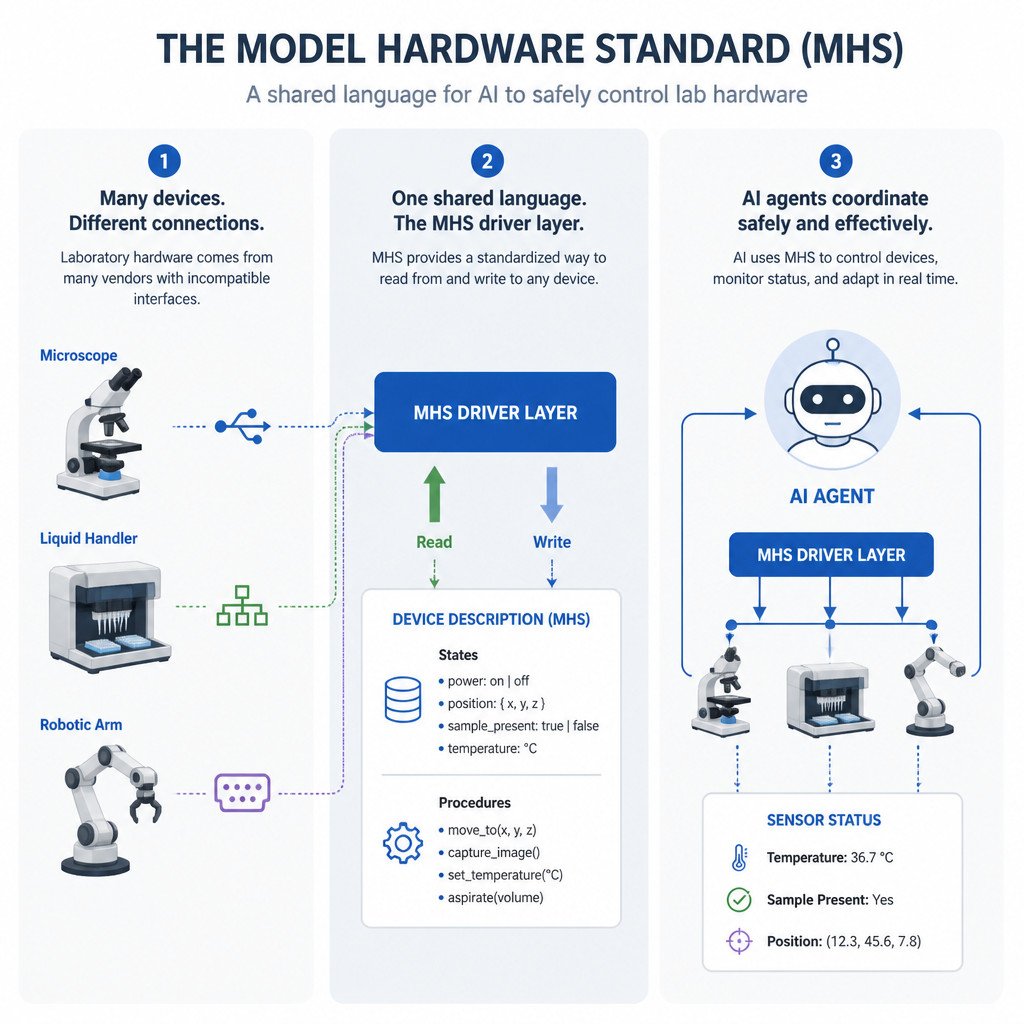
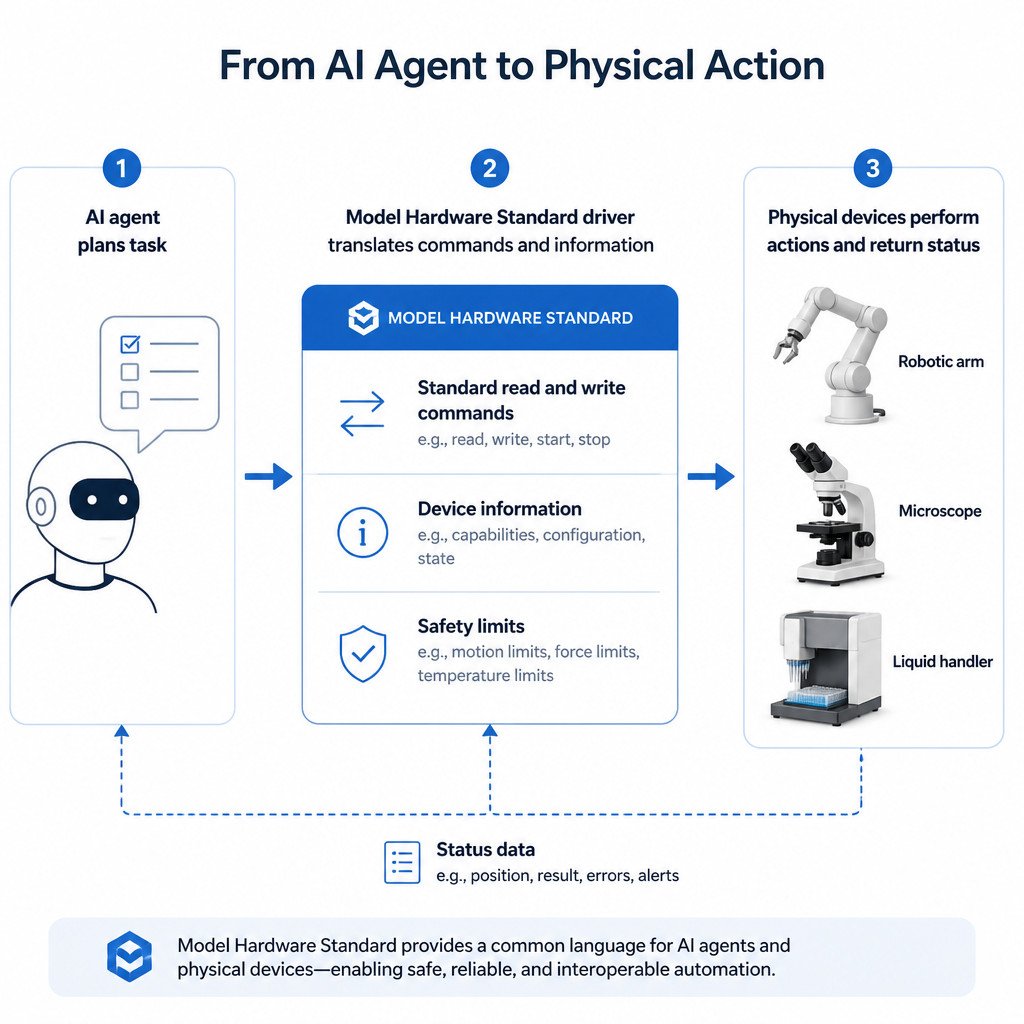
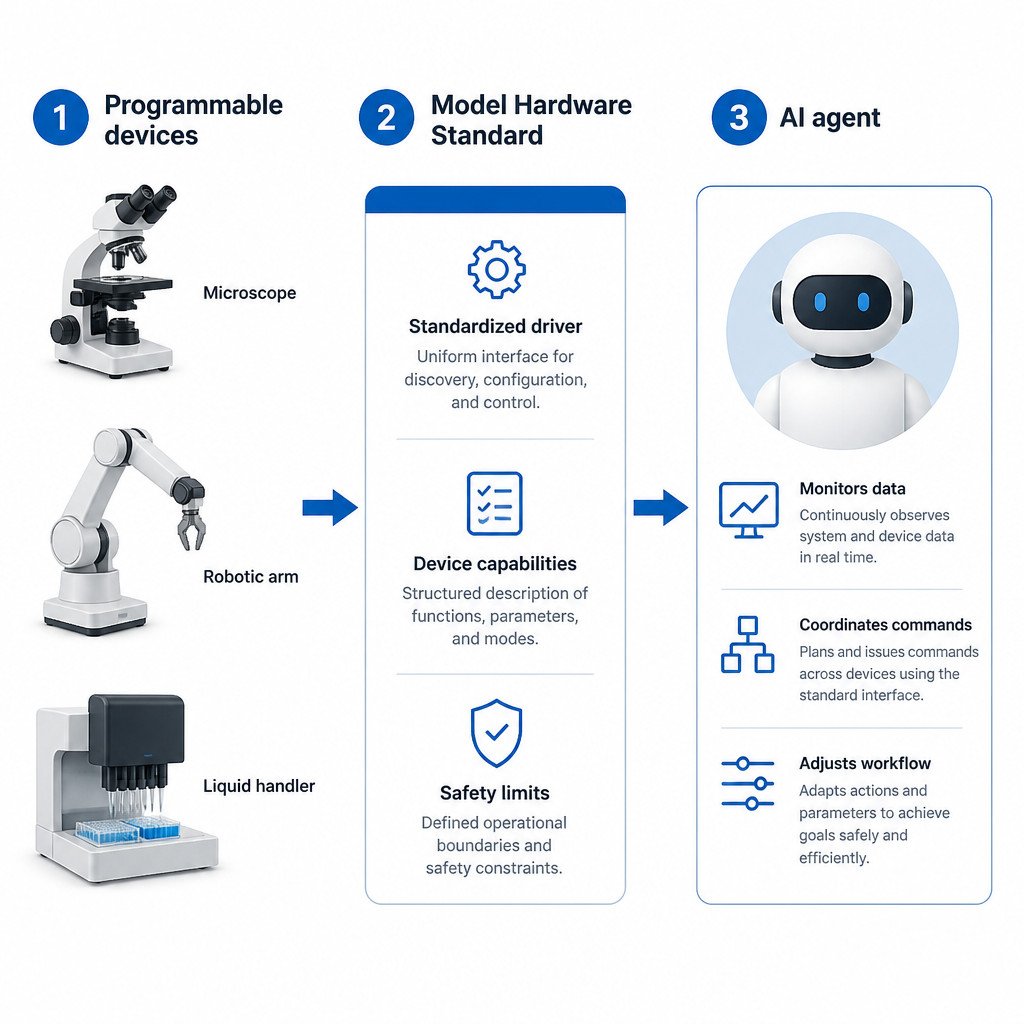
MHS provides a common software interface between an AI agent and physical equipment. Instead of building a custom integration for each microscope, camera, liquid handler, or robot, developers can describe a device using an MHS driver. The driver translates between the underlying machine and the software trying to control it.
It works much like a computer device driver, but it’s designed for agent-based systems. These systems need to discover equipment, inspect its capabilities, check its status, and request actions in a consistent format.
How MHS Works
An MHS driver exposes straightforward operations. These include read commands that retrieve information such as temperature or sensor values, along with write commands that change a setting or begin an approved operation. The driver also supplies a structured description of the device’s capabilities, states, and relevant operating context.
Some of that context may appear as natural-language notes covering real-world limits or physical characteristics that aren’t obvious from a software command alone. An agent can connect to MHS through standard protocols, including the Model Context Protocol (MCP). This allows one coordinating system to work with multiple compatible devices. (anthropic.com)
Why MHS Matters
Connecting a group of specialized instruments currently tends to require custom code and automation experts. A shared interface could reduce that integration work and make complicated workflows easier to update. Possible uses include coordinating lab experiments, monitoring manufacturing processes, calibrating equipment, and connecting sensors to robots.
MHS doesn’t make physical AI risk-free, however. Anthropic says current language models still have limitations in spatial and physical reasoning, so expert oversight remains necessary. Part of the research preview’s purpose is to develop safety evaluations and operating practices before the specification is open-sourced. (anthropic.com)
?)