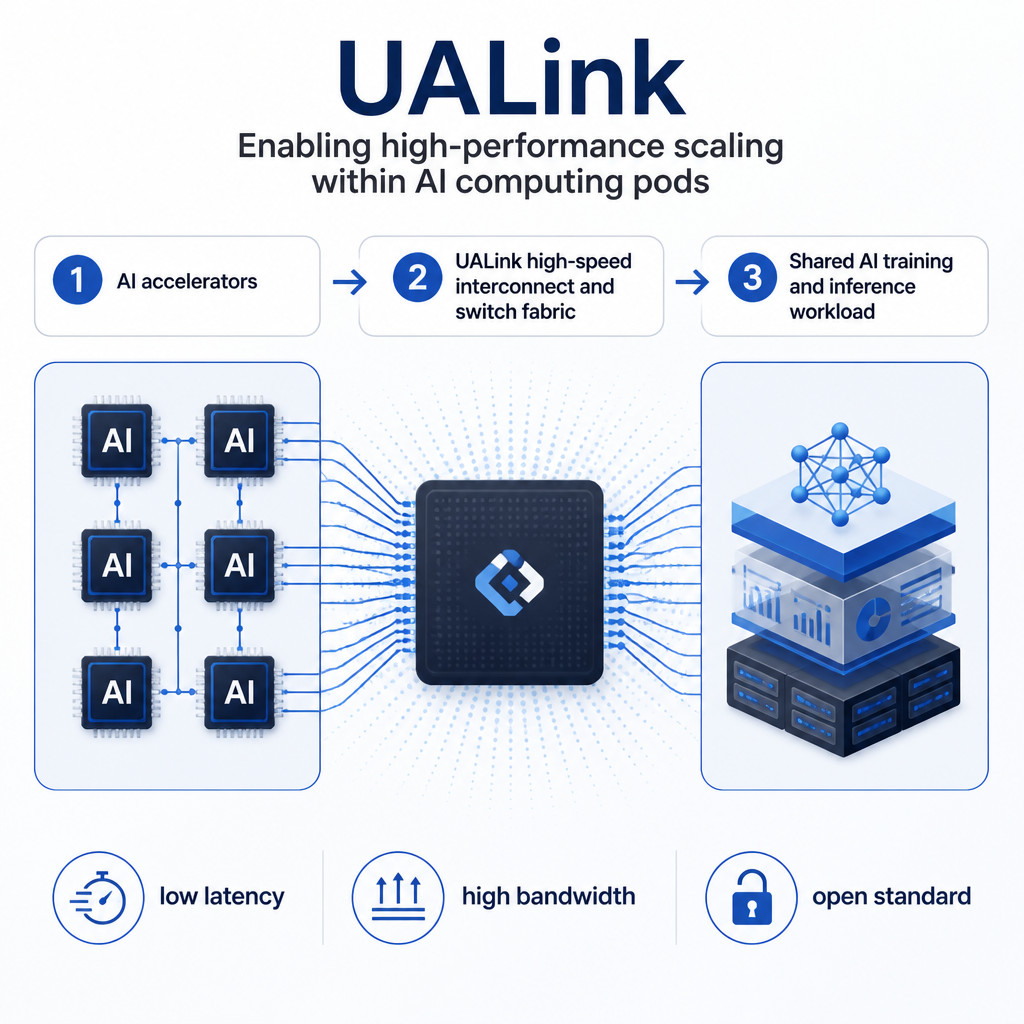
Rack-scale AI systems are drawing more attention as companies build infrastructure for ever-larger AI models. At its Advancing AI event on July 23, 2026, AMD launched the Helios Rackscale Solution, and Microsoft said it plans to deploy the platform on Azure. The announcement reflects a change in how AI hardware is put together. Rather than treating servers as mostly separate machines, designers are building the entire rack as a coordinated AI building block.
What Is a Rack-Scale AI System?
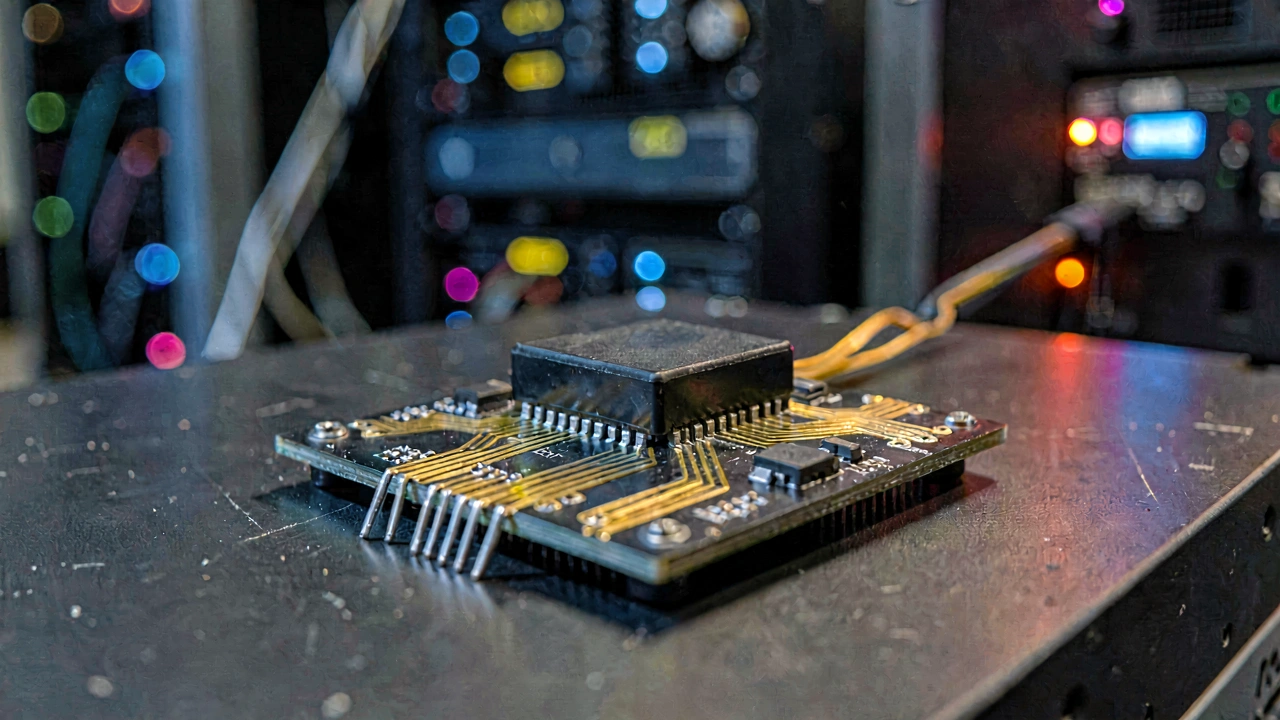
A rack-scale AI system is a data-center rack built as an integrated unit for artificial intelligence workloads. It brings together many AI accelerators, usually GPUs, along with server CPUs, memory, networking hardware and the software required to run them.
The rack itself is the tall cabinet commonly found in data centers. With a conventional setup, operators might select servers, network switches and cables separately. A rack-scale design defines how all those components fit together and communicate, making the full rack the product instead of focusing only on each server.
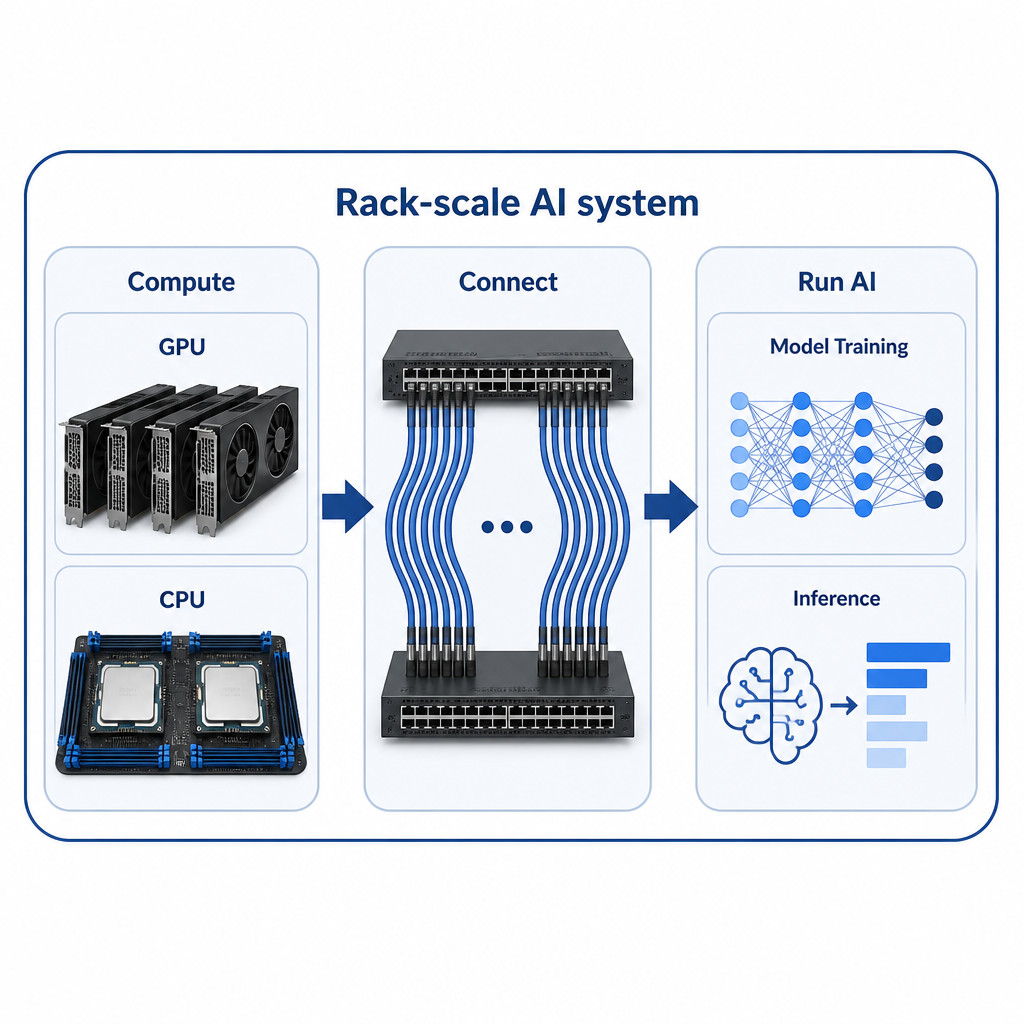
How Rack-Scale AI Works
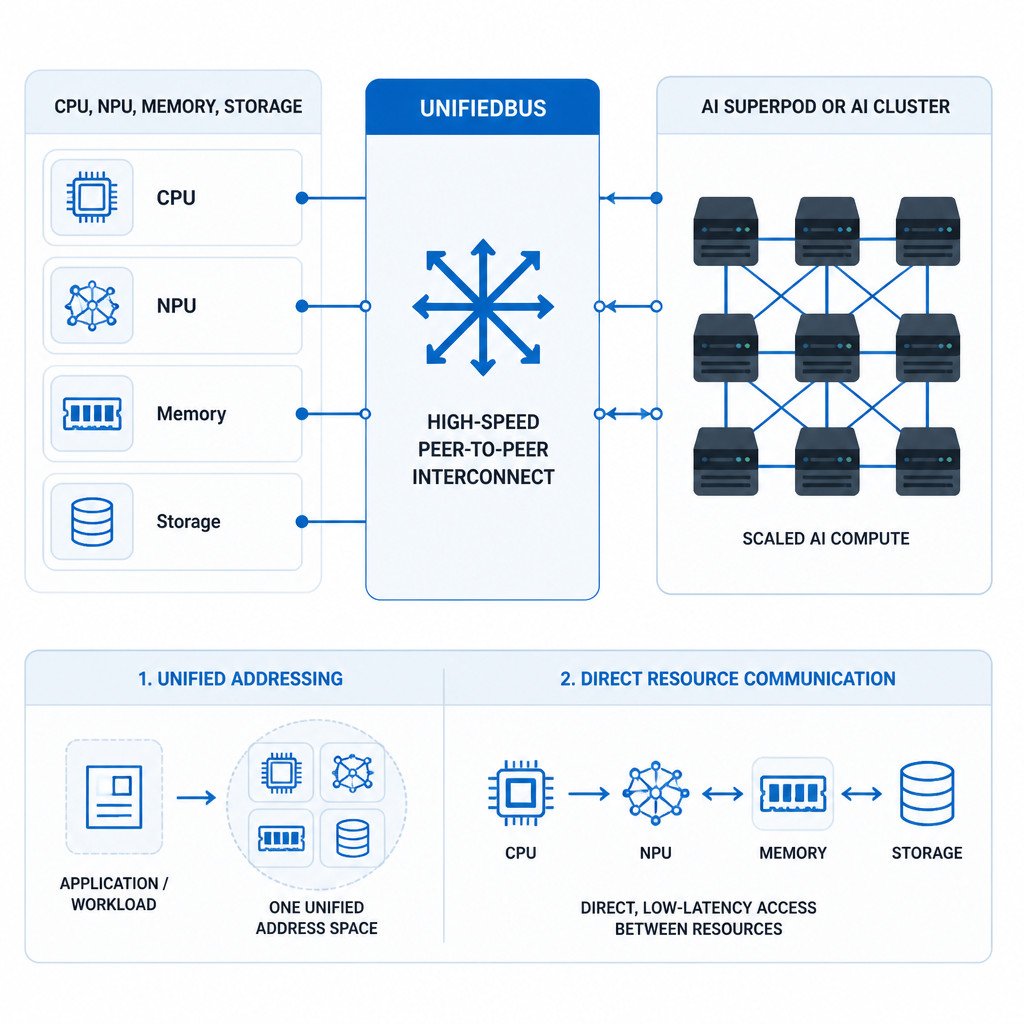
Large AI workloads are divided among many accelerators. During model training, the chips repeatedly exchange calculations and model data. During inference, they work together to produce responses for users. That means the connections between chips can matter nearly as much as the chips themselves.
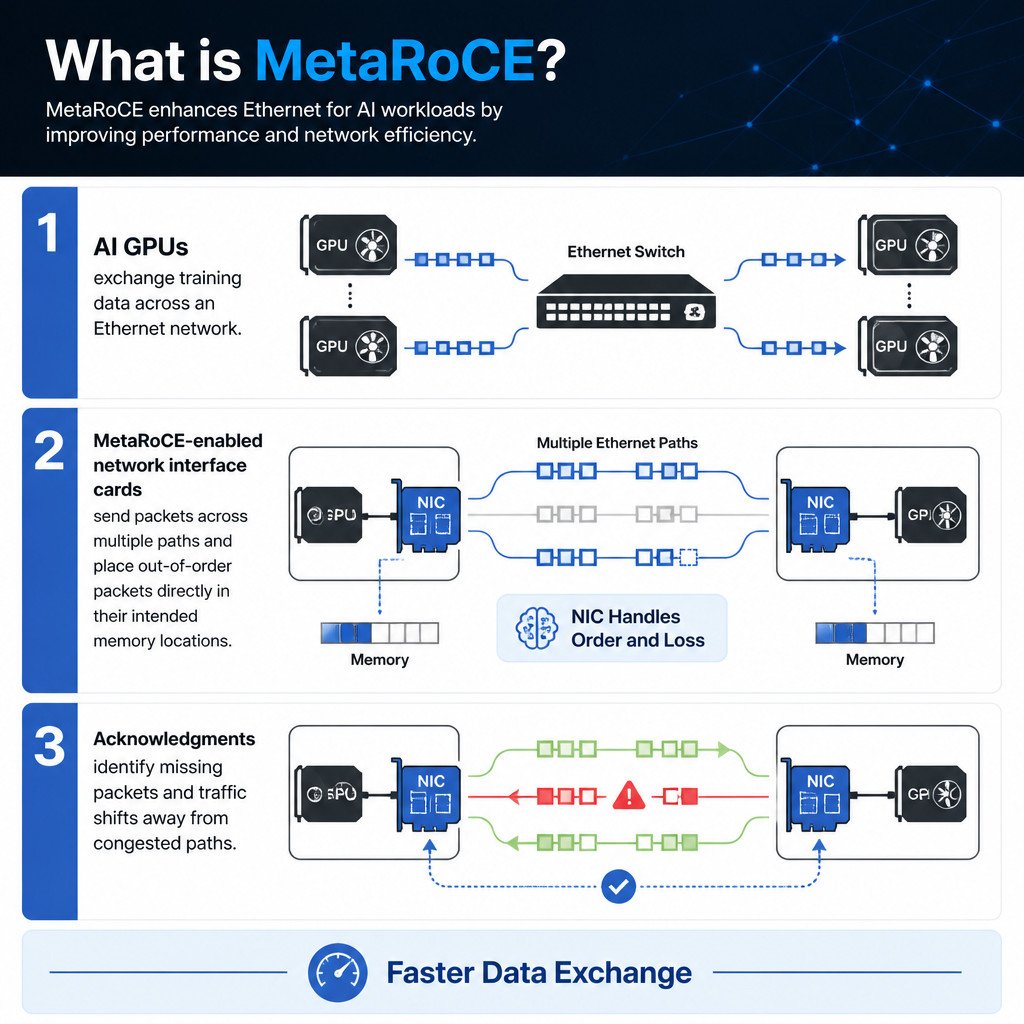
Rack-scale systems rely on high-bandwidth networking to transfer data between compute trays and across other racks. GPUs perform the highly parallel AI calculations, while CPUs manage general-purpose coordination. Management software schedules workloads and keeps track of the hardware. Together, these parts are designed to reduce communication bottlenecks so the rack operates more like one large computing system.
Why Rack-Scale AI Matters
Training frontier models and running high-volume AI inference demand enormous computing capacity. Designing systems at rack level can make them easier to deploy, expand and tune than assembling every component independently. Suppliers can also optimize power delivery, networking and software for a known hardware layout.
Cloud providers, AI labs, research institutions and enterprises running demanding models are the main users of rack-scale AI. It won’t replace ordinary servers for every job. But for organizations that need thousands of accelerators working together reliably, it’s becoming an important unit of infrastructure.