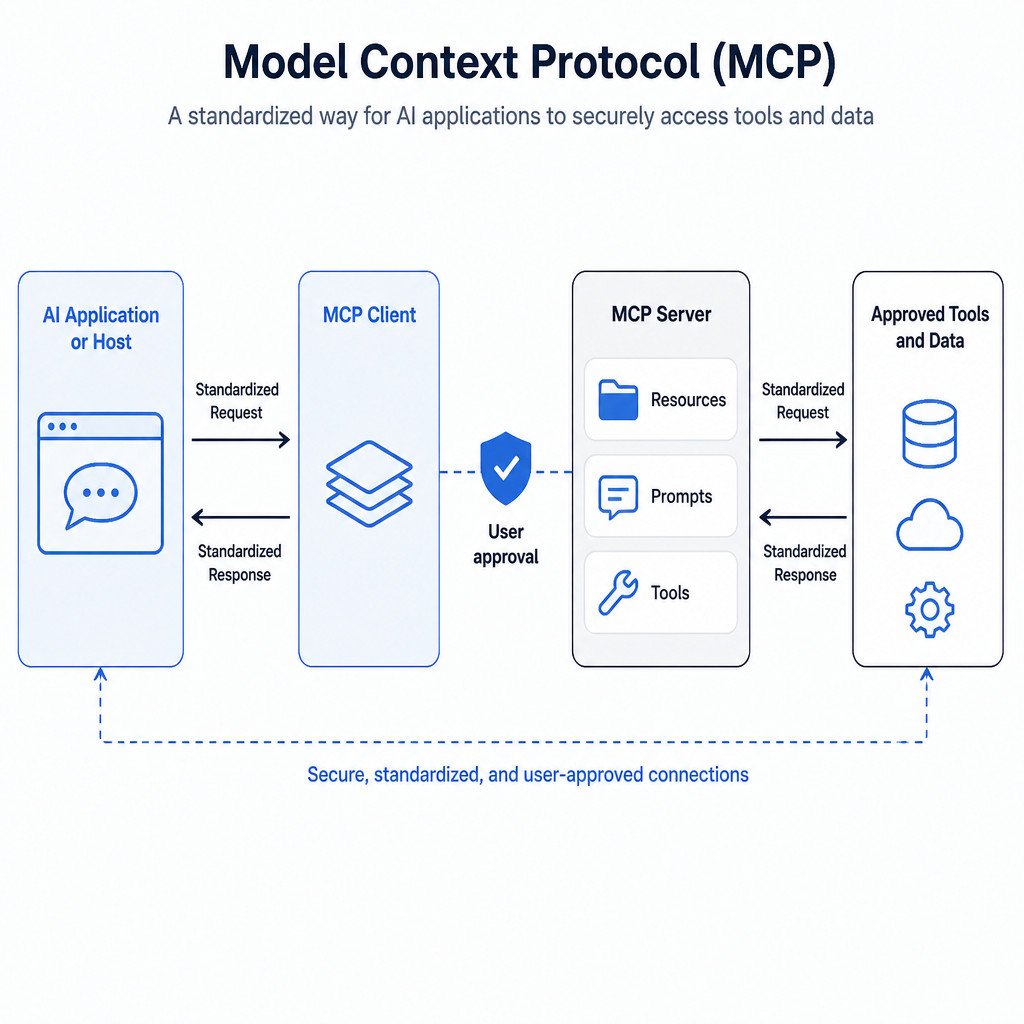
Stateless MCP offers a newer way for AI applications to connect with external tools, data sources, and services through the Model Context Protocol (MCP). It has become newly relevant because the MCP protocol revision released on July 28, 2026, removed the required session handshake from its newer HTTP-based workflow. As a result, running AI tool servers at a larger scale is easier.
What Is Stateless MCP?
MCP is an open protocol that gives AI assistants a consistent way to discover and call tools. An assistant might connect to an MCP server to search a company knowledge base, query a database, or create a support ticket.
With earlier versions of MCP, a client would commonly begin by creating a session with a particular server instance. Each later request had to include that session identity. Infrastructure might then need to keep routing the client back to the same server or share session data among several servers.
Stateless MCP removes that protocol-level session. Instead, every request carries the information needed to interpret it, including the protocol version, client capabilities, and requested tool call.
How Stateless MCP Works
Rather than establishing a long-lived connection first, an AI client sends a self-contained request. A load balancer can direct it to any compatible MCP server instance, which can process the request without looking up an earlier protocol session.
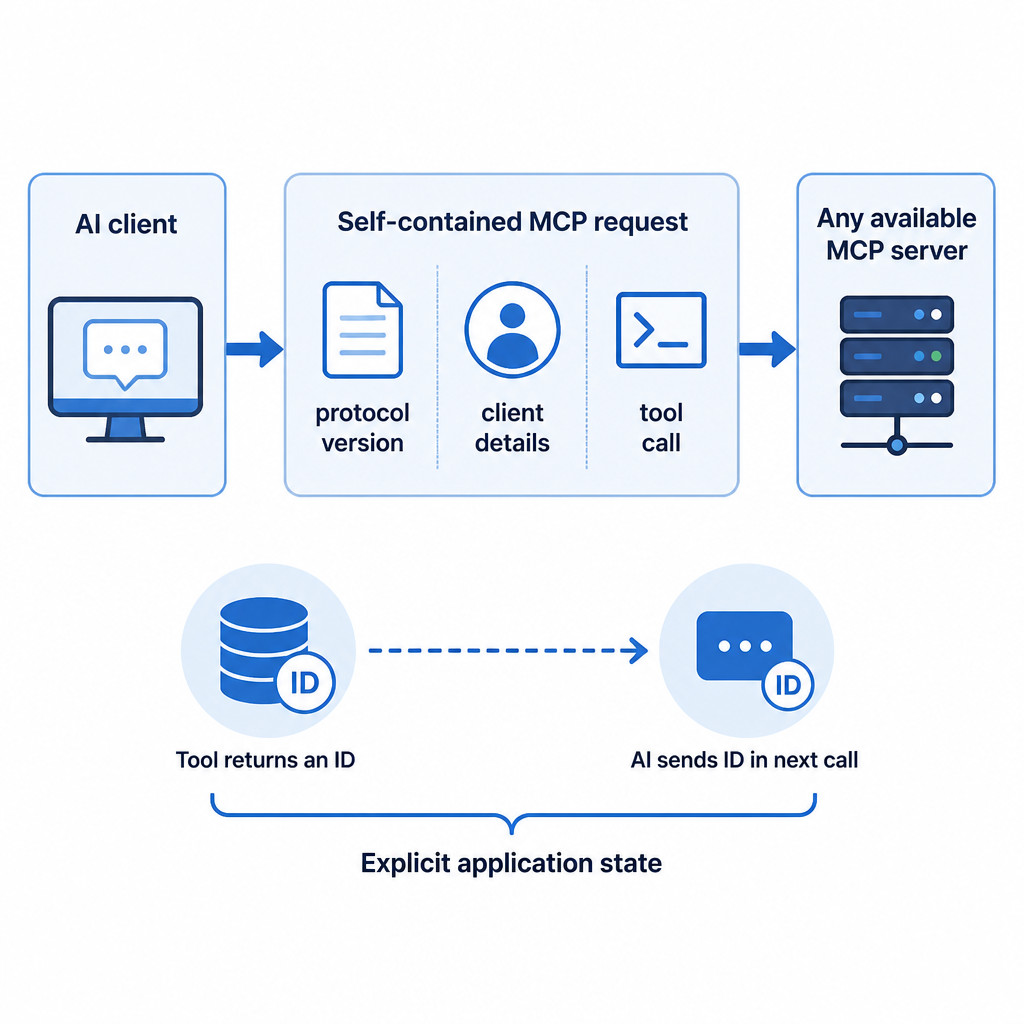
That doesn’t mean every AI task has to lose its memory. If an application needs continuity, a tool can return an explicit identifier, such as a shopping basket ID or browser ID. The AI supplies that identifier as a regular argument in its next tool call. Useful application state is passed openly rather than being hidden inside transport-level session data.
Why Stateless MCP Matters
A stateless design works well with familiar web infrastructure, including ordinary HTTP routing, load balancing, caching, and request tracing. This can reduce the operational complexity involved in deploying remote MCP servers for many users or agents.
Because each request contains its own context, individual calls are also easier to inspect and route. Developers still have to protect tool permissions and validate authorization. Even so, stateless MCP gives them a more familiar foundation for running services connected to AI applications.
Where Stateless MCP Is Used
Stateless MCP is especially useful for remote AI tool servers operating behind cloud infrastructure. These include services that give AI assistants access to search, business systems, developer tools, or data. Older MCP clients can keep using earlier session-based protocol versions while software gradually moves to the newer revision.