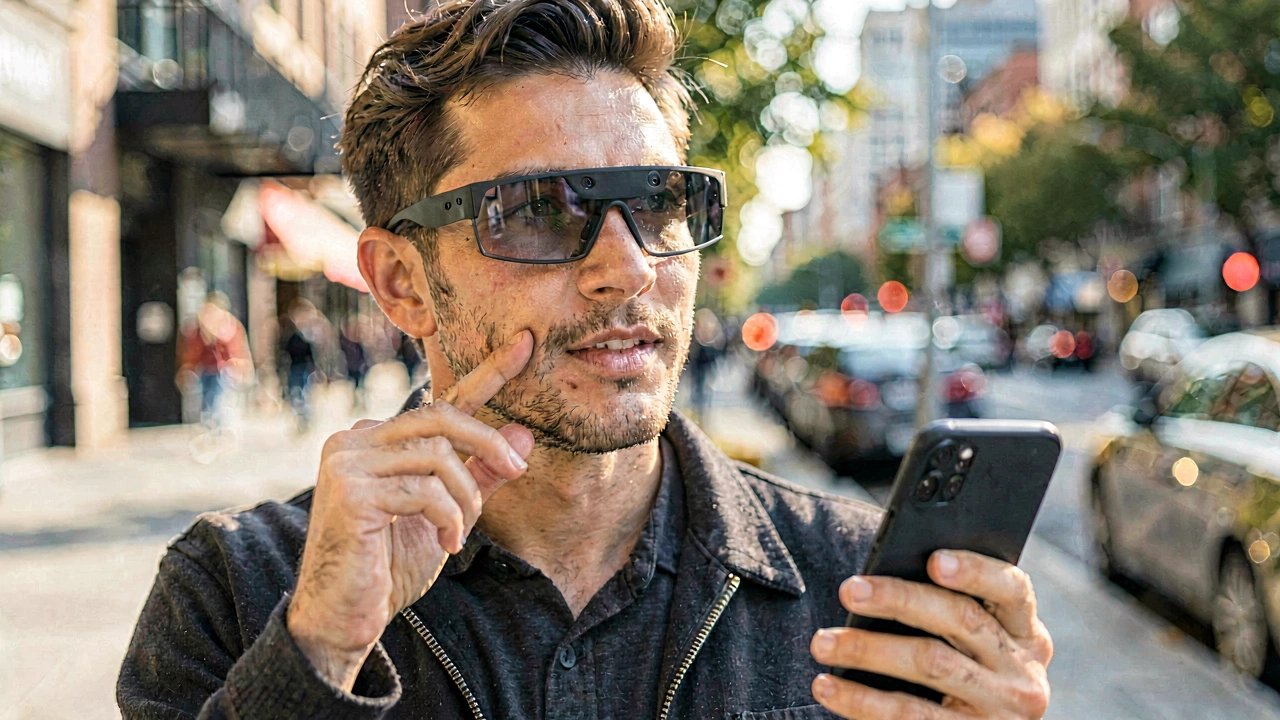
Samsung’s Galaxy Unpacked event on July 22 covered more than new foldables. In London, the company also showed intelligent eyewear developed with Gentle Monster and Warby Parker. Built on Android XR, the glasses are designed to bring Gemini assistance into a familiar-looking frame.
The reveal gives a long-running smart-glasses concept a clearer direction. AI is being designed to reach people before they open an app or glance down at a phone. The emerging competition goes beyond adding a chatbot to every device. Companies want to place assistants where they can hear, see and respond to whatever is happening.
Why smart glasses are back in the AI conversation
Samsung intends its glasses to provide hands-free help during daily routines, work and travel. According to the company, the hardware combines a built-in camera with voice and touch controls. Gemini can summarize messages, provide real-time translation, give navigation help, create notes based on what the wearer sees and share a first-person view during calls.
None of those technical components is new by itself. Wearables have included cameras, microphones, speakers and voice assistants for years. What’s changing is the assistant behind them. A multimodal AI system can draw on a spoken request, visual context and location at the same time, which could make glasses more useful than a device that simply waits for someone to type a prompt.
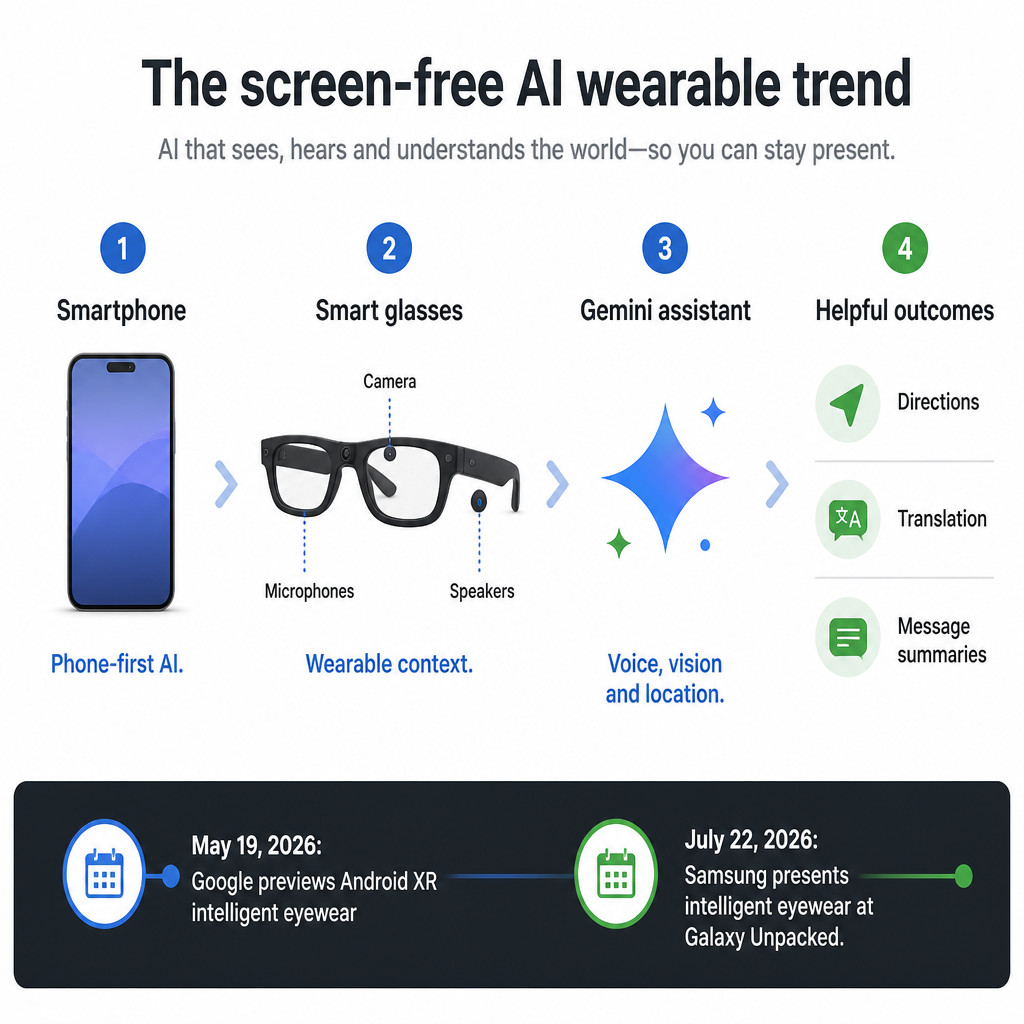
Google had already described this approach at I/O in May. It said Android XR would support audio glasses offering spoken assistance, along with display glasses that can privately present information such as navigation guidance or translation captions. The first audio-glasses designs, created with Samsung, Gentle Monster and Warby Parker, are due to arrive this fall. Google’s intelligent-eyewear preview made the partnership public, while Samsung’s July presentation brought the idea closer to becoming a consumer product category.
The shift from apps to context
The clearest trend here isn’t the imminent disappearance of phones. Samsung describes the glasses as one part of the broader Galaxy ecosystem. A phone will still provide connectivity, accounts and apps, as well as a larger screen whenever one is needed.
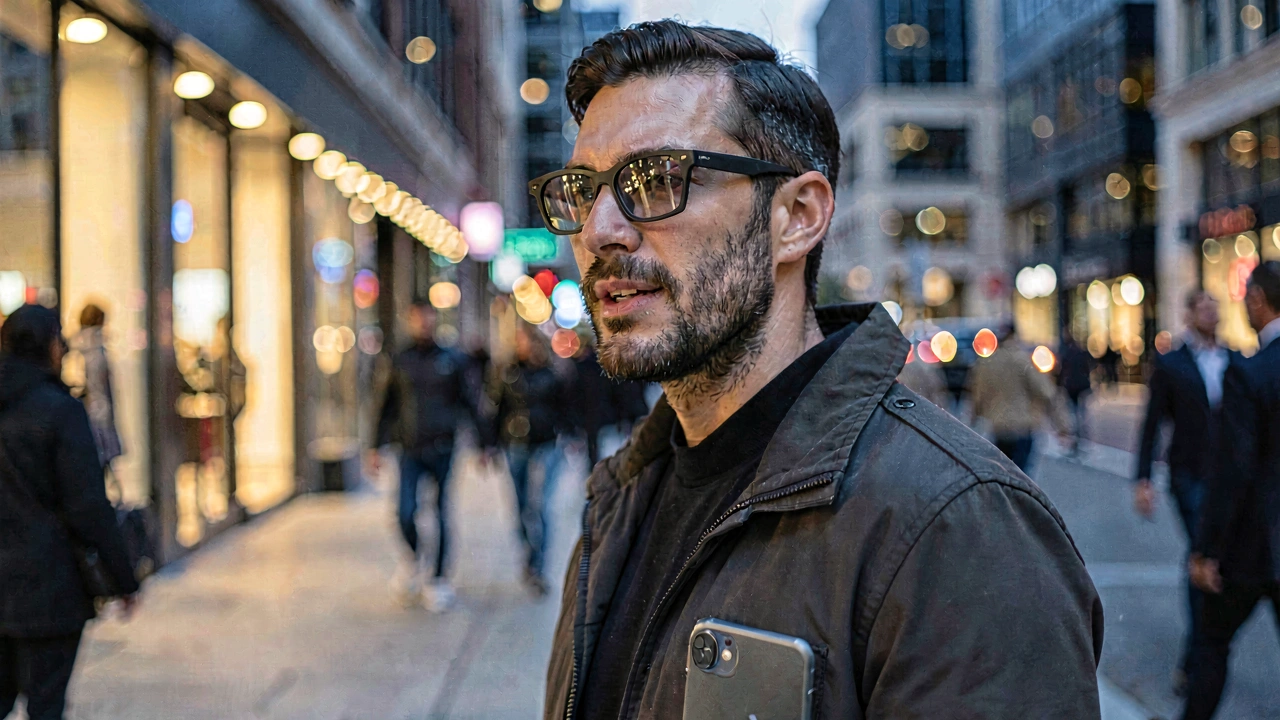
Glasses could, however, cut down on the small interactions that now require people to reach for and unlock a phone. That might mean checking a message, asking for directions, translating a sign or saving a note from a whiteboard. It’s a meaningful change in interface design. Ideally, the product won’t keep talking or putting information in front of the wearer. It will stay out of the way until it’s useful.
There are clear obstacles. Glasses with cameras bring higher privacy expectations in public places, and AI responses still need to be reliable. Battery life, comfort and style will also determine whether people want to wear them regularly. Samsung says the models it showed are lightweight and aim to deliver up to nine hours of use on one charge, although features and market availability may differ. Samsung’s announcement also indicates that the showcased designs belong to a rollout that is still developing.
What comes next
Smart glasses are becoming a major test for agentic AI in consumer hardware. If assistants can provide useful, permission-based help without becoming distracting or intrusive, phones may become less of a destination and more of a computing hub working behind the scenes. Samsung’s latest move suggests that the race to build this screen-free layer of AI is now well underway.